

Breeding strategies also play a key role in improving species of raw materials in
production of cellulosic ethanol, as have been done with food crops from their wild
ancestors for decades, resulting in seeds more resistant to biotic and abiotic factors
(Sticklen 2008). Important features should be improved in biomass for biofuel
production, such as yield, adaptability, resistance to drought and diseases, and
high biomass yield per hectare (classical breeding) (Hoang et al. 2015). By changing
DNA code of ancestral sugarcane species together with traditional breeding
methods, it was possible to develop sugarcane energy (energy cane). The main
characteristic of this variety is the significant increase of biomass, containing more
fibers than sucrose in its composition (Matsuoka et al. 2014).
In studies carried out with 115 varieties of sugarcane (100 of classic breeding and
15 of precision breeding), it was observed the potential of genotypes for fiber
processing capacity and yield of fermentable sugars, obtained from acid
pre-treatment and enzymatic hydrolysis (Benjamin et al. 2013). Varieties of genetic
improvement showed higher levels of arabinoxylan and lower lignin and ash
content, whereas classical breeding varieties that presented low lignin content did
not present higher amounts of structural carbohydrates. The highest glucose yields
after enzymatic hydrolysis were observed in samples that had lower lignin contents.
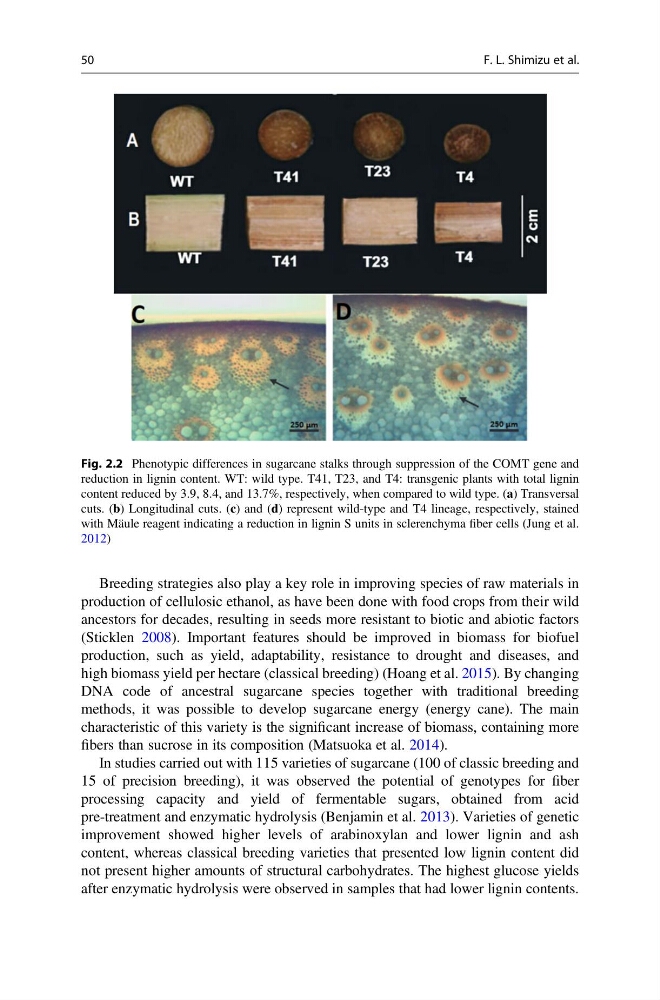
Fig. 2.2 Phenotypic differences in sugarcane stalks through suppression of the COMT gene and
reduction in lignin content. WT: wild type. T41, T23, and T4: transgenic plants with total lignin
content reduced by 3.9, 8.4, and 13.7%, respectively, when compared to wild type. (a) Transversal
cuts. (b) Longitudinal cuts. (c) and (d) represent wild-type and T4 lineage, respectively, stained
with Mäule reagent indicating a reduction in lignin S units in sclerenchyma fiber cells (Jung et al.
2012)
50
F. L. Shimizu et al.
production of cellulosic ethanol, as have been done with food crops from their wild
ancestors for decades, resulting in seeds more resistant to biotic and abiotic factors
(Sticklen 2008). Important features should be improved in biomass for biofuel
production, such as yield, adaptability, resistance to drought and diseases, and
high biomass yield per hectare (classical breeding) (Hoang et al. 2015). By changing
DNA code of ancestral sugarcane species together with traditional breeding
methods, it was possible to develop sugarcane energy (energy cane). The main
characteristic of this variety is the significant increase of biomass, containing more
fibers than sucrose in its composition (Matsuoka et al. 2014).
In studies carried out with 115 varieties of sugarcane (100 of classic breeding and
15 of precision breeding), it was observed the potential of genotypes for fiber
processing capacity and yield of fermentable sugars, obtained from acid
pre-treatment and enzymatic hydrolysis (Benjamin et al. 2013). Varieties of genetic
improvement showed higher levels of arabinoxylan and lower lignin and ash
content, whereas classical breeding varieties that presented low lignin content did
not present higher amounts of structural carbohydrates. The highest glucose yields
after enzymatic hydrolysis were observed in samples that had lower lignin contents.
Fig. 2.2 Phenotypic differences in sugarcane stalks through suppression of the COMT gene and
reduction in lignin content. WT: wild type. T41, T23, and T4: transgenic plants with total lignin
content reduced by 3.9, 8.4, and 13.7%, respectively, when compared to wild type. (a) Transversal
cuts. (b) Longitudinal cuts. (c) and (d) represent wild-type and T4 lineage, respectively, stained
with Mäule reagent indicating a reduction in lignin S units in sclerenchyma fiber cells (Jung et al.
2012)
50
F. L. Shimizu et al.