

In wet milling the shelled corns pass through mechanical cleaners designed to
remove unwanted material, such as pieces of cobs, sticks, husks, meal, and stones.
The cleaned corns are then fed into “steep” tanks, where they are soaked in dilute
sulfuric acid and remain for 24 to 48 h at a temperature of about 52
C. Steeping
softens the kernel and helps to break down the protein holding the starch particles.
Generally, water drained from the steep tank, called “light steep water” contains
about 6% of the original dry weight of the grains and is discharged to multiple-effect
evaporators. The solids from steep water are rich in protein and are concentrated to
30–55% solids. The resulting steeping liquor can be sold as animal feed (May 1994)
(Fig. 1.7).
The germ is removed from the steeped corn in the degerminating mills, which
break the kernel to free the germ, the starch, and the gluten. The germ is separated in
liquid cyclones from the mixture of fiber, starch, and gluten. It is then washed,
dewatered, dried, and further processed to extract corn oil (Bothast and Schlicher
2005).
The starch and gluten are separated from the fiber by further washing, grinding,
and screening operations. The solids and the fiber are used as a feed. The starch is
separated from the gluten by centrifugation (May 1994; Bothast and Schlicher
2005). Once the pure starch slurry is obtained, the wet-mill process is similar to
that of dry milling. First, the pH of the slurry is adjusted to 5.8–6.2 with calcium
hydroxide, and then alpha-amylase is added to convert the starch into soluble shortchain dextrins (liquefaction). Calcium is often added (20–100 ppm) to enhance
enzyme stability.
The slurry from the liquefaction stage is mixed with heat-sterilized steep water
and sent for saccharification. The steep water provides both the fermentation
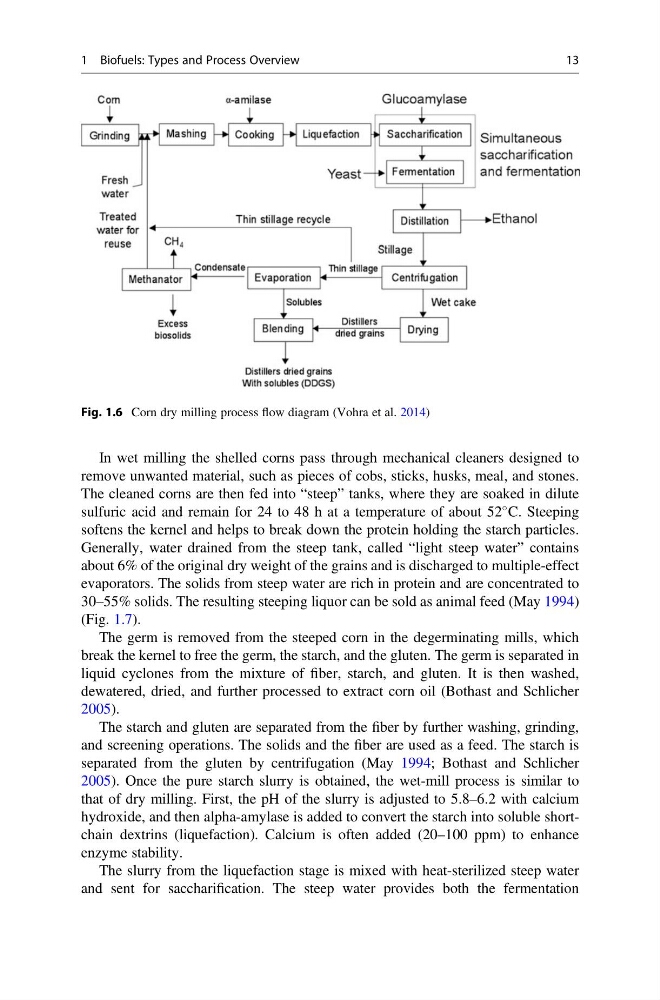
Fig. 1.6 Corn dry milling process flow diagram (Vohra et al. 2014)
1 Biofuels: Types and Process Overview
13
remove unwanted material, such as pieces of cobs, sticks, husks, meal, and stones.
The cleaned corns are then fed into “steep” tanks, where they are soaked in dilute
sulfuric acid and remain for 24 to 48 h at a temperature of about 52
C. Steeping
softens the kernel and helps to break down the protein holding the starch particles.
Generally, water drained from the steep tank, called “light steep water” contains
about 6% of the original dry weight of the grains and is discharged to multiple-effect
evaporators. The solids from steep water are rich in protein and are concentrated to
30–55% solids. The resulting steeping liquor can be sold as animal feed (May 1994)
(Fig. 1.7).
The germ is removed from the steeped corn in the degerminating mills, which
break the kernel to free the germ, the starch, and the gluten. The germ is separated in
liquid cyclones from the mixture of fiber, starch, and gluten. It is then washed,
dewatered, dried, and further processed to extract corn oil (Bothast and Schlicher
2005).
The starch and gluten are separated from the fiber by further washing, grinding,
and screening operations. The solids and the fiber are used as a feed. The starch is
separated from the gluten by centrifugation (May 1994; Bothast and Schlicher
2005). Once the pure starch slurry is obtained, the wet-mill process is similar to
that of dry milling. First, the pH of the slurry is adjusted to 5.8–6.2 with calcium
hydroxide, and then alpha-amylase is added to convert the starch into soluble shortchain dextrins (liquefaction). Calcium is often added (20–100 ppm) to enhance
enzyme stability.
The slurry from the liquefaction stage is mixed with heat-sterilized steep water
and sent for saccharification. The steep water provides both the fermentation
Fig. 1.6 Corn dry milling process flow diagram (Vohra et al. 2014)
1 Biofuels: Types and Process Overview
13