

2H 2 S þ O 2 ! 2S þ 2H 2 O
ð9:1Þ
9.2.1.2 Iron Chloride Dosing
Similar to air/oxygen dosing, iron chloride dosing is done to the biogas digester in
which H 2 S can be reduced by adding FeCl 2 and FeCl 3 or which can be explained by
Reaction 9.2:
Fe
2þ
þ S
2À
! FeS
ð9:2Þ
The resultant FeS can be easily removed from the system with discharge solids
and can be utilised as a sulphur-rich fertiliser in the form of elemental sulphur.
9.2.2 Absorption Method
Absorption process is generally used for effective removal of H 2 S from biogas.
Absorption is the process by which one material (a solid or liquid) is absorbed by
another substance, such as a liquid or gas, through minute pores or voids to its bulk
surface. The absorption process can be classified into chemical or physical. Both the
processes are discussed below. The basic absorption of H 2 S can be explained by the
following Eqs. (9.3, 9.4 and 9.5):
H 2 S g
ð Þ þ H 2 O Ð H 2 S aq
ð Þ
ð9:3Þ
Maximum
permissible H 2 S
concentraƟon
(ppm) for Biogas
uƟlizaƟon
Boiler
H 2 S<250 ppm
DomesƟc stoves
H 2 S<100ppm
Internal
combusƟon
engine H 2 S:
500–1500 ppm
Fuel cell
H 2 S: 1–5 ppm
Vehicle fuel
H 2 S<5 ppm
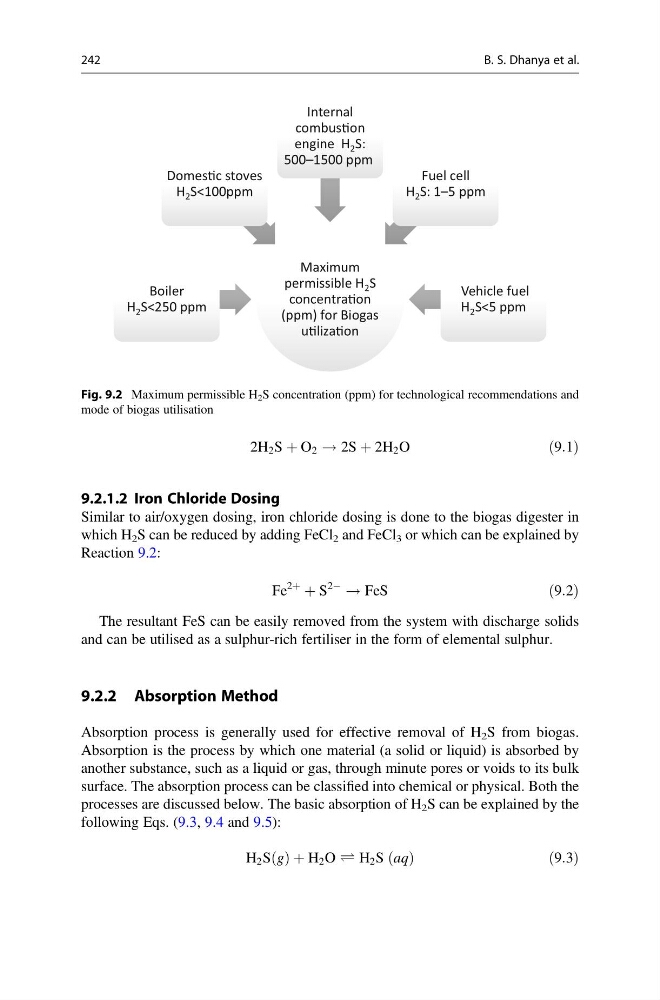
Fig. 9.2 Maximum permissible H 2 S concentration (ppm) for technological recommendations and
mode of biogas utilisation
242
B. S. Dhanya et al.
ð9:1Þ
9.2.1.2 Iron Chloride Dosing
Similar to air/oxygen dosing, iron chloride dosing is done to the biogas digester in
which H 2 S can be reduced by adding FeCl 2 and FeCl 3 or which can be explained by
Reaction 9.2:
Fe
2þ
þ S
2À
! FeS
ð9:2Þ
The resultant FeS can be easily removed from the system with discharge solids
and can be utilised as a sulphur-rich fertiliser in the form of elemental sulphur.
9.2.2 Absorption Method
Absorption process is generally used for effective removal of H 2 S from biogas.
Absorption is the process by which one material (a solid or liquid) is absorbed by
another substance, such as a liquid or gas, through minute pores or voids to its bulk
surface. The absorption process can be classified into chemical or physical. Both the
processes are discussed below. The basic absorption of H 2 S can be explained by the
following Eqs. (9.3, 9.4 and 9.5):
H 2 S g
ð Þ þ H 2 O Ð H 2 S aq
ð Þ
ð9:3Þ
Maximum
permissible H 2 S
concentraƟon
(ppm) for Biogas
uƟlizaƟon
Boiler
H 2 S<250 ppm
DomesƟc stoves
H 2 S<100ppm
Internal
combusƟon
engine H 2 S:
500–1500 ppm
Fuel cell
H 2 S: 1–5 ppm
Vehicle fuel
H 2 S<5 ppm
Fig. 9.2 Maximum permissible H 2 S concentration (ppm) for technological recommendations and
mode of biogas utilisation
242
B. S. Dhanya et al.