

in the Chlorella vulgaris cells is responsible for providing conversion efficiencies as
high as 65% (Adeniyi et al. 2018).
8.5.2.3 Inter-transesterification
This method involves enzymatic production of fatty acid esters from algal oil. The
easy removal of the by-products and high purity of the final product so obtained
encourages the use of this conversion technique. However, its use is restricted by
high cost of the enzymes that further reduces the economic feasibility of the process
(Razzak et al. 2013; Milano et al. 2016).
8.6
Transesterification
The diesel production from algal oil involves a method called transesterification
which is a chemical conversion process of the microalgal biomass. This chemical
reaction proceeds with the formation of FAME and glycerol due to the reaction of
triglyceride with alcohol. The glycerol so produced could be used in cosmetic and
pharmaceutical industry (Suganya et al. 2016; Kandiyoti et al. 2017; Adeniyi et al.
2018). The type of alcohol employed, the kind of catalyst used, and the molar ratios
determine this chemical reaction that forms low molecular weight FAMEs from raw
algal lipids (Adeniyi et al. 2018). This type of transesterification is vital in biodiesel
production because it reduces the viscosity of the algal oil, thereby enhancing its
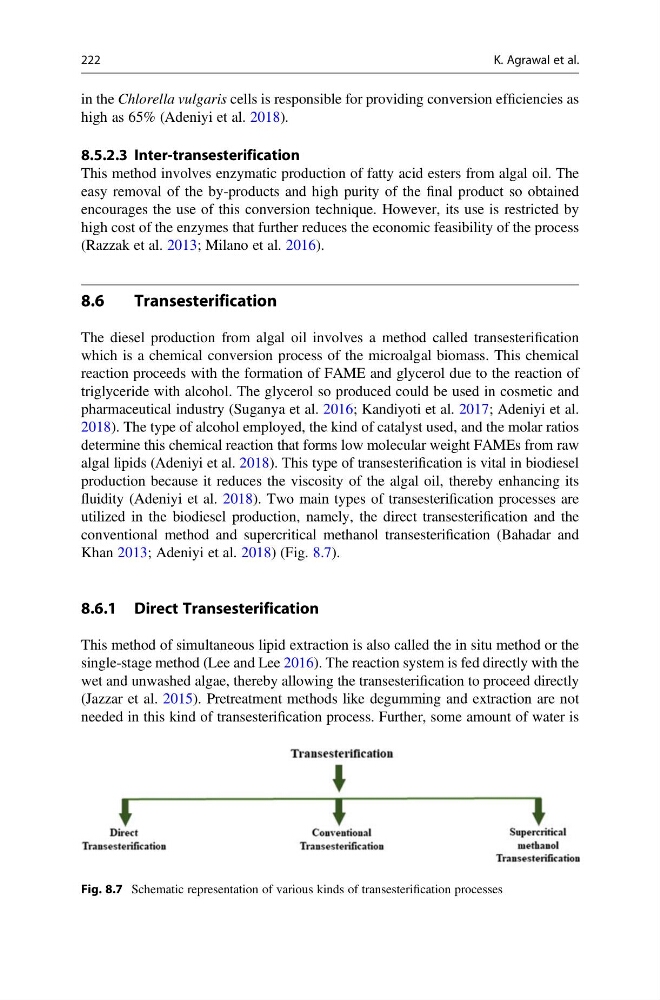
fluidity (Adeniyi et al. 2018). Two main types of transesterification processes are
utilized in the biodiesel production, namely, the direct transesterification and the
conventional method and supercritical methanol transesterification (Bahadar and
Khan 2013; Adeniyi et al. 2018) (Fig. 8.7).
8.6.1 Direct Transesterification
This method of simultaneous lipid extraction is also called the in situ method or the
single-stage method (Lee and Lee 2016). The reaction system is fed directly with the
wet and unwashed algae, thereby allowing the transesterification to proceed directly
(Jazzar et al. 2015). Pretreatment methods like degumming and extraction are not
needed in this kind of transesterification process. Further, some amount of water is
Fig. 8.7 Schematic representation of various kinds of transesterification processes
222
K. Agrawal et al.
high as 65% (Adeniyi et al. 2018).
8.5.2.3 Inter-transesterification
This method involves enzymatic production of fatty acid esters from algal oil. The
easy removal of the by-products and high purity of the final product so obtained
encourages the use of this conversion technique. However, its use is restricted by
high cost of the enzymes that further reduces the economic feasibility of the process
(Razzak et al. 2013; Milano et al. 2016).
8.6
Transesterification
The diesel production from algal oil involves a method called transesterification
which is a chemical conversion process of the microalgal biomass. This chemical
reaction proceeds with the formation of FAME and glycerol due to the reaction of
triglyceride with alcohol. The glycerol so produced could be used in cosmetic and
pharmaceutical industry (Suganya et al. 2016; Kandiyoti et al. 2017; Adeniyi et al.
2018). The type of alcohol employed, the kind of catalyst used, and the molar ratios
determine this chemical reaction that forms low molecular weight FAMEs from raw
algal lipids (Adeniyi et al. 2018). This type of transesterification is vital in biodiesel
production because it reduces the viscosity of the algal oil, thereby enhancing its
fluidity (Adeniyi et al. 2018). Two main types of transesterification processes are
utilized in the biodiesel production, namely, the direct transesterification and the
conventional method and supercritical methanol transesterification (Bahadar and
Khan 2013; Adeniyi et al. 2018) (Fig. 8.7).
8.6.1 Direct Transesterification
This method of simultaneous lipid extraction is also called the in situ method or the
single-stage method (Lee and Lee 2016). The reaction system is fed directly with the
wet and unwashed algae, thereby allowing the transesterification to proceed directly
(Jazzar et al. 2015). Pretreatment methods like degumming and extraction are not
needed in this kind of transesterification process. Further, some amount of water is
Fig. 8.7 Schematic representation of various kinds of transesterification processes
222
K. Agrawal et al.