

8.2.1.2 Artificial System
Artificial system is also called indoor cultivation system (ICS) or closed
photobioreactor system (CPBRS) and is the most stringently controlled and monitored method of algal biomass cultivation. It was designed to address the limitations
of the OPCS such as pollution and contamination risks that impede their use in
pharmaceuticals and cosmetics industries. In addition, CBPRS allows monoculture
cultivation of algal species for longer durations along with a lower contamination
risk (Chisti 2007; Brennan and Owende 2010; Ugwu et al. 2008). As the artificial
means of production employs fluorescent lamps for continuous production, it
requires higher-energy input and increased carbon footprint (Brennan and Owende
2010). On the basis of duration and method employed, three types of cultivation
system were developed (i.e., batch, continuous, and semicontinuous) (Chisti 2013).
In batch system, the target culture is inoculated in the growth media and allowed to
grow until maximum population density is attained (Mathimani et al. 2018), and
the products are harvested in a single step (Suali and Sarbatly 2012). It is then
followed by a new cycle of cultivation with fresh inoculum of the microalgal cells
and the growth medium. In the continuous system, continuous inflow of the culture
medium with a simultaneous growth of biomass is maintained (Mathimani et al.
2018). Despite the wide use of the batch culture method, the production costs were
reduced by approximately 40% in continuous culture systems (Suali and Sarbatly
2012). Lastly, in the semicontinuous system, culture medium is added continuously, but only a partial amount of biomass is harvested to attain a constant growth
rate of the culture (Mathimani et al. 2018). These systems can be operated as
various types of photobioreactors (PBRs), namely, the column, tubular, flat plate,
penthouse-roof, plastic bag, bubble column, helical type, stirred tank, and airlift
(Bahadar and Khan 2013).
8.2.1.2.1 Column Photobioreactors (CPBRs)
CPBRs are easy to operate, compact, and cheap. The CPBRs are composed of a
series of straight glass or plastic tubes arranged horizontally, vertically, inclined, or
helically, which is responsible for capturing sunlight. A mechanical pump/airlift
system performs the recirculation of the algal culture and allows the exchange of
carbon dioxide and oxygen between the aeration gas and the growth medium (Ugwu
et al. 2002, 2008; Eriksen 2008; Brennan and Owende 2010).
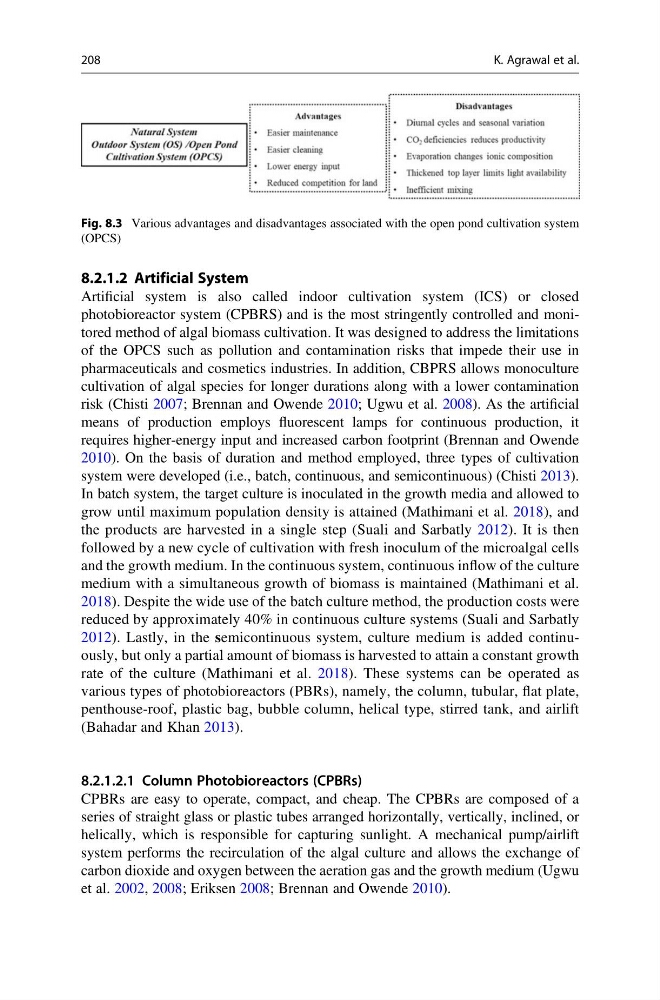
Fig. 8.3 Various advantages and disadvantages associated with the open pond cultivation system
(OPCS)
208
K. Agrawal et al.
Artificial system is also called indoor cultivation system (ICS) or closed
photobioreactor system (CPBRS) and is the most stringently controlled and monitored method of algal biomass cultivation. It was designed to address the limitations
of the OPCS such as pollution and contamination risks that impede their use in
pharmaceuticals and cosmetics industries. In addition, CBPRS allows monoculture
cultivation of algal species for longer durations along with a lower contamination
risk (Chisti 2007; Brennan and Owende 2010; Ugwu et al. 2008). As the artificial
means of production employs fluorescent lamps for continuous production, it
requires higher-energy input and increased carbon footprint (Brennan and Owende
2010). On the basis of duration and method employed, three types of cultivation
system were developed (i.e., batch, continuous, and semicontinuous) (Chisti 2013).
In batch system, the target culture is inoculated in the growth media and allowed to
grow until maximum population density is attained (Mathimani et al. 2018), and
the products are harvested in a single step (Suali and Sarbatly 2012). It is then
followed by a new cycle of cultivation with fresh inoculum of the microalgal cells
and the growth medium. In the continuous system, continuous inflow of the culture
medium with a simultaneous growth of biomass is maintained (Mathimani et al.
2018). Despite the wide use of the batch culture method, the production costs were
reduced by approximately 40% in continuous culture systems (Suali and Sarbatly
2012). Lastly, in the semicontinuous system, culture medium is added continuously, but only a partial amount of biomass is harvested to attain a constant growth
rate of the culture (Mathimani et al. 2018). These systems can be operated as
various types of photobioreactors (PBRs), namely, the column, tubular, flat plate,
penthouse-roof, plastic bag, bubble column, helical type, stirred tank, and airlift
(Bahadar and Khan 2013).
8.2.1.2.1 Column Photobioreactors (CPBRs)
CPBRs are easy to operate, compact, and cheap. The CPBRs are composed of a
series of straight glass or plastic tubes arranged horizontally, vertically, inclined, or
helically, which is responsible for capturing sunlight. A mechanical pump/airlift
system performs the recirculation of the algal culture and allows the exchange of
carbon dioxide and oxygen between the aeration gas and the growth medium (Ugwu
et al. 2002, 2008; Eriksen 2008; Brennan and Owende 2010).
Fig. 8.3 Various advantages and disadvantages associated with the open pond cultivation system
(OPCS)
208
K. Agrawal et al.