

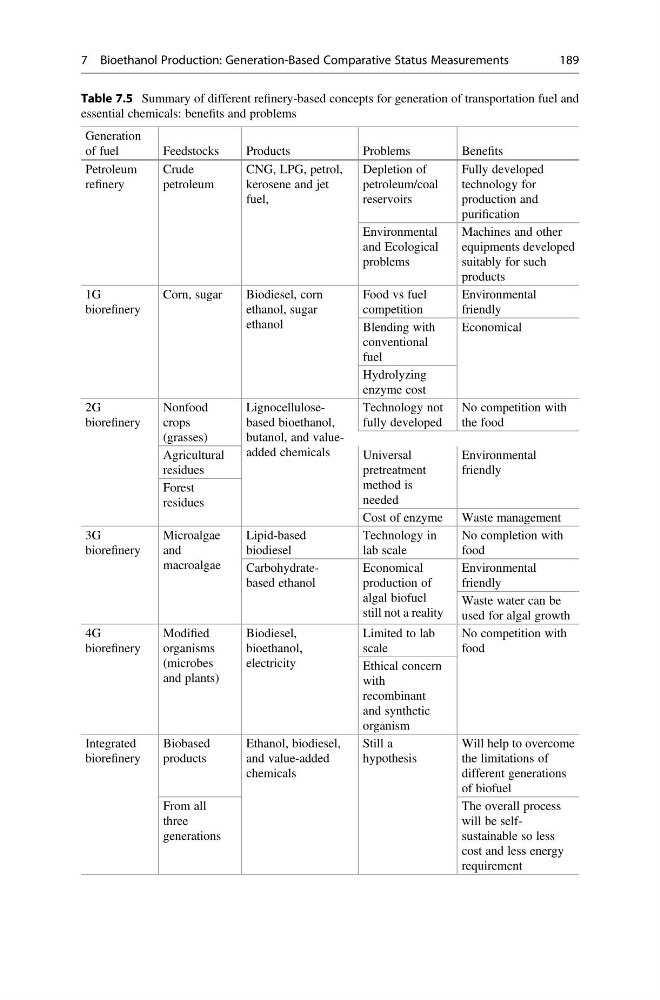
Table 7.5 Summary of different refinery-based concepts for generation of transportation fuel and
essential chemicals: benefits and problems
Generation
of fuel
Feedstocks
Products
Problems
Benefits
Petroleum
refinery
Crude
petroleum
CNG, LPG, petrol,
kerosene and jet
fuel,
Depletion of
petroleum/coal
reservoirs
Fully developed
technology for
production and
purification
Environmental
and Ecological
problems
Machines and other
equipments developed
suitably for such
products
1G
biorefinery
Corn, sugar
Biodiesel, corn
ethanol, sugar
ethanol
Food vs fuel
competition
Environmental
friendly
Blending with
conventional
fuel
Economical
Hydrolyzing
enzyme cost
2G
biorefinery
Nonfood
crops
(grasses)
Lignocellulosebased bioethanol,
butanol, and valueadded chemicals
Technology not
fully developed
No competition with
the food
Agricultural
residues
Universal
pretreatment
method is
needed
Environmental
friendly
Forest
residues
Cost of enzyme Waste management
3G
biorefinery
Microalgae
and
macroalgae
Lipid-based
biodiesel
Technology in
lab scale
No completion with
food
Carbohydratebased ethanol
Economical
production of
algal biofuel
still not a reality
Environmental
friendly
Waste water can be
used for algal growth
4G
biorefinery
Modified
organisms
(microbes
and plants)
Biodiesel,
bioethanol,
electricity
Limited to lab
scale
No competition with
food
Ethical concern
with
recombinant
and synthetic
organism
Integrated
biorefinery
Biobased
products
Ethanol, biodiesel,
and value-added
chemicals
Still a
hypothesis
Will help to overcome
the limitations of
different generations
of biofuel
From all
three
generations
The overall process
will be selfsustainable so less
cost and less energy
requirement
7 Bioethanol Production: Generation-Based Comparative Status Measurements
189
essential chemicals: benefits and problems
Generation
of fuel
Feedstocks
Products
Problems
Benefits
Petroleum
refinery
Crude
petroleum
CNG, LPG, petrol,
kerosene and jet
fuel,
Depletion of
petroleum/coal
reservoirs
Fully developed
technology for
production and
purification
Environmental
and Ecological
problems
Machines and other
equipments developed
suitably for such
products
1G
biorefinery
Corn, sugar
Biodiesel, corn
ethanol, sugar
ethanol
Food vs fuel
competition
Environmental
friendly
Blending with
conventional
fuel
Economical
Hydrolyzing
enzyme cost
2G
biorefinery
Nonfood
crops
(grasses)
Lignocellulosebased bioethanol,
butanol, and valueadded chemicals
Technology not
fully developed
No competition with
the food
Agricultural
residues
Universal
pretreatment
method is
needed
Environmental
friendly
Forest
residues
Cost of enzyme Waste management
3G
biorefinery
Microalgae
and
macroalgae
Lipid-based
biodiesel
Technology in
lab scale
No completion with
food
Carbohydratebased ethanol
Economical
production of
algal biofuel
still not a reality
Environmental
friendly
Waste water can be
used for algal growth
4G
biorefinery
Modified
organisms
(microbes
and plants)
Biodiesel,
bioethanol,
electricity
Limited to lab
scale
No competition with
food
Ethical concern
with
recombinant
and synthetic
organism
Integrated
biorefinery
Biobased
products
Ethanol, biodiesel,
and value-added
chemicals
Still a
hypothesis
Will help to overcome
the limitations of
different generations
of biofuel
From all
three
generations
The overall process
will be selfsustainable so less
cost and less energy
requirement
7 Bioethanol Production: Generation-Based Comparative Status Measurements
189