

possible. However diesel for initial ignition is a must for dual-fuel engine. In
gas-alone spark engines, basic modification is the air/gas mixer set-up, instead of a
carburettor. Rich-burn and lean-burn types of spark-ignition internal combustion
engines are mainly used for low-BTU (British thermal unit) gas CHP applications.
However, as the engine modification is permanent, original fuel cannot be used
(Pruthviraj 2016; Stefan 2004).
3.10.1.4 Combustion Gas Turbines
In combustion gas turbines, heat and energy are produced by both compression and
ignition of atmospheric air and fuel mixture within the turbine. The compressed
intake air and biogas is ignited in the combustion chamber. The gases then enter the
turbine at high pressure and drive the generator. Energy is then utilized from the
expanded, high-temperature gases to move turbine blades that produce electricity.
The gas turbines consist of turbine assembly with gas compressor, the combustion
chamber, and monitoring equipment.
The turbine exhaust gas leaves at temperature 400–600
C, which can be utilized
with a heat exchanger for producing hot water or it can be utilized to run a steam
turbine or to preheat the air used in the turbine. Gas turbines can generate100 kW of
electricity and a heating output of 165 kW, with very low emission values (Deublein
and Steinhauser 2008). Over 50% of efficacy can be improved by combining a gas
turbine with a steam turbine. Since it requires high-pressure feed gas supply, gas
turbines require gas compressor, which in turn will increase the initial investment
costs. Generally higher capital is required to build it, as compared to other types of
engines but the overall operating and maintenance costs are much lower.
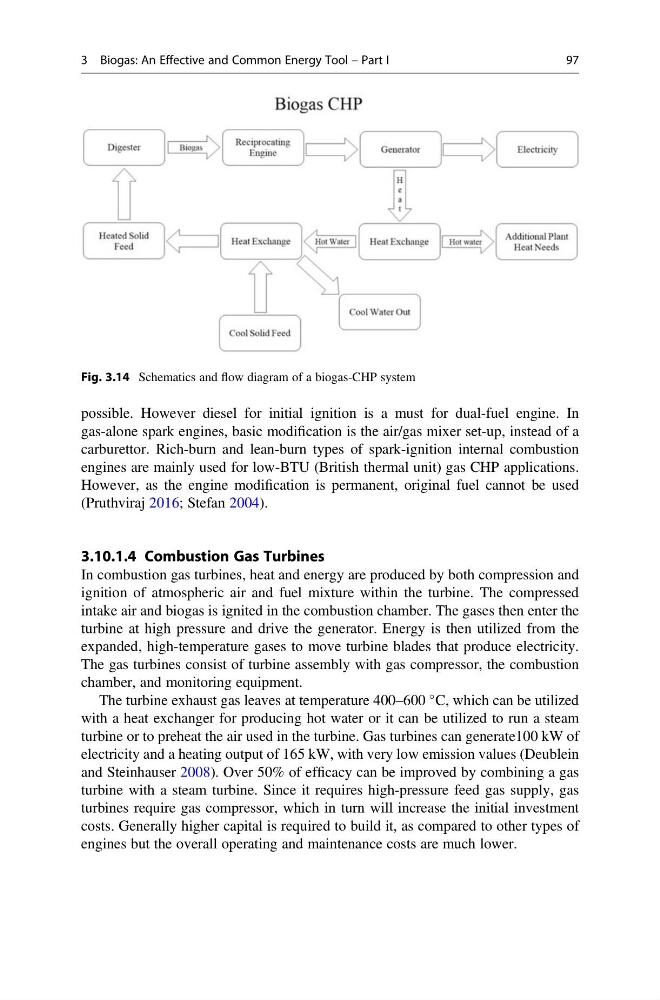
Fig. 3.14 Schematics and flow diagram of a biogas-CHP system
3 Biogas: An Effective and Common Energy Tool – Part I
97
gas-alone spark engines, basic modification is the air/gas mixer set-up, instead of a
carburettor. Rich-burn and lean-burn types of spark-ignition internal combustion
engines are mainly used for low-BTU (British thermal unit) gas CHP applications.
However, as the engine modification is permanent, original fuel cannot be used
(Pruthviraj 2016; Stefan 2004).
3.10.1.4 Combustion Gas Turbines
In combustion gas turbines, heat and energy are produced by both compression and
ignition of atmospheric air and fuel mixture within the turbine. The compressed
intake air and biogas is ignited in the combustion chamber. The gases then enter the
turbine at high pressure and drive the generator. Energy is then utilized from the
expanded, high-temperature gases to move turbine blades that produce electricity.
The gas turbines consist of turbine assembly with gas compressor, the combustion
chamber, and monitoring equipment.
The turbine exhaust gas leaves at temperature 400–600
C, which can be utilized
with a heat exchanger for producing hot water or it can be utilized to run a steam
turbine or to preheat the air used in the turbine. Gas turbines can generate100 kW of
electricity and a heating output of 165 kW, with very low emission values (Deublein
and Steinhauser 2008). Over 50% of efficacy can be improved by combining a gas
turbine with a steam turbine. Since it requires high-pressure feed gas supply, gas
turbines require gas compressor, which in turn will increase the initial investment
costs. Generally higher capital is required to build it, as compared to other types of
engines but the overall operating and maintenance costs are much lower.
Fig. 3.14 Schematics and flow diagram of a biogas-CHP system
3 Biogas: An Effective and Common Energy Tool – Part I
97