

Green Infrastructure and Social Welfare. Lessons for …
79
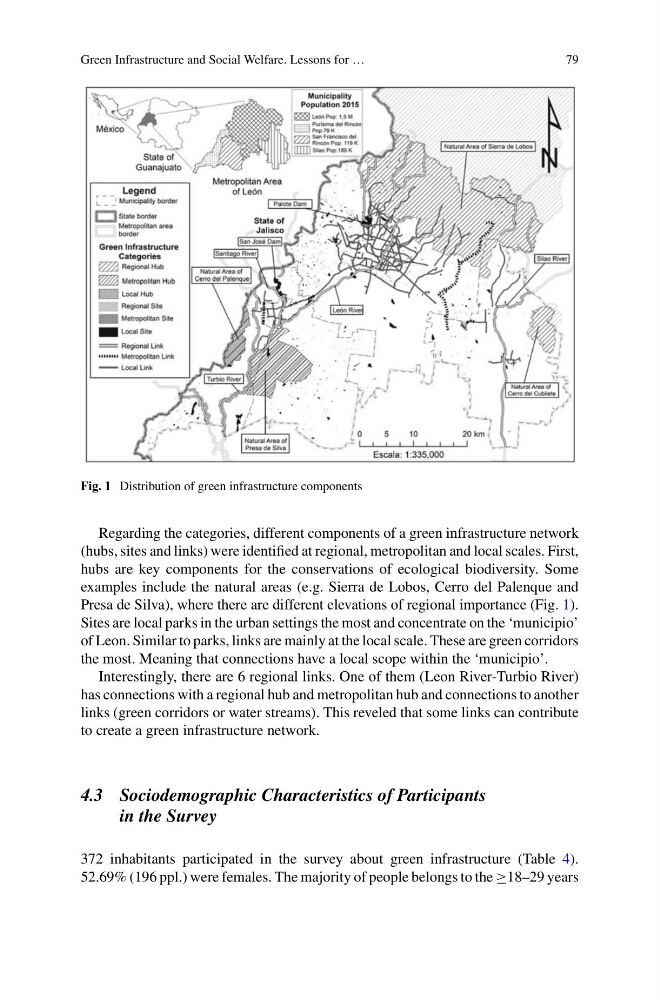
Fig. 1 Distribution of green infrastructure components
Regarding the categories, different components of a green infrastructure network
(hubs, sites and links) were identified at regional, metropolitan and local scales. First,
hubs are key components for the conservations of ecological biodiversity. Some
examples include the natural areas (e.g. Sierra de Lobos, Cerro del Palenque and
Presa de Silva), where there are different elevations of regional importance (Fig. 1).
Sites are local parks in the urban settings the most and concentrate on the ‘municipio’
of Leon. Similar to parks, links are mainly at the local scale. These are green corridors
the most. Meaning that connections have a local scope within the ‘municipio’.
Interestingly, there are 6 regional links. One of them (Leon River-Turbio River)
has connections with a regional hub and metropolitan hub and connections to another
links (green corridors or water streams). This reveled that some links can contribute
to create a green infrastructure network.
4.3 Sociodemographic Characteristics of Participants
in the Survey
372 inhabitants participated in the survey about green infrastructure (Table 4).
52.69% (196 ppl.) were females. The majority of people belongs to the ≥18–29 years
79
Fig. 1 Distribution of green infrastructure components
Regarding the categories, different components of a green infrastructure network
(hubs, sites and links) were identified at regional, metropolitan and local scales. First,
hubs are key components for the conservations of ecological biodiversity. Some
examples include the natural areas (e.g. Sierra de Lobos, Cerro del Palenque and
Presa de Silva), where there are different elevations of regional importance (Fig. 1).
Sites are local parks in the urban settings the most and concentrate on the ‘municipio’
of Leon. Similar to parks, links are mainly at the local scale. These are green corridors
the most. Meaning that connections have a local scope within the ‘municipio’.
Interestingly, there are 6 regional links. One of them (Leon River-Turbio River)
has connections with a regional hub and metropolitan hub and connections to another
links (green corridors or water streams). This reveled that some links can contribute
to create a green infrastructure network.
4.3 Sociodemographic Characteristics of Participants
in the Survey
372 inhabitants participated in the survey about green infrastructure (Table 4).
52.69% (196 ppl.) were females. The majority of people belongs to the ≥18–29 years