

The Role of the Ecological Fiscal Transfers for Water …
63
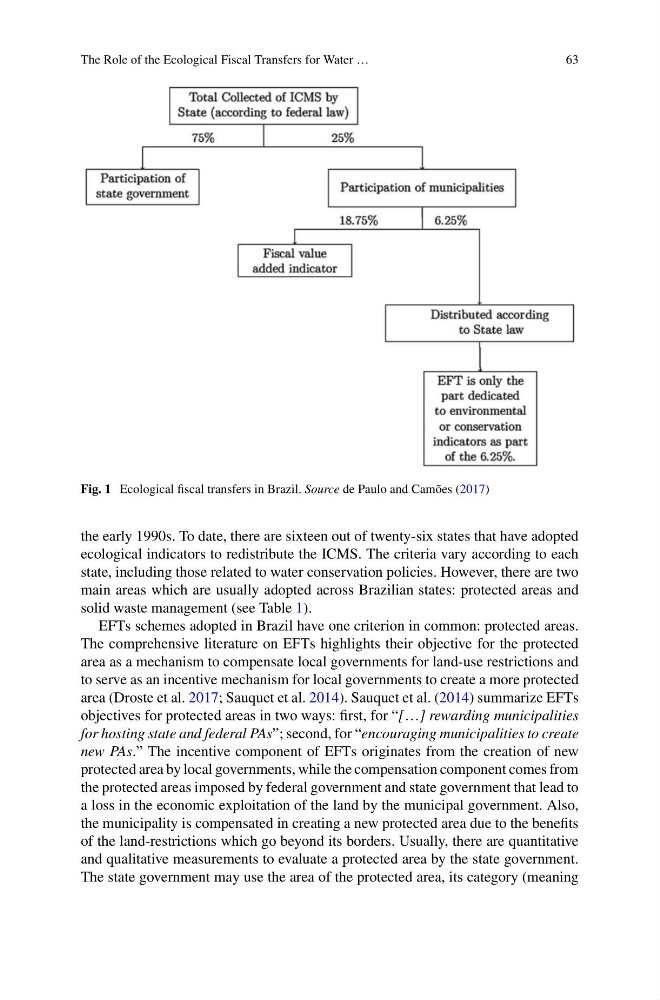
Fig. 1 Ecological fiscal transfers in Brazil. Source de Paulo and Camões (2017)
the early 1990s. To date, there are sixteen out of twenty-six states that have adopted
ecological indicators to redistribute the ICMS. The criteria vary according to each
state, including those related to water conservation policies. However, there are two
main areas which are usually adopted across Brazilian states: protected areas and
solid waste management (see Table 1).
EFTs schemes adopted in Brazil have one criterion in common: protected areas.
The comprehensive literature on EFTs highlights their objective for the protected
area as a mechanism to compensate local governments for land-use restrictions and
to serve as an incentive mechanism for local governments to create a more protected
area (Droste et al. 2017; Sauquet et al. 2014). Sauquet et al. (2014) summarize EFTs
objectives for protected areas in two ways: first, for “[…] rewarding municipalities
for hosting state and federal PAs”; second, for “encouraging municipalities to create
new PAs.” The incentive component of EFTs originates from the creation of new
protected area by local governments, while the compensation component comes from
the protected areas imposed by federal government and state government that lead to
a loss in the economic exploitation of the land by the municipal government. Also,
the municipality is compensated in creating a new protected area due to the benefits
of the land-restrictions which go beyond its borders. Usually, there are quantitative
and qualitative measurements to evaluate a protected area by the state government.
The state government may use the area of the protected area, its category (meaning
63
Fig. 1 Ecological fiscal transfers in Brazil. Source de Paulo and Camões (2017)
the early 1990s. To date, there are sixteen out of twenty-six states that have adopted
ecological indicators to redistribute the ICMS. The criteria vary according to each
state, including those related to water conservation policies. However, there are two
main areas which are usually adopted across Brazilian states: protected areas and
solid waste management (see Table 1).
EFTs schemes adopted in Brazil have one criterion in common: protected areas.
The comprehensive literature on EFTs highlights their objective for the protected
area as a mechanism to compensate local governments for land-use restrictions and
to serve as an incentive mechanism for local governments to create a more protected
area (Droste et al. 2017; Sauquet et al. 2014). Sauquet et al. (2014) summarize EFTs
objectives for protected areas in two ways: first, for “[…] rewarding municipalities
for hosting state and federal PAs”; second, for “encouraging municipalities to create
new PAs.” The incentive component of EFTs originates from the creation of new
protected area by local governments, while the compensation component comes from
the protected areas imposed by federal government and state government that lead to
a loss in the economic exploitation of the land by the municipal government. Also,
the municipality is compensated in creating a new protected area due to the benefits
of the land-restrictions which go beyond its borders. Usually, there are quantitative
and qualitative measurements to evaluate a protected area by the state government.
The state government may use the area of the protected area, its category (meaning