

The Role of Institutions in Promoting Resilience …
661
Expected Role of Institutions
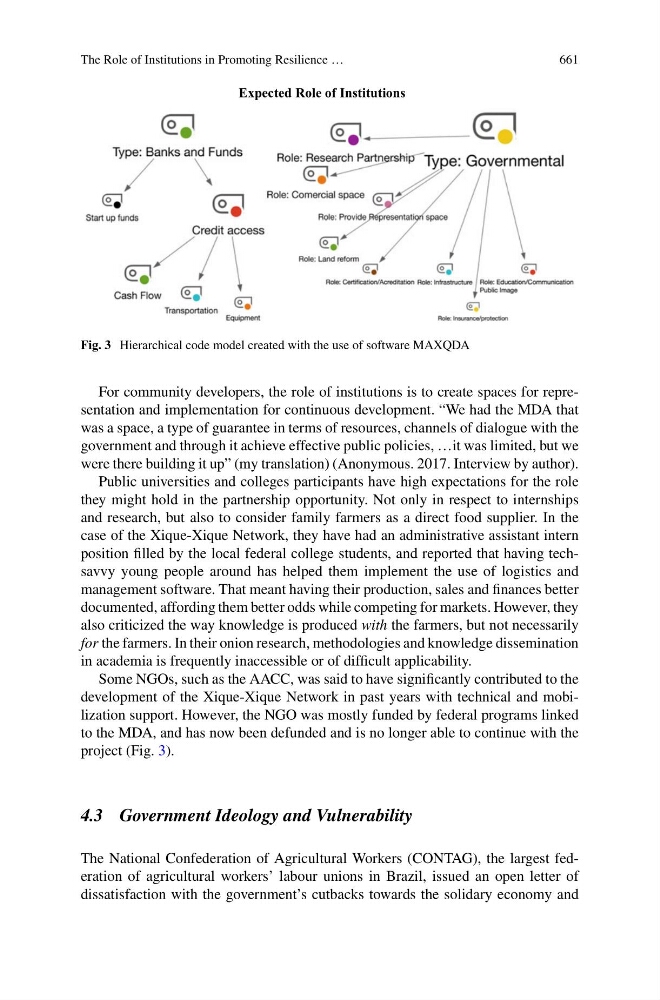
Fig. 3 Hierarchical code model created with the use of software MAXQDA
For community developers, the role of institutions is to create spaces for representation and implementation for continuous development. “We had the MDA that
was a space, a type of guarantee in terms of resources, channels of dialogue with the
government and through it achieve effective public policies, …it was limited, but we
were there building it up” (my translation) (Anonymous. 2017. Interview by author).
Public universities and colleges participants have high expectations for the role
they might hold in the partnership opportunity. Not only in respect to internships
and research, but also to consider family farmers as a direct food supplier. In the
case of the Xique-Xique Network, they have had an administrative assistant intern
position filled by the local federal college students, and reported that having techsavvy young people around has helped them implement the use of logistics and
management software. That meant having their production, sales and finances better
documented, affording them better odds while competing for markets. However, they
also criticized the way knowledge is produced with the farmers, but not necessarily
for the farmers. In their onion research, methodologies and knowledge dissemination
in academia is frequently inaccessible or of difficult applicability.
Some NGOs, such as the AACC, was said to have significantly contributed to the
development of the Xique-Xique Network in past years with technical and mobilization support. However, the NGO was mostly funded by federal programs linked
to the MDA, and has now been defunded and is no longer able to continue with the
project (Fig. 3).
4.3 Government Ideology and Vulnerability
The National Confederation of Agricultural Workers (CONTAG), the largest federation of agricultural workers’ labour unions in Brazil, issued an open letter of
dissatisfaction with the government’s cutbacks towards the solidary economy and
661
Expected Role of Institutions
Fig. 3 Hierarchical code model created with the use of software MAXQDA
For community developers, the role of institutions is to create spaces for representation and implementation for continuous development. “We had the MDA that
was a space, a type of guarantee in terms of resources, channels of dialogue with the
government and through it achieve effective public policies, …it was limited, but we
were there building it up” (my translation) (Anonymous. 2017. Interview by author).
Public universities and colleges participants have high expectations for the role
they might hold in the partnership opportunity. Not only in respect to internships
and research, but also to consider family farmers as a direct food supplier. In the
case of the Xique-Xique Network, they have had an administrative assistant intern
position filled by the local federal college students, and reported that having techsavvy young people around has helped them implement the use of logistics and
management software. That meant having their production, sales and finances better
documented, affording them better odds while competing for markets. However, they
also criticized the way knowledge is produced with the farmers, but not necessarily
for the farmers. In their onion research, methodologies and knowledge dissemination
in academia is frequently inaccessible or of difficult applicability.
Some NGOs, such as the AACC, was said to have significantly contributed to the
development of the Xique-Xique Network in past years with technical and mobilization support. However, the NGO was mostly funded by federal programs linked
to the MDA, and has now been defunded and is no longer able to continue with the
project (Fig. 3).
4.3 Government Ideology and Vulnerability
The National Confederation of Agricultural Workers (CONTAG), the largest federation of agricultural workers’ labour unions in Brazil, issued an open letter of
dissatisfaction with the government’s cutbacks towards the solidary economy and