

Teacher’s Approach on Climate Change …
633
Table 5 Characterization of the group of teachers who are part of the research
Teacher
Subject(s)
Gender
Age
Education level
Religion
A
History and Geography
Female
38
Postgraduate
Catholic
B
Physics Education
Female
43
Postgraduate
Catholic
C
Arts
Female
51
Graduate
Catholic
D
Mathematics and Physics
Female
26
Postgraduate
Spiritist
4.3.1 Characteristics of the Research Group
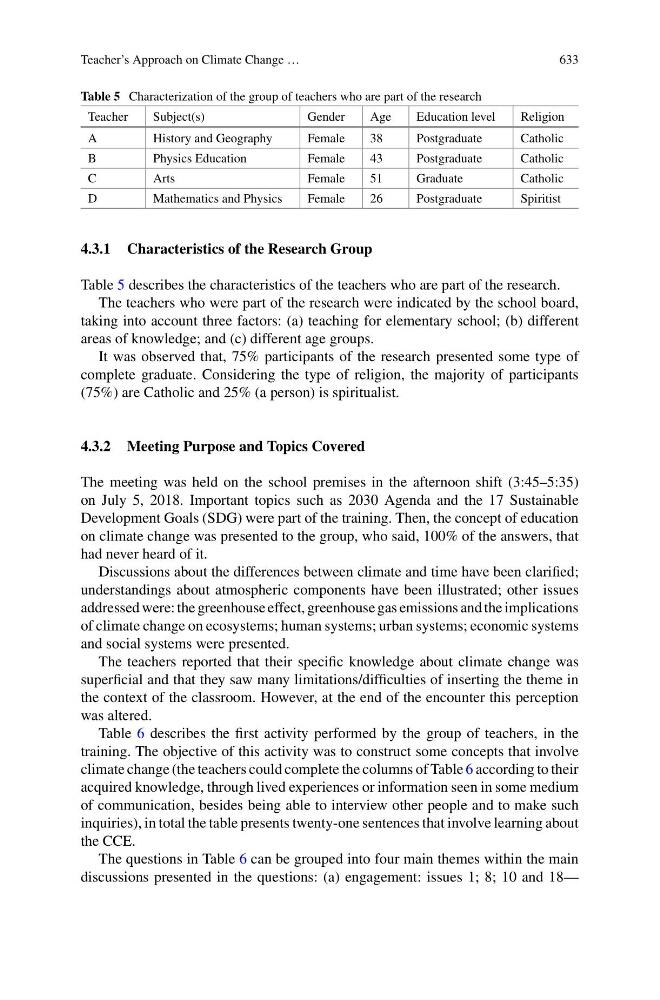
Table 5 describes the characteristics of the teachers who are part of the research.
The teachers who were part of the research were indicated by the school board,
taking into account three factors: (a) teaching for elementary school; (b) different
areas of knowledge; and (c) different age groups.
It was observed that, 75% participants of the research presented some type of
complete graduate. Considering the type of religion, the majority of participants
(75%) are Catholic and 25% (a person) is spiritualist.
4.3.2 Meeting Purpose and Topics Covered
The meeting was held on the school premises in the afternoon shift (3:45–5:35)
on July 5, 2018. Important topics such as 2030 Agenda and the 17 Sustainable
Development Goals (SDG) were part of the training. Then, the concept of education
on climate change was presented to the group, who said, 100% of the answers, that
had never heard of it.
Discussions about the differences between climate and time have been clarified;
understandings about atmospheric components have been illustrated; other issues
addressed were: the greenhouse effect, greenhouse gas emissions and the implications
of climate change on ecosystems; human systems; urban systems; economic systems
and social systems were presented.
The teachers reported that their specific knowledge about climate change was
superficial and that they saw many limitations/difficulties of inserting the theme in
the context of the classroom. However, at the end of the encounter this perception
was altered.
Table 6 describes the first activity performed by the group of teachers, in the
training. The objective of this activity was to construct some concepts that involve
climate change (the teachers could complete the columns of Table 6 according to their
acquired knowledge, through lived experiences or information seen in some medium
of communication, besides being able to interview other people and to make such
inquiries), in total the table presents twenty-one sentences that involve learning about
the CCE.
The questions in Table 6 can be grouped into four main themes within the main
discussions presented in the questions: (a) engagement: issues 1; 8; 10 and 18—
633
Table 5 Characterization of the group of teachers who are part of the research
Teacher
Subject(s)
Gender
Age
Education level
Religion
A
History and Geography
Female
38
Postgraduate
Catholic
B
Physics Education
Female
43
Postgraduate
Catholic
C
Arts
Female
51
Graduate
Catholic
D
Mathematics and Physics
Female
26
Postgraduate
Spiritist
4.3.1 Characteristics of the Research Group
Table 5 describes the characteristics of the teachers who are part of the research.
The teachers who were part of the research were indicated by the school board,
taking into account three factors: (a) teaching for elementary school; (b) different
areas of knowledge; and (c) different age groups.
It was observed that, 75% participants of the research presented some type of
complete graduate. Considering the type of religion, the majority of participants
(75%) are Catholic and 25% (a person) is spiritualist.
4.3.2 Meeting Purpose and Topics Covered
The meeting was held on the school premises in the afternoon shift (3:45–5:35)
on July 5, 2018. Important topics such as 2030 Agenda and the 17 Sustainable
Development Goals (SDG) were part of the training. Then, the concept of education
on climate change was presented to the group, who said, 100% of the answers, that
had never heard of it.
Discussions about the differences between climate and time have been clarified;
understandings about atmospheric components have been illustrated; other issues
addressed were: the greenhouse effect, greenhouse gas emissions and the implications
of climate change on ecosystems; human systems; urban systems; economic systems
and social systems were presented.
The teachers reported that their specific knowledge about climate change was
superficial and that they saw many limitations/difficulties of inserting the theme in
the context of the classroom. However, at the end of the encounter this perception
was altered.
Table 6 describes the first activity performed by the group of teachers, in the
training. The objective of this activity was to construct some concepts that involve
climate change (the teachers could complete the columns of Table 6 according to their
acquired knowledge, through lived experiences or information seen in some medium
of communication, besides being able to interview other people and to make such
inquiries), in total the table presents twenty-one sentences that involve learning about
the CCE.
The questions in Table 6 can be grouped into four main themes within the main
discussions presented in the questions: (a) engagement: issues 1; 8; 10 and 18—