

392
V. Meyer Jr. et al.
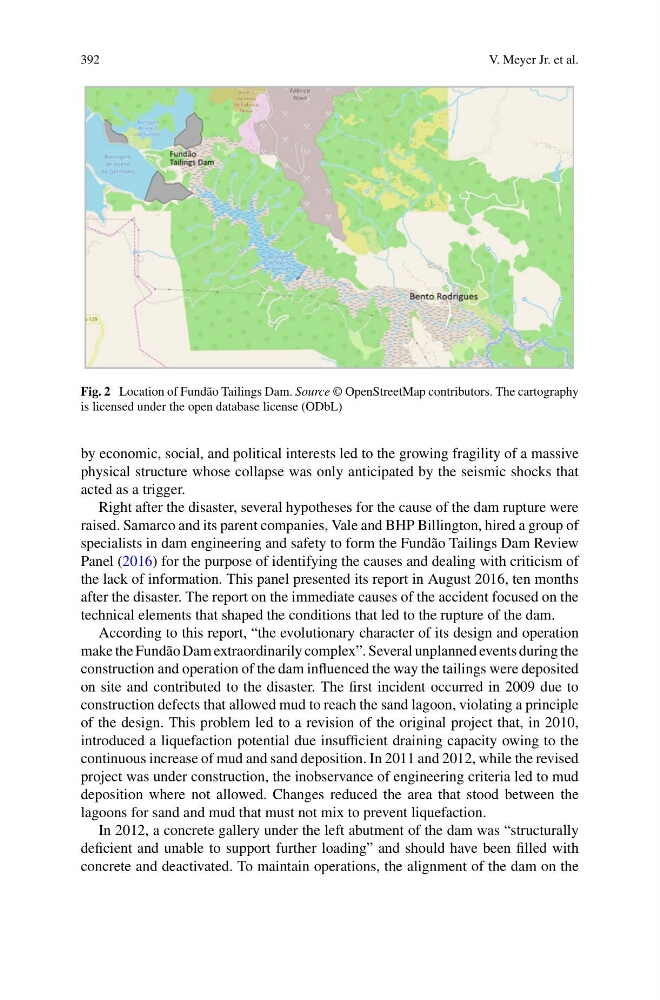
Fig. 2 Location of Fundão Tailings Dam. Source © OpenStreetMap contributors. The cartography
is licensed under the open database license (ODbL)
by economic, social, and political interests led to the growing fragility of a massive
physical structure whose collapse was only anticipated by the seismic shocks that
acted as a trigger.
Right after the disaster, several hypotheses for the cause of the dam rupture were
raised. Samarco and its parent companies, Vale and BHP Billington, hired a group of
specialists in dam engineering and safety to form the Fundão Tailings Dam Review
Panel (2016) for the purpose of identifying the causes and dealing with criticism of
the lack of information. This panel presented its report in August 2016, ten months
after the disaster. The report on the immediate causes of the accident focused on the
technical elements that shaped the conditions that led to the rupture of the dam.
According to this report, “the evolutionary character of its design and operation
make the Fundão Dam extraordinarily complex”. Several unplanned events during the
construction and operation of the dam influenced the way the tailings were deposited
on site and contributed to the disaster. The first incident occurred in 2009 due to
construction defects that allowed mud to reach the sand lagoon, violating a principle
of the design. This problem led to a revision of the original project that, in 2010,
introduced a liquefaction potential due insufficient draining capacity owing to the
continuous increase of mud and sand deposition. In 2011 and 2012, while the revised
project was under construction, the inobservance of engineering criteria led to mud
deposition where not allowed. Changes reduced the area that stood between the
lagoons for sand and mud that must not mix to prevent liquefaction.
In 2012, a concrete gallery under the left abutment of the dam was “structurally
deficient and unable to support further loading” and should have been filled with
concrete and deactivated. To maintain operations, the alignment of the dam on the
V. Meyer Jr. et al.
Fig. 2 Location of Fundão Tailings Dam. Source © OpenStreetMap contributors. The cartography
is licensed under the open database license (ODbL)
by economic, social, and political interests led to the growing fragility of a massive
physical structure whose collapse was only anticipated by the seismic shocks that
acted as a trigger.
Right after the disaster, several hypotheses for the cause of the dam rupture were
raised. Samarco and its parent companies, Vale and BHP Billington, hired a group of
specialists in dam engineering and safety to form the Fundão Tailings Dam Review
Panel (2016) for the purpose of identifying the causes and dealing with criticism of
the lack of information. This panel presented its report in August 2016, ten months
after the disaster. The report on the immediate causes of the accident focused on the
technical elements that shaped the conditions that led to the rupture of the dam.
According to this report, “the evolutionary character of its design and operation
make the Fundão Dam extraordinarily complex”. Several unplanned events during the
construction and operation of the dam influenced the way the tailings were deposited
on site and contributed to the disaster. The first incident occurred in 2009 due to
construction defects that allowed mud to reach the sand lagoon, violating a principle
of the design. This problem led to a revision of the original project that, in 2010,
introduced a liquefaction potential due insufficient draining capacity owing to the
continuous increase of mud and sand deposition. In 2011 and 2012, while the revised
project was under construction, the inobservance of engineering criteria led to mud
deposition where not allowed. Changes reduced the area that stood between the
lagoons for sand and mud that must not mix to prevent liquefaction.
In 2012, a concrete gallery under the left abutment of the dam was “structurally
deficient and unable to support further loading” and should have been filled with
concrete and deactivated. To maintain operations, the alignment of the dam on the