

The Fundão Tailings Dam Catastrophe …
391
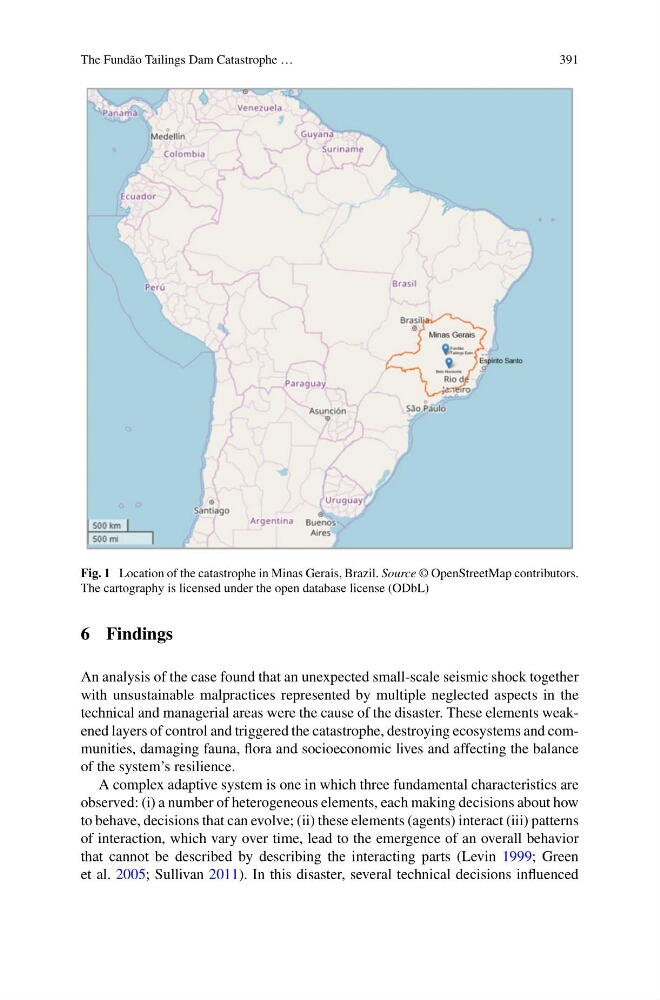
Fig. 1 Location of the catastrophe in Minas Gerais, Brazil. Source © OpenStreetMap contributors.
The cartography is licensed under the open database license (ODbL)
6 Findings
An analysis of the case found that an unexpected small-scale seismic shock together
with unsustainable malpractices represented by multiple neglected aspects in the
technical and managerial areas were the cause of the disaster. These elements weakened layers of control and triggered the catastrophe, destroying ecosystems and communities, damaging fauna, flora and socioeconomic lives and affecting the balance
of the system’s resilience.
A complex adaptive system is one in which three fundamental characteristics are
observed: (i) a number of heterogeneous elements, each making decisions about how
to behave, decisions that can evolve; (ii) these elements (agents) interact (iii) patterns
of interaction, which vary over time, lead to the emergence of an overall behavior
that cannot be described by describing the interacting parts (Levin 1999; Green
et al. 2005; Sullivan 2011). In this disaster, several technical decisions influenced
391
Fig. 1 Location of the catastrophe in Minas Gerais, Brazil. Source © OpenStreetMap contributors.
The cartography is licensed under the open database license (ODbL)
6 Findings
An analysis of the case found that an unexpected small-scale seismic shock together
with unsustainable malpractices represented by multiple neglected aspects in the
technical and managerial areas were the cause of the disaster. These elements weakened layers of control and triggered the catastrophe, destroying ecosystems and communities, damaging fauna, flora and socioeconomic lives and affecting the balance
of the system’s resilience.
A complex adaptive system is one in which three fundamental characteristics are
observed: (i) a number of heterogeneous elements, each making decisions about how
to behave, decisions that can evolve; (ii) these elements (agents) interact (iii) patterns
of interaction, which vary over time, lead to the emergence of an overall behavior
that cannot be described by describing the interacting parts (Levin 1999; Green
et al. 2005; Sullivan 2011). In this disaster, several technical decisions influenced