

89
water to onion grown under sprinkler system in sandy soil reduced yield by 8%.
Zayton (2007) studied the effect of skipping the last irrigation on the applied irrigation water and the yield of onion. He found that 20% of the applied irrigation water
was saved and 15% the yield was lost. Ouda et al. (2010) simulated the effect of
applying 80% of full irrigation to onion grown in clay soil under surface system,
where onion yield losses were 5%.
5.2.3 Irrigation Water Savings Techniques for Onion
5.2.3.1 Traditional Cultivation of Onion
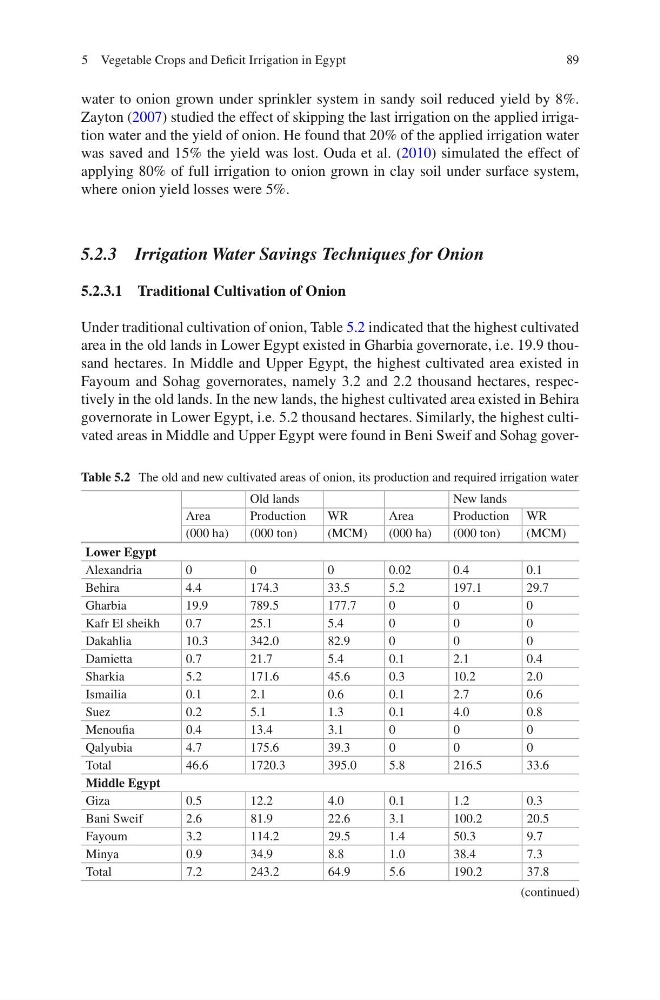
Under traditional cultivation of onion, Table 5.2 indicated that the highest cultivated
area in the old lands in Lower Egypt existed in Gharbia governorate, i.e. 19.9 thousand hectares. In Middle and Upper Egypt, the highest cultivated area existed in
Fayoum and Sohag governorates, namely 3.2 and 2.2 thousand hectares, respectively in the old lands. In the new lands, the highest cultivated area existed in Behira
governorate in Lower Egypt, i.e. 5.2 thousand hectares. Similarly, the highest cultivated areas in Middle and Upper Egypt were found in Beni Sweif and Sohag goverTable 5.2 The old and new cultivated areas of onion, its production and required irrigation water
Old lands
New lands
Area
Production
WR
Area
Production WR
(000 ha)
(000 ton)
(MCM)
(000 ha)
(000 ton)
(MCM)
Lower Egypt
Alexandria
0
0
0
0.02
0.4
0.1
Behira
4.4
174.3
33.5
5.2
197.1
29.7
Gharbia
19.9
789.5
177.7
0
0
0
Kafr El sheikh
0.7
25.1
5.4
0
0
0
Dakahlia
10.3
342.0
82.9
0
0
0
Damietta
0.7
21.7
5.4
0.1
2.1
0.4
Sharkia
5.2
171.6
45.6
0.3
10.2
2.0
Ismailia
0.1
2.1
0.6
0.1
2.7
0.6
Suez
0.2
5.1
1.3
0.1
4.0
0.8
Menoufia
0.4
13.4
3.1
0
0
0
Qalyubia
4.7
175.6
39.3
0
0
0
Total
46.6
1720.3
395.0
5.8
216.5
33.6
Middle Egypt
Giza
0.5
12.2
4.0
0.1
1.2
0.3
Bani Sweif
2.6
81.9
22.6
3.1
100.2
20.5
Fayoum
3.2
114.2
29.5
1.4
50.3
9.7
Minya
0.9
34.9
8.8
1.0
38.4
7.3
Total
7.2
243.2
64.9
5.6
190.2
37.8
(continued)
5 Vegetable Crops and Deficit Irrigation in Egypt
water to onion grown under sprinkler system in sandy soil reduced yield by 8%.
Zayton (2007) studied the effect of skipping the last irrigation on the applied irrigation water and the yield of onion. He found that 20% of the applied irrigation water
was saved and 15% the yield was lost. Ouda et al. (2010) simulated the effect of
applying 80% of full irrigation to onion grown in clay soil under surface system,
where onion yield losses were 5%.
5.2.3 Irrigation Water Savings Techniques for Onion
5.2.3.1 Traditional Cultivation of Onion
Under traditional cultivation of onion, Table 5.2 indicated that the highest cultivated
area in the old lands in Lower Egypt existed in Gharbia governorate, i.e. 19.9 thousand hectares. In Middle and Upper Egypt, the highest cultivated area existed in
Fayoum and Sohag governorates, namely 3.2 and 2.2 thousand hectares, respectively in the old lands. In the new lands, the highest cultivated area existed in Behira
governorate in Lower Egypt, i.e. 5.2 thousand hectares. Similarly, the highest cultivated areas in Middle and Upper Egypt were found in Beni Sweif and Sohag goverTable 5.2 The old and new cultivated areas of onion, its production and required irrigation water
Old lands
New lands
Area
Production
WR
Area
Production WR
(000 ha)
(000 ton)
(MCM)
(000 ha)
(000 ton)
(MCM)
Lower Egypt
Alexandria
0
0
0
0.02
0.4
0.1
Behira
4.4
174.3
33.5
5.2
197.1
29.7
Gharbia
19.9
789.5
177.7
0
0
0
Kafr El sheikh
0.7
25.1
5.4
0
0
0
Dakahlia
10.3
342.0
82.9
0
0
0
Damietta
0.7
21.7
5.4
0.1
2.1
0.4
Sharkia
5.2
171.6
45.6
0.3
10.2
2.0
Ismailia
0.1
2.1
0.6
0.1
2.7
0.6
Suez
0.2
5.1
1.3
0.1
4.0
0.8
Menoufia
0.4
13.4
3.1
0
0
0
Qalyubia
4.7
175.6
39.3
0
0
0
Total
46.6
1720.3
395.0
5.8
216.5
33.6
Middle Egypt
Giza
0.5
12.2
4.0
0.1
1.2
0.3
Bani Sweif
2.6
81.9
22.6
3.1
100.2
20.5
Fayoum
3.2
114.2
29.5
1.4
50.3
9.7
Minya
0.9
34.9
8.8
1.0
38.4
7.3
Total
7.2
243.2
64.9
5.6
190.2
37.8
(continued)
5 Vegetable Crops and Deficit Irrigation in Egypt