

76
4.3.3.3 Application of Deficit Irrigation
Previous research done on the effect of deficit irrigation on sugar beet yield indicated that saving 27% of the applied irrigation water under surface irrigation resulted
in 14% losses in its yield (Eid and Ibrahim 2010). Whereas, in sandy soil, Mehanna
et al. (2017) and El-Darder et al. (2017) revealed that 23–33% saving in the applied
water could reduce sugar beet yield 7–18%. Thus, we assumed that saving of 11%
of the applied water in the old lands will result in 5% yield losses and saving of 7%
of the applied water in the new lands will result in 6% yield losses.
Table 4.11 revealed that 36.7 thousand hectares can be added if we invest the
saved irrigation water amounts from deficit irrigation application in cultivating new
areas, which will increase the total cultivated area of sugar beet to 239.9 thousand
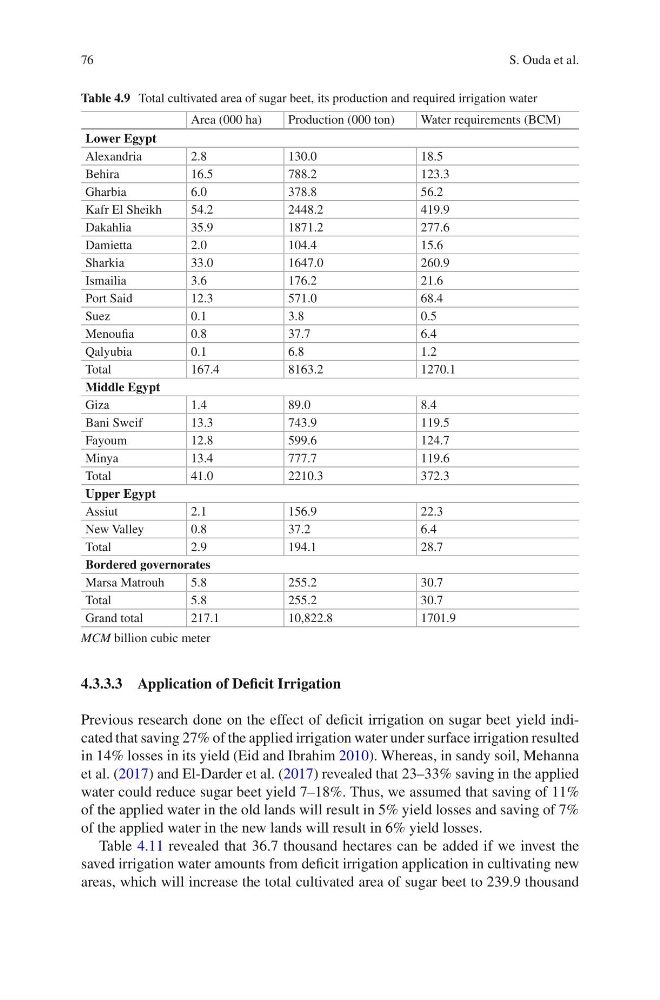
Table 4.9 Total cultivated area of sugar beet, its production and required irrigation water
Area (000 ha)
Production (000 ton)
Water requirements (BCM)
Lower Egypt
Alexandria
2.8
130.0
18.5
Behira
16.5
788.2
123.3
Gharbia
6.0
378.8
56.2
Kafr El Sheikh
54.2
2448.2
419.9
Dakahlia
35.9
1871.2
277.6
Damietta
2.0
104.4
15.6
Sharkia
33.0
1647.0
260.9
Ismailia
3.6
176.2
21.6
Port Said
12.3
571.0
68.4
Suez
0.1
3.8
0.5
Menoufia
0.8
37.7
6.4
Qalyubia
0.1
6.8
1.2
Total
167.4
8163.2
1270.1
Middle Egypt
Giza
1.4
89.0
8.4
Bani Sweif
13.3
743.9
119.5
Fayoum
12.8
599.6
124.7
Minya
13.4
777.7
119.6
Total
41.0
2210.3
372.3
Upper Egypt
Assiut
2.1
156.9
22.3
New Valley
0.8
37.2
6.4
Total
2.9
194.1
28.7
Bordered governorates
Marsa Matrouh
5.8
255.2
30.7
Total
5.8
255.2
30.7
Grand total
217.1
10,822.8
1701.9
MCM billion cubic meter
S. Ouda et al.
4.3.3.3 Application of Deficit Irrigation
Previous research done on the effect of deficit irrigation on sugar beet yield indicated that saving 27% of the applied irrigation water under surface irrigation resulted
in 14% losses in its yield (Eid and Ibrahim 2010). Whereas, in sandy soil, Mehanna
et al. (2017) and El-Darder et al. (2017) revealed that 23–33% saving in the applied
water could reduce sugar beet yield 7–18%. Thus, we assumed that saving of 11%
of the applied water in the old lands will result in 5% yield losses and saving of 7%
of the applied water in the new lands will result in 6% yield losses.
Table 4.11 revealed that 36.7 thousand hectares can be added if we invest the
saved irrigation water amounts from deficit irrigation application in cultivating new
areas, which will increase the total cultivated area of sugar beet to 239.9 thousand
Table 4.9 Total cultivated area of sugar beet, its production and required irrigation water
Area (000 ha)
Production (000 ton)
Water requirements (BCM)
Lower Egypt
Alexandria
2.8
130.0
18.5
Behira
16.5
788.2
123.3
Gharbia
6.0
378.8
56.2
Kafr El Sheikh
54.2
2448.2
419.9
Dakahlia
35.9
1871.2
277.6
Damietta
2.0
104.4
15.6
Sharkia
33.0
1647.0
260.9
Ismailia
3.6
176.2
21.6
Port Said
12.3
571.0
68.4
Suez
0.1
3.8
0.5
Menoufia
0.8
37.7
6.4
Qalyubia
0.1
6.8
1.2
Total
167.4
8163.2
1270.1
Middle Egypt
Giza
1.4
89.0
8.4
Bani Sweif
13.3
743.9
119.5
Fayoum
12.8
599.6
124.7
Minya
13.4
777.7
119.6
Total
41.0
2210.3
372.3
Upper Egypt
Assiut
2.1
156.9
22.3
New Valley
0.8
37.2
6.4
Total
2.9
194.1
28.7
Bordered governorates
Marsa Matrouh
5.8
255.2
30.7
Total
5.8
255.2
30.7
Grand total
217.1
10,822.8
1701.9
MCM billion cubic meter
S. Ouda et al.