

47
cultivated area of flax is low, as a result of high competition with either wheat or
Egyptian clover, where both crops are more important to the farmers.
Hassan and Shafique (2011) suggested solutions to reduce edible oil productionconsumption gap using three crops (cotton seeds, sunflower and soybean) in 2007
through increasing its cultivating area, without indicating how they were going to
increase its area. They indicated that the cultivated area of cotton could be increased
by 145%, the cultivated area of sunflower could be increased by 870% and the cultivated area of soybean could be increased by 495%. The rise in the production of
these three crops could increase the self-sufficiency of edible oil from 32% to 84%.
In 2007, the total population was 79.5 million inhabitants.
Zohry and Ouda (2018a) indicated that the total cultivated area of cotton, sunflower, soybean, maize and flax could be increase through implementing intercropping systems and cultivation of three-crop sequences. Regarding cotton, it can be
relied intercropped with wheat and onion (Lamlom et al. 2018) to increase its production. With respect to sunflower, it could be intercropped with summer tomato,
sugarcane and under fruit trees. It could be also relay intercropped with wheat and
could be cultivated as early summer crop after sugar beet and faba bean. With
respect to soybean, it can be intercropped with maize (Metwally et al. 2018a), it can
be intercropped with sorghum (Abou-Keriasha et al. 1993), it can be intercropped
with sugarcane (Eweida et al. 1996, Figure 3.12a) and it could be intercropped
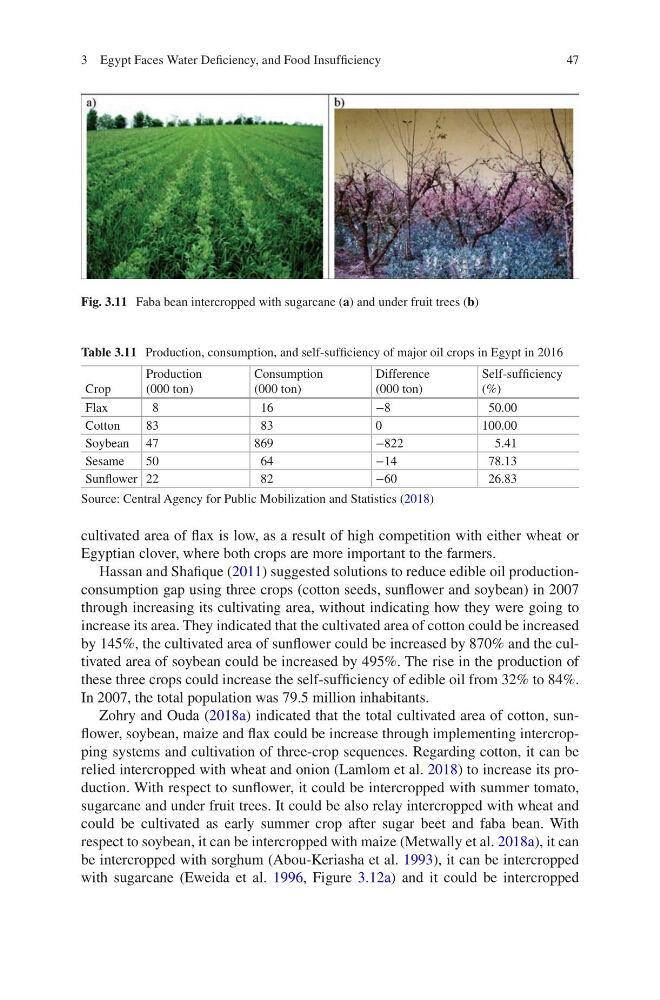
Fig. 3.11 Faba bean intercropped with sugarcane (a) and under fruit trees (b)
Table 3.11 Production, consumption, and self-sufficiency of major oil crops in Egypt in 2016
Crop
Production
(000 ton)
Consumption
(000 ton)
Difference
(000 ton)
Self-sufficiency
(%)
Flax
8
16
−8
50.00
Cotton
83
83
0
100.00
Soybean 47
869
−822
5.41
Sesame
50
64
−14
78.13
Sunflower 22
82
−60
26.83
Source: Central Agency for Public Mobilization and Statistics (2018)
3 Egypt Faces Water Deficiency, and Food Insufficiency
cultivated area of flax is low, as a result of high competition with either wheat or
Egyptian clover, where both crops are more important to the farmers.
Hassan and Shafique (2011) suggested solutions to reduce edible oil productionconsumption gap using three crops (cotton seeds, sunflower and soybean) in 2007
through increasing its cultivating area, without indicating how they were going to
increase its area. They indicated that the cultivated area of cotton could be increased
by 145%, the cultivated area of sunflower could be increased by 870% and the cultivated area of soybean could be increased by 495%. The rise in the production of
these three crops could increase the self-sufficiency of edible oil from 32% to 84%.
In 2007, the total population was 79.5 million inhabitants.
Zohry and Ouda (2018a) indicated that the total cultivated area of cotton, sunflower, soybean, maize and flax could be increase through implementing intercropping systems and cultivation of three-crop sequences. Regarding cotton, it can be
relied intercropped with wheat and onion (Lamlom et al. 2018) to increase its production. With respect to sunflower, it could be intercropped with summer tomato,
sugarcane and under fruit trees. It could be also relay intercropped with wheat and
could be cultivated as early summer crop after sugar beet and faba bean. With
respect to soybean, it can be intercropped with maize (Metwally et al. 2018a), it can
be intercropped with sorghum (Abou-Keriasha et al. 1993), it can be intercropped
with sugarcane (Eweida et al. 1996, Figure 3.12a) and it could be intercropped
Fig. 3.11 Faba bean intercropped with sugarcane (a) and under fruit trees (b)
Table 3.11 Production, consumption, and self-sufficiency of major oil crops in Egypt in 2016
Crop
Production
(000 ton)
Consumption
(000 ton)
Difference
(000 ton)
Self-sufficiency
(%)
Flax
8
16
−8
50.00
Cotton
83
83
0
100.00
Soybean 47
869
−822
5.41
Sesame
50
64
−14
78.13
Sunflower 22
82
−60
26.83
Source: Central Agency for Public Mobilization and Statistics (2018)
3 Egypt Faces Water Deficiency, and Food Insufficiency