

34.5 Molecular Biology Approaches
Real-time PCR (quantitative PCR, qPCR) method is routinely used for quantification
of microorganisms present in contaminated soil and water samples (Dolinová et al.
2016, 2017; Němeček et al. 2017). Different DNA primers (short oligonucleotides
used to amplify specific regions of DNA) are used to detect species-specific and
functional groups of microorganisms in order to evaluate the nZVI impact over
certain periods of time (Table 34.1).
In principle, qPCR is based on the conventional PCR technology but it differs in
how the amplification of a targeted DNA molecule during the PCR in real time is
monitored (not at its end, as in conventional PCR). The qPCR method combines
PCR amplification and detection into a single step. This approach eliminates the
need for detection of products using gel electrophoresis, and more importantly, it
enables to quantify the template gene. There are two commonly used methods for
how the PCR products can be detected. First, sequence-specific DNA probes that are
labeled with a fluorescent reporter can be used. This method allows detection of only
specific products after hybridization of the probe with its complementary sequence.
The second commonly used approach is based on nonspecific fluorescent dyes that
intercalate with any double-stranded DNA. Real-time PCR instruments measure the
accumulation of fluorescent signal during the exponential phase of the reaction
enabling the fast and precise quantification of the PCR products.
Positive and negative DNA controls should be added to every experiment to
ensure that a specific product was amplified. Positive control serves as the amplification control when all the tested DNA samples are negative. On the other hand,
including the negative control (which contains only reaction mixture without any
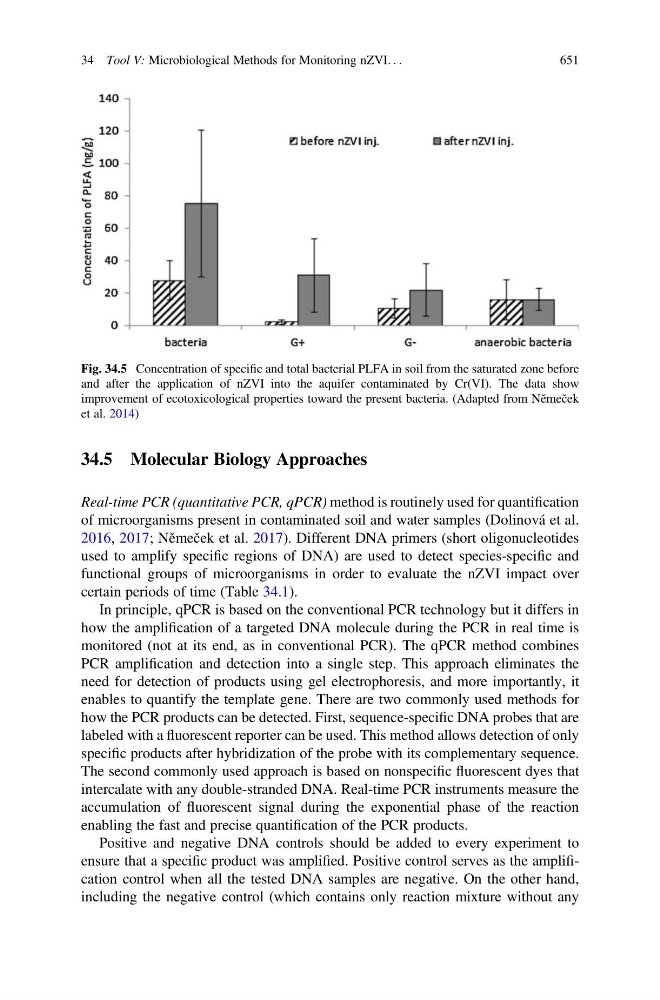
Fig. 34.5 Concentration of specific and total bacterial PLFA in soil from the saturated zone before
and after the application of nZVI into the aquifer contaminated by Cr(VI). The data show
improvement of ecotoxicological properties toward the present bacteria. (Adapted from Němeček
et al. 2014)
34 Tool V: Microbiological Methods for Monitoring nZVI. . .
651