

According to the consolidated literature, key microbial players in this process are
actinomycetes and fungi rather than bacteria (Anastasi et al. 2005; Tuomela et al.
2000; Wang et al. 2015); there are several reasons behind this. On the one hand, the
composition of the substrate at this point—when main components are high molecular weight compounds with polymeric and polydispersed structures—favors the
growth of filamentous fungi and actinomycetes. These microorganisms produce
extracellular enzymes able to hydrolyze wood biopolymers, while bacteria mostly
rely on the transport of their substrates intracellularly. On the other hand, the fact that
maturation is generally achieved statically promotes the colonization of the substrate
by hyphae (and pseudohyphae), which are otherwise disrupted by periodical turning
of the compost matrix. It is to be pointed out, however, that bacterial degradation of
structural plant macromolecules has been overlooked too often. A growing body of
evidence indicates that several bacterial taxa harbor genes encoding plant cell walldegrading enzymes, including ligninolytic enzymes (Brown and Chang 2014), and
that these prokaryotes are abundant in natural ecosystems where humification takes
place. Therefore, it is reasonable to think that bacteria participate in the overall
compost humification process.
23.2.3 Factors Affecting the Composting Process
The composition of the starting material is of crucial importance for the composting
process, as the organic components represent the natural growth substrate for
microorganisms. One of the crucial parameters concerning the input material is the
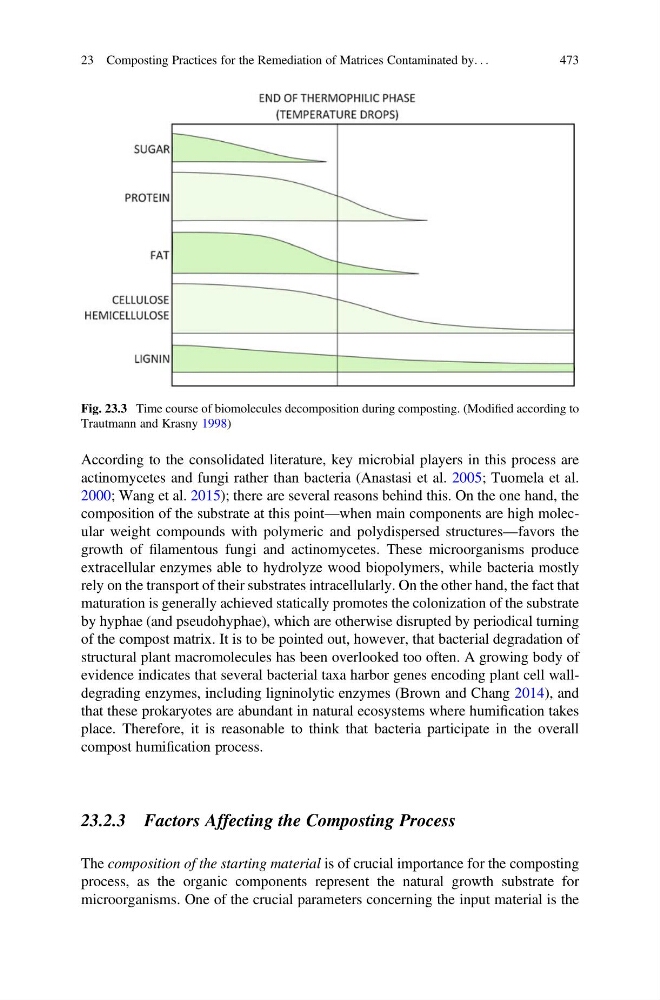
Fig. 23.3 Time course of biomolecules decomposition during composting. (Modified according to
Trautmann and Krasny 1998)
23 Composting Practices for the Remediation of Matrices Contaminated by. . .
473
actinomycetes and fungi rather than bacteria (Anastasi et al. 2005; Tuomela et al.
2000; Wang et al. 2015); there are several reasons behind this. On the one hand, the
composition of the substrate at this point—when main components are high molecular weight compounds with polymeric and polydispersed structures—favors the
growth of filamentous fungi and actinomycetes. These microorganisms produce
extracellular enzymes able to hydrolyze wood biopolymers, while bacteria mostly
rely on the transport of their substrates intracellularly. On the other hand, the fact that
maturation is generally achieved statically promotes the colonization of the substrate
by hyphae (and pseudohyphae), which are otherwise disrupted by periodical turning
of the compost matrix. It is to be pointed out, however, that bacterial degradation of
structural plant macromolecules has been overlooked too often. A growing body of
evidence indicates that several bacterial taxa harbor genes encoding plant cell walldegrading enzymes, including ligninolytic enzymes (Brown and Chang 2014), and
that these prokaryotes are abundant in natural ecosystems where humification takes
place. Therefore, it is reasonable to think that bacteria participate in the overall
compost humification process.
23.2.3 Factors Affecting the Composting Process
The composition of the starting material is of crucial importance for the composting
process, as the organic components represent the natural growth substrate for
microorganisms. One of the crucial parameters concerning the input material is the
Fig. 23.3 Time course of biomolecules decomposition during composting. (Modified according to
Trautmann and Krasny 1998)
23 Composting Practices for the Remediation of Matrices Contaminated by. . .
473