

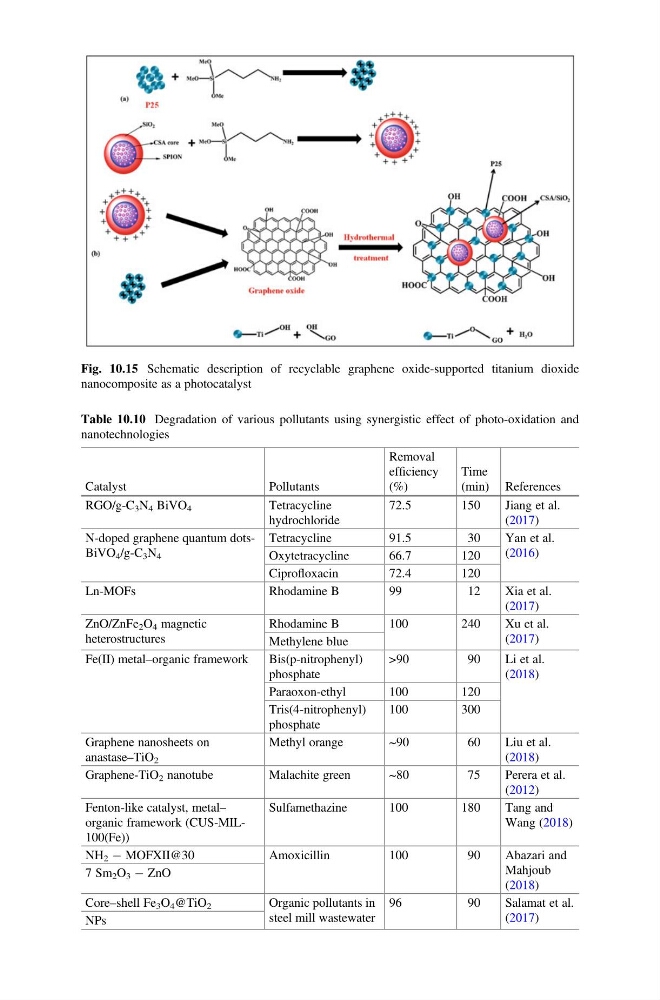
Fig. 10.15 Schematic description of recyclable graphene oxide-supported titanium dioxide
nanocomposite as a photocatalyst
Table 10.10 Degradation of various pollutants using synergistic effect of photo-oxidation and
nanotechnologies
Catalyst
Pollutants
Removal
efficiency
(%)
Time
(min) References
RGO/g-C 3 N 4 BiVO 4
Tetracycline
hydrochloride
72.5
150
Jiang et al.
(2017)
N-doped graphene quantum dotsBiVO 4 /g-C 3 N 4
Tetracycline
91.5
30
Yan et al.
(2016)
Oxytetracycline
66.7
120
Ciprofloxacin
72.4
120
Ln-MOFs
Rhodamine B
99
12
Xia et al.
(2017)
ZnO/ZnFe 2 O 4 magnetic
heterostructures
Rhodamine B
100
240
Xu et al.
(2017)
Methylene blue
Fe(II) metal–organic framework
Bis(p-nitrophenyl)
phosphate
>90
90
Li et al.
(2018)
Paraoxon-ethyl
100
120
Tris(4-nitrophenyl)
phosphate
100
300
Graphene nanosheets on
anastase–TiO 2
Methyl orange
~90
60
Liu et al.
(2018)
Graphene-TiO 2 nanotube
Malachite green
~80
75
Perera et al.
(2012)
Fenton-like catalyst, metal–
organic framework (CUS-MIL100(Fe))
Sulfamethazine
100
180
Tang and
Wang (2018)
NH 2 À MOFXII@30
Amoxicillin
100
90
Abazari and
Mahjoub
(2018)
7 Sm 2 O 3 À ZnO
Core–shell Fe 3 O 4 @TiO 2
Organic pollutants in
steel mill wastewater
96
90
Salamat et al.
(2017)
NPs
nanocomposite as a photocatalyst
Table 10.10 Degradation of various pollutants using synergistic effect of photo-oxidation and
nanotechnologies
Catalyst
Pollutants
Removal
efficiency
(%)
Time
(min) References
RGO/g-C 3 N 4 BiVO 4
Tetracycline
hydrochloride
72.5
150
Jiang et al.
(2017)
N-doped graphene quantum dotsBiVO 4 /g-C 3 N 4
Tetracycline
91.5
30
Yan et al.
(2016)
Oxytetracycline
66.7
120
Ciprofloxacin
72.4
120
Ln-MOFs
Rhodamine B
99
12
Xia et al.
(2017)
ZnO/ZnFe 2 O 4 magnetic
heterostructures
Rhodamine B
100
240
Xu et al.
(2017)
Methylene blue
Fe(II) metal–organic framework
Bis(p-nitrophenyl)
phosphate
>90
90
Li et al.
(2018)
Paraoxon-ethyl
100
120
Tris(4-nitrophenyl)
phosphate
100
300
Graphene nanosheets on
anastase–TiO 2
Methyl orange
~90
60
Liu et al.
(2018)
Graphene-TiO 2 nanotube
Malachite green
~80
75
Perera et al.
(2012)
Fenton-like catalyst, metal–
organic framework (CUS-MIL100(Fe))
Sulfamethazine
100
180
Tang and
Wang (2018)
NH 2 À MOFXII@30
Amoxicillin
100
90
Abazari and
Mahjoub
(2018)
7 Sm 2 O 3 À ZnO
Core–shell Fe 3 O 4 @TiO 2
Organic pollutants in
steel mill wastewater
96
90
Salamat et al.
(2017)
NPs