

However, this process will strongly depend on the solution pH as well as on many
other parameters; therefore it should be thoroughly investigated in the future.
Overall, investigating the influence of the pH on the persulfate decomposition can
be considered as another serious challenge. The oxidation of substances by
persulfate depends strongly on the concentration of hydronium and hydroxyl ions.
Especially PMS is affected by the pH since it reacts differently when the molecule is
fully protonated or deprotonated (i.e., H 2 SO 5 , HSO 5
À , or SO 5
2À
). Further, a very
interesting topic that has not been carefully investigated yet is the rate of the
formation of radicals in various pH values. Generally, PS reactions at acidic pH
most frequently improve the degradation kinetics, however, the improved removal
rates were also observed at neutral pH (between 6 and 8) and slightly basic pH
(between 9 and 10, which can be often associated with interchanging of the radical
species—sulfate to hydroxyl) depending on the contaminant and activation type
(Matzek and Carter 2016).
Another challenging concept involves the PDS activation with hydrogen peroxide, which was studied by several authors (Zhao et al. 2013). However, its exact
mechanism remains unknown, but there are several researchers that believe the
activation process depends only on the heat generated from the hydrogen peroxide
exothermic reactions.
It should be noted that because of several undesirable characteristics, like postcontamination with sulfate ions and reaction with chlorine/bromine species with
further chlorination/bromination of the water matrix (both of those processes can
lead to the increase in the toxicity), sulfate radical-based systems are not considered
the best candidates for drinking water treatment. However, it is possible that a new
technology in combination with the membrane techniques will be developed to serve
the purpose in the future.
Acknowledgement The authors appreciate kind support of laboratory of Instrumental Analytical
Chemistry at University Duisburg-Essen, namely of Prof. Torsten Schmidt, in elucidation of carbon
tetrachloride degradability.
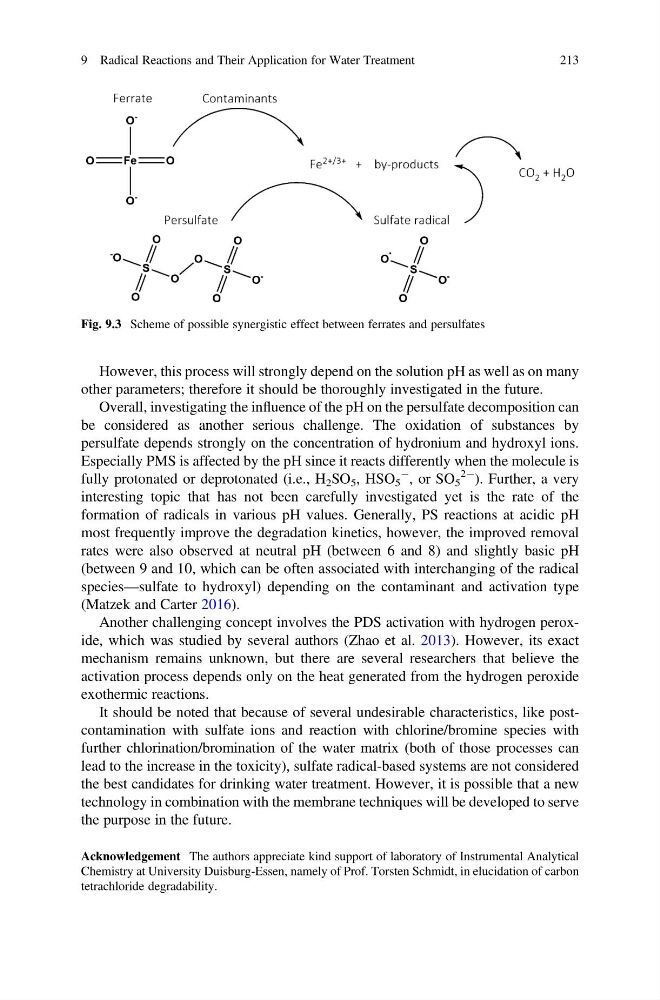
Fig. 9.3 Scheme of possible synergistic effect between ferrates and persulfates
9 Radical Reactions and Their Application for Water Treatment
213
other parameters; therefore it should be thoroughly investigated in the future.
Overall, investigating the influence of the pH on the persulfate decomposition can
be considered as another serious challenge. The oxidation of substances by
persulfate depends strongly on the concentration of hydronium and hydroxyl ions.
Especially PMS is affected by the pH since it reacts differently when the molecule is
fully protonated or deprotonated (i.e., H 2 SO 5 , HSO 5
À , or SO 5
2À
). Further, a very
interesting topic that has not been carefully investigated yet is the rate of the
formation of radicals in various pH values. Generally, PS reactions at acidic pH
most frequently improve the degradation kinetics, however, the improved removal
rates were also observed at neutral pH (between 6 and 8) and slightly basic pH
(between 9 and 10, which can be often associated with interchanging of the radical
species—sulfate to hydroxyl) depending on the contaminant and activation type
(Matzek and Carter 2016).
Another challenging concept involves the PDS activation with hydrogen peroxide, which was studied by several authors (Zhao et al. 2013). However, its exact
mechanism remains unknown, but there are several researchers that believe the
activation process depends only on the heat generated from the hydrogen peroxide
exothermic reactions.
It should be noted that because of several undesirable characteristics, like postcontamination with sulfate ions and reaction with chlorine/bromine species with
further chlorination/bromination of the water matrix (both of those processes can
lead to the increase in the toxicity), sulfate radical-based systems are not considered
the best candidates for drinking water treatment. However, it is possible that a new
technology in combination with the membrane techniques will be developed to serve
the purpose in the future.
Acknowledgement The authors appreciate kind support of laboratory of Instrumental Analytical
Chemistry at University Duisburg-Essen, namely of Prof. Torsten Schmidt, in elucidation of carbon
tetrachloride degradability.
Fig. 9.3 Scheme of possible synergistic effect between ferrates and persulfates
9 Radical Reactions and Their Application for Water Treatment
213