

The CHC concentrations increased from 12 mg/L to 69 mg/L whilst 90% of the
CHC amount was represented by PCE. The decreasing level of the groundwater did
not allow sampling of B149 after the day 250 until the end of the pilot test.
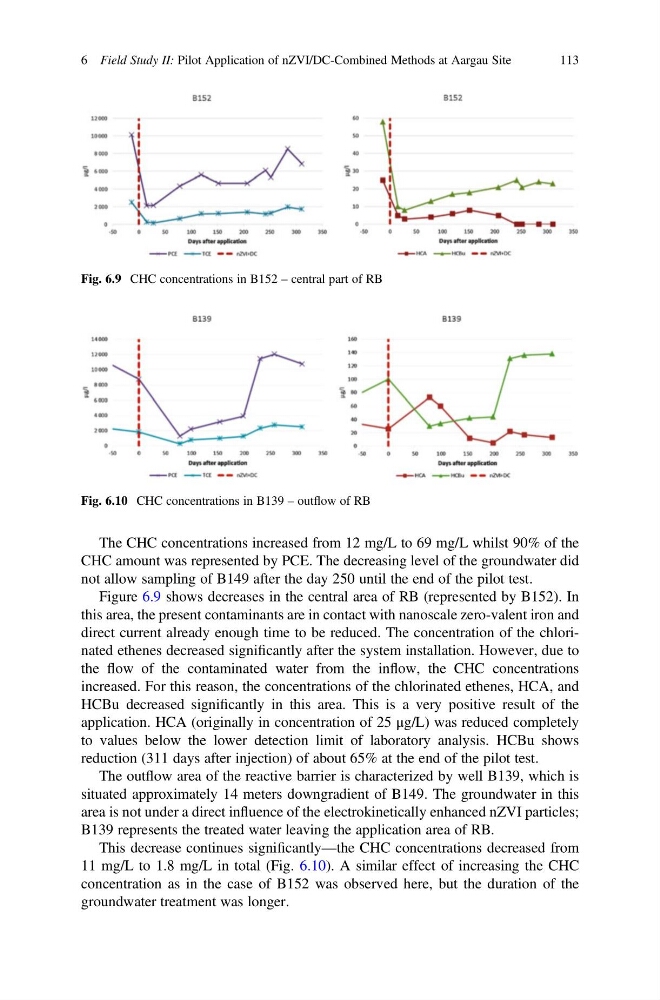
Figure 6.9 shows decreases in the central area of RB (represented by B152). In
this area, the present contaminants are in contact with nanoscale zero-valent iron and
direct current already enough time to be reduced. The concentration of the chlorinated ethenes decreased significantly after the system installation. However, due to
the flow of the contaminated water from the inflow, the CHC concentrations
increased. For this reason, the concentrations of the chlorinated ethenes, HCA, and
HCBu decreased significantly in this area. This is a very positive result of the
application. HCA (originally in concentration of 25 μg/L) was reduced completely
to values below the lower detection limit of laboratory analysis. HCBu shows
reduction (311 days after injection) of about 65% at the end of the pilot test.
The outflow area of the reactive barrier is characterized by well B139, which is
situated approximately 14 meters downgradient of B149. The groundwater in this
area is not under a direct influence of the electrokinetically enhanced nZVI particles;
B139 represents the treated water leaving the application area of RB.
This decrease continues significantly—the CHC concentrations decreased from
11 mg/L to 1.8 mg/L in total (Fig. 6.10). A similar effect of increasing the CHC
concentration as in the case of B152 was observed here, but the duration of the
groundwater treatment was longer.
Fig. 6.9 CHC concentrations in B152 – central part of RB
Fig. 6.10 CHC concentrations in B139 – outflow of RB
6 Field Study II: Pilot Application of nZVI/DC-Combined Methods at Aargau Site
113
CHC amount was represented by PCE. The decreasing level of the groundwater did
not allow sampling of B149 after the day 250 until the end of the pilot test.
Figure 6.9 shows decreases in the central area of RB (represented by B152). In
this area, the present contaminants are in contact with nanoscale zero-valent iron and
direct current already enough time to be reduced. The concentration of the chlorinated ethenes decreased significantly after the system installation. However, due to
the flow of the contaminated water from the inflow, the CHC concentrations
increased. For this reason, the concentrations of the chlorinated ethenes, HCA, and
HCBu decreased significantly in this area. This is a very positive result of the
application. HCA (originally in concentration of 25 μg/L) was reduced completely
to values below the lower detection limit of laboratory analysis. HCBu shows
reduction (311 days after injection) of about 65% at the end of the pilot test.
The outflow area of the reactive barrier is characterized by well B139, which is
situated approximately 14 meters downgradient of B149. The groundwater in this
area is not under a direct influence of the electrokinetically enhanced nZVI particles;
B139 represents the treated water leaving the application area of RB.
This decrease continues significantly—the CHC concentrations decreased from
11 mg/L to 1.8 mg/L in total (Fig. 6.10). A similar effect of increasing the CHC
concentration as in the case of B152 was observed here, but the duration of the
groundwater treatment was longer.
Fig. 6.9 CHC concentrations in B152 – central part of RB
Fig. 6.10 CHC concentrations in B139 – outflow of RB
6 Field Study II: Pilot Application of nZVI/DC-Combined Methods at Aargau Site
113