

2.2 Sensing Mechanisms of Colorimetric Sensors
There are different sensing mechanisms based upon which colorimetric sensors can
be designed i.e. Intramolecular Charge Transfer, Forster Resonance Energy
Transfer, aggregation, pH, indicator formation,
2.2.1 Intramolecular Charge Transfer (ICT)
ICT refers to the charge transfer to the electron deficient acceptor from election rich
moiety within the same molecule. It generally occurs when the molecule is in the
photoexcited state by absorbing the light of specific wavelength which facilitates
the transfer of electron from one part of molecules to the another. This forms a
p-bridge which connects the donor and acceptor groups. Utilizing this sensing
mechanism, the receptor molecule aminonaphthoquinones is utilized to design the
colorimetric detection of Cu(II) where pyridine N-atom and amine N-atom forms
square planar complex with Cu(II) shown in inset of Fig. 3. This results in blue
shift of ICT band and increase in d-d transitions upon the increase in concentration
of Cu(II) ions. These results in change in color of receptor from yellow to blue
instantaneously, which indicates the selectivity of Cu(II) towards the synthesized
receptor as shown in Fig. 3 [2]. Similarly, hemicyanine is reported as colorimetric
sensing agent for Hg(II) ions which changes its color from red to colourless, which
is also confirmed by the changes in UV/Vis spectra [3].
The concept of ICT has been utilized in several for colorimetric sensing applications, but there are challenges which still exist to utilize its full potentials.
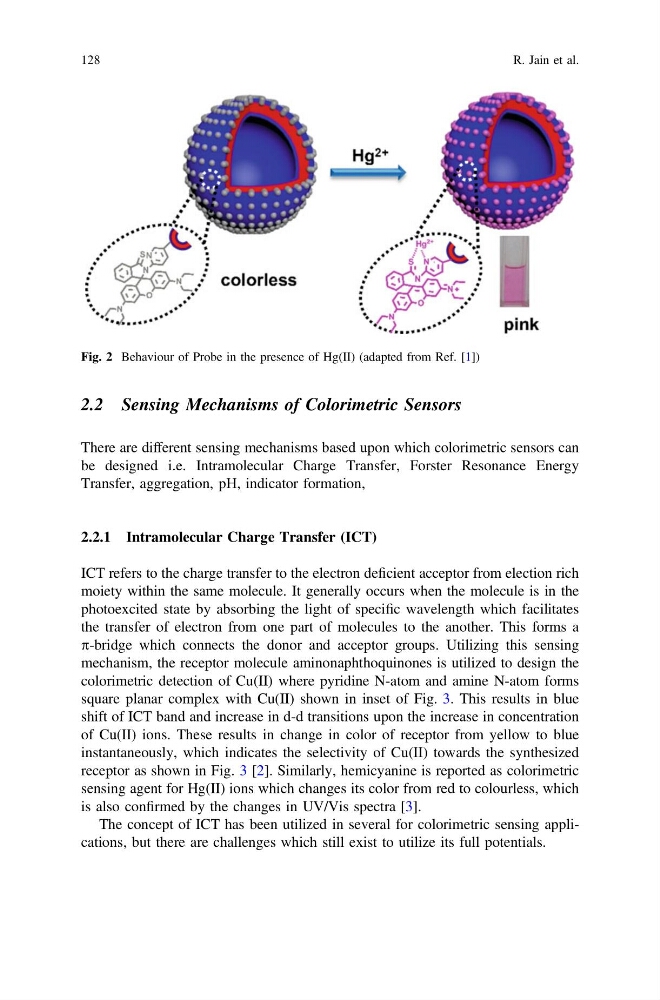
Fig. 2 Behaviour of Probe in the presence of Hg(II) (adapted from Ref. [1])
128
R. Jain et al.
There are different sensing mechanisms based upon which colorimetric sensors can
be designed i.e. Intramolecular Charge Transfer, Forster Resonance Energy
Transfer, aggregation, pH, indicator formation,
2.2.1 Intramolecular Charge Transfer (ICT)
ICT refers to the charge transfer to the electron deficient acceptor from election rich
moiety within the same molecule. It generally occurs when the molecule is in the
photoexcited state by absorbing the light of specific wavelength which facilitates
the transfer of electron from one part of molecules to the another. This forms a
p-bridge which connects the donor and acceptor groups. Utilizing this sensing
mechanism, the receptor molecule aminonaphthoquinones is utilized to design the
colorimetric detection of Cu(II) where pyridine N-atom and amine N-atom forms
square planar complex with Cu(II) shown in inset of Fig. 3. This results in blue
shift of ICT band and increase in d-d transitions upon the increase in concentration
of Cu(II) ions. These results in change in color of receptor from yellow to blue
instantaneously, which indicates the selectivity of Cu(II) towards the synthesized
receptor as shown in Fig. 3 [2]. Similarly, hemicyanine is reported as colorimetric
sensing agent for Hg(II) ions which changes its color from red to colourless, which
is also confirmed by the changes in UV/Vis spectra [3].
The concept of ICT has been utilized in several for colorimetric sensing applications, but there are challenges which still exist to utilize its full potentials.
Fig. 2 Behaviour of Probe in the presence of Hg(II) (adapted from Ref. [1])
128
R. Jain et al.