

cardiovascular system. HMs when accumulate in the body than the permissible
limit they may result in permanent damage to brain, liver and kidney [6, 8].
Fluoride, does not occur in the fundamental state in environment since it is highly
reactive. It exists as mineral fluoride with mass of about 0.3 g/kg of the Earth’s
crust [9]. In groundwater, fluoride concentrations differ with the kind of rock bed
the water drifts through but then again do not surpass 10 mg/L [10]. Various
fluorides containing compounds are extensively used in various industrial sector of
aluminum processing, glass fiber, steel, pharmaceutical, fertilizer and others. When
fluoride is up taken orally (in the form of water or medicines or in food products)
the solvable fluorides are entirely get immersed in the GI tract. Immersed fluoride is
then circulate via the blood; and when it enters brain, resulting in increased risk for
diseases like Alzheimer’s disease and various other memory related issues collectively termed as dementia [11–14]. It is also accountable for fluorosis. As per the
survey conducted, across many countries including India has more than 15 states
are affected by acute fluorosis [15].
Selenium (Se) is existent in the earth’s crust, bonded with minerals containing
Sulphur. Selenium occurs in numerous forms, such as selenides (Se
2− ), selenium
(Se
0 ), selenites (Se
4+ ) and selenates (Se
6+ ) [16, 17]. The level of selenium in water
arrays 0.06–400 µg/L [18–20]. In seleniferous areas, gastrointestinal disorders, skin
discoloration and rotten teethes were reported in common [21].
Cyanide is highly toxic and dangerous contaminant. Major source of cyanide
addition to water cycle are anthropogenic sources such as industrial waste from
electroplating, gold and silver extraction, base metal flotation; coal gasification; and
the decontamination of ships, buildings, grain silos, seeds in vacuum cavities.
During, drinking water chlorination, cyanogen chloride might be a by-product and
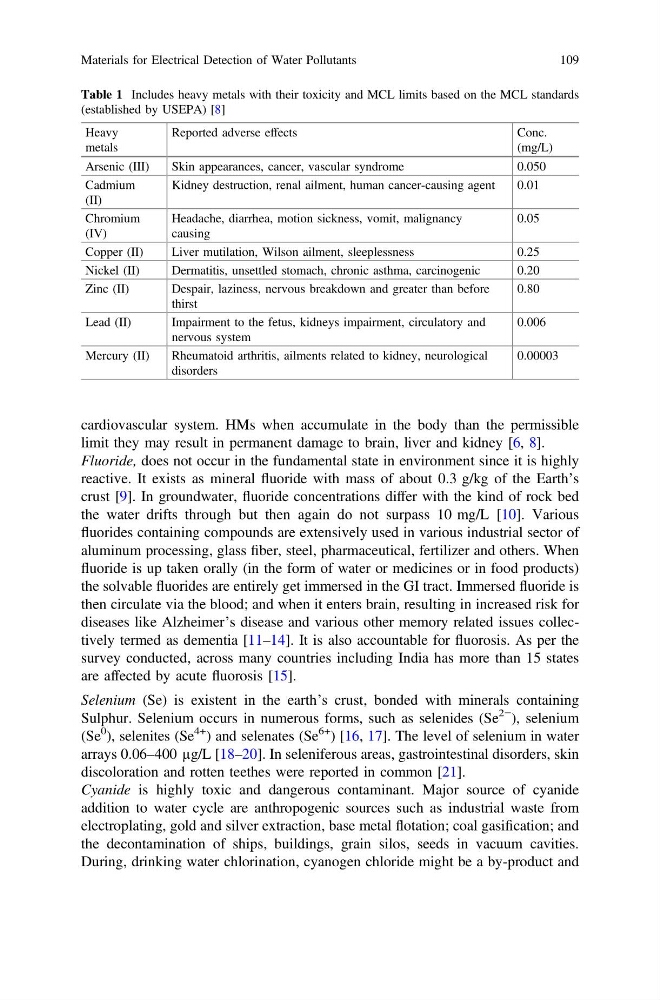
Table 1 Includes heavy metals with their toxicity and MCL limits based on the MCL standards
(established by USEPA) [8]
Heavy
metals
Reported adverse effects
Conc.
(mg/L)
Arsenic (III)
Skin appearances, cancer, vascular syndrome
0.050
Cadmium
(II)
Kidney destruction, renal ailment, human cancer-causing agent
0.01
Chromium
(IV)
Headache, diarrhea, motion sickness, vomit, malignancy
causing
0.05
Copper (II)
Liver mutilation, Wilson ailment, sleeplessness
0.25
Nickel (II)
Dermatitis, unsettled stomach, chronic asthma, carcinogenic
0.20
Zinc (II)
Despair, laziness, nervous breakdown and greater than before
thirst
0.80
Lead (II)
Impairment to the fetus, kidneys impairment, circulatory and
nervous system
0.006
Mercury (II)
Rheumatoid arthritis, ailments related to kidney, neurological
disorders
0.00003
Materials for Electrical Detection of Water Pollutants
109
limit they may result in permanent damage to brain, liver and kidney [6, 8].
Fluoride, does not occur in the fundamental state in environment since it is highly
reactive. It exists as mineral fluoride with mass of about 0.3 g/kg of the Earth’s
crust [9]. In groundwater, fluoride concentrations differ with the kind of rock bed
the water drifts through but then again do not surpass 10 mg/L [10]. Various
fluorides containing compounds are extensively used in various industrial sector of
aluminum processing, glass fiber, steel, pharmaceutical, fertilizer and others. When
fluoride is up taken orally (in the form of water or medicines or in food products)
the solvable fluorides are entirely get immersed in the GI tract. Immersed fluoride is
then circulate via the blood; and when it enters brain, resulting in increased risk for
diseases like Alzheimer’s disease and various other memory related issues collectively termed as dementia [11–14]. It is also accountable for fluorosis. As per the
survey conducted, across many countries including India has more than 15 states
are affected by acute fluorosis [15].
Selenium (Se) is existent in the earth’s crust, bonded with minerals containing
Sulphur. Selenium occurs in numerous forms, such as selenides (Se
2− ), selenium
(Se
0 ), selenites (Se
4+ ) and selenates (Se
6+ ) [16, 17]. The level of selenium in water
arrays 0.06–400 µg/L [18–20]. In seleniferous areas, gastrointestinal disorders, skin
discoloration and rotten teethes were reported in common [21].
Cyanide is highly toxic and dangerous contaminant. Major source of cyanide
addition to water cycle are anthropogenic sources such as industrial waste from
electroplating, gold and silver extraction, base metal flotation; coal gasification; and
the decontamination of ships, buildings, grain silos, seeds in vacuum cavities.
During, drinking water chlorination, cyanogen chloride might be a by-product and
Table 1 Includes heavy metals with their toxicity and MCL limits based on the MCL standards
(established by USEPA) [8]
Heavy
metals
Reported adverse effects
Conc.
(mg/L)
Arsenic (III)
Skin appearances, cancer, vascular syndrome
0.050
Cadmium
(II)
Kidney destruction, renal ailment, human cancer-causing agent
0.01
Chromium
(IV)
Headache, diarrhea, motion sickness, vomit, malignancy
causing
0.05
Copper (II)
Liver mutilation, Wilson ailment, sleeplessness
0.25
Nickel (II)
Dermatitis, unsettled stomach, chronic asthma, carcinogenic
0.20
Zinc (II)
Despair, laziness, nervous breakdown and greater than before
thirst
0.80
Lead (II)
Impairment to the fetus, kidneys impairment, circulatory and
nervous system
0.006
Mercury (II)
Rheumatoid arthritis, ailments related to kidney, neurological
disorders
0.00003
Materials for Electrical Detection of Water Pollutants
109