

180
6.5 Conclusions
This chapter synopsizes recent progresses in unwanted CO 2 greenhouse gas conversion to formaldehyde via photocatalytic approach, CO 2 hydrogenation, homogeneous CO 2 reduction, and selective methane oxidation. The fundamentals of
photocatalytic CO 2 reduction to HCHO including thermodynamics, kinetics, and
mechanism aspects were systematically reviewed. In general, the mechanistic pathways for CO 2 photoreduction are a relatively complex redox process which involves
reductant oxidation and a multistep CO 2 reduction process with C 1 -products formation (CO 2 → HCOOH → HCHO → CH 3 OH → CH 4 ). To attain great selectivity and
efficiency for photocatalytic CO 2 reduction to HCHO, several approaches have been
suggested including (i) enhancing light harvesting, (ii) promoting separation of the
photoproduced charges, (iii) improving CO 2 adsorption and activation, (iv) accelerating CO 2 reduction kinetics, and (v) suppressing side reactions. However, reactor
scale-up, large-scale production, and feasible commercialization are the current
challenges of photocatalytic CO 2 reduction process. Although formaldehyde production from heterogeneous CO 2 hydrogenation and selective methane oxidation
processes has been recently explored, there is limited investigation about mechanistic steps and kinetic modelling. Hence, these aspects should be further examined for
thoroughly understanding reaction kinetics and mechanism in order to optimize
catalytic performance and design catalytic reactor for industrial applications.
References
Alper E, Yuksel Orhan O (2017) CO 2 utilization: developments in conversion processes. Petroleum
3:109–126. https://doi.org/10.1016/J.PETLM.2016.11.003
Anpo M, Yamashita H, Ikeue K et al (1998) Photocatalytic reduction of CO 2 with H 2 O on
Ti-MCM-41 and Ti-MCM-48 mesoporous zeolite catalysts. Catal Today 44:327–332. https://
doi.org/10.1016/S0920-5861(98)00206-5
Ao CH, Lee SC (2004) Combination effect of activated carbon with TiO 2 for the photodegradation
of binary pollutants at typical indoor air level. J Photochem Photobiol A Chem 161:131–140.
https://doi.org/10.1016/S1010-6030(03)00276-4
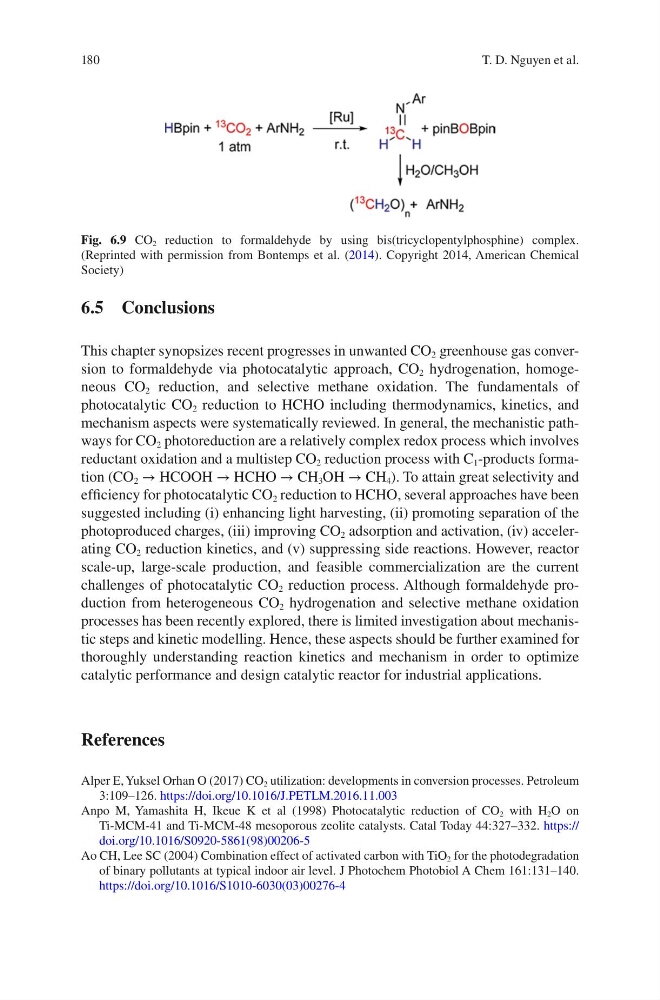
Fig. 6.9 CO 2 reduction to formaldehyde by using bis(tricyclopentylphosphine) complex.
(Reprinted with permission from Bontemps et al. (2014). Copyright 2014, American Chemical
Society)
T. D. Nguyen et al.
6.5 Conclusions
This chapter synopsizes recent progresses in unwanted CO 2 greenhouse gas conversion to formaldehyde via photocatalytic approach, CO 2 hydrogenation, homogeneous CO 2 reduction, and selective methane oxidation. The fundamentals of
photocatalytic CO 2 reduction to HCHO including thermodynamics, kinetics, and
mechanism aspects were systematically reviewed. In general, the mechanistic pathways for CO 2 photoreduction are a relatively complex redox process which involves
reductant oxidation and a multistep CO 2 reduction process with C 1 -products formation (CO 2 → HCOOH → HCHO → CH 3 OH → CH 4 ). To attain great selectivity and
efficiency for photocatalytic CO 2 reduction to HCHO, several approaches have been
suggested including (i) enhancing light harvesting, (ii) promoting separation of the
photoproduced charges, (iii) improving CO 2 adsorption and activation, (iv) accelerating CO 2 reduction kinetics, and (v) suppressing side reactions. However, reactor
scale-up, large-scale production, and feasible commercialization are the current
challenges of photocatalytic CO 2 reduction process. Although formaldehyde production from heterogeneous CO 2 hydrogenation and selective methane oxidation
processes has been recently explored, there is limited investigation about mechanistic steps and kinetic modelling. Hence, these aspects should be further examined for
thoroughly understanding reaction kinetics and mechanism in order to optimize
catalytic performance and design catalytic reactor for industrial applications.
References
Alper E, Yuksel Orhan O (2017) CO 2 utilization: developments in conversion processes. Petroleum
3:109–126. https://doi.org/10.1016/J.PETLM.2016.11.003
Anpo M, Yamashita H, Ikeue K et al (1998) Photocatalytic reduction of CO 2 with H 2 O on
Ti-MCM-41 and Ti-MCM-48 mesoporous zeolite catalysts. Catal Today 44:327–332. https://
doi.org/10.1016/S0920-5861(98)00206-5
Ao CH, Lee SC (2004) Combination effect of activated carbon with TiO 2 for the photodegradation
of binary pollutants at typical indoor air level. J Photochem Photobiol A Chem 161:131–140.
https://doi.org/10.1016/S1010-6030(03)00276-4
Fig. 6.9 CO 2 reduction to formaldehyde by using bis(tricyclopentylphosphine) complex.
(Reprinted with permission from Bontemps et al. (2014). Copyright 2014, American Chemical
Society)
T. D. Nguyen et al.