

141
Fig. 5.10, two possible reaction routes, e.g., paths A and B, were proposed for
dimethylammonium dimethylcarbamate conversion to methanol. The path A
involves dimethylammonium dimethylcarbamate conversion to dimethylformamide, e.g., step i, and then dimethylformamide hydrogenation with C–N bond
rupture to yield methanol, e.g., step ii. Another pathway, e.g., path B, suggests that
dimethylammonium dimethylcarbamate can reversibly yield NHMe 2 and carbon
dioxide, e.g., step iii, followed by carbon dioxide hydrogenation to formic acid, e.g.,
step iv. This pathway can proceed further to formic acid deprotonation for yielding
dimethylammonium formate via step v or formic acid amidation for forming
dimethylformamide, e.g., step vi. Finally, the selective dimethylformamide hydrogenation could result in methanol, e.g., step ii.
Kothandaraman et al. (2016) recently found that Ru–pincer catalyst exhibited
high activity for in situ carbon dioxide hydrogenation to methanol even in base-free
conditions due to the presence of -NH functionalities. To determine the function of
-NH moiety in mechanistic steps, it was replaced by -NMe, with Me being methyl
group. Notably, methanol was not found for -NMe moiety-based catalyst, whereas
ammonium formate, ammonium carbamate, and N-formyl intermediates were
detected through
13
C and
1
H NMR (nuclear magnetic resonance) spectroscopy measurements, e.g., steps 2–4 in Fig. 5.11. This observation indicates that the -NH moiety plays a key role in N-formyl intermediate transformation to methanol, e.g., step
4 of Fig. 5.11.
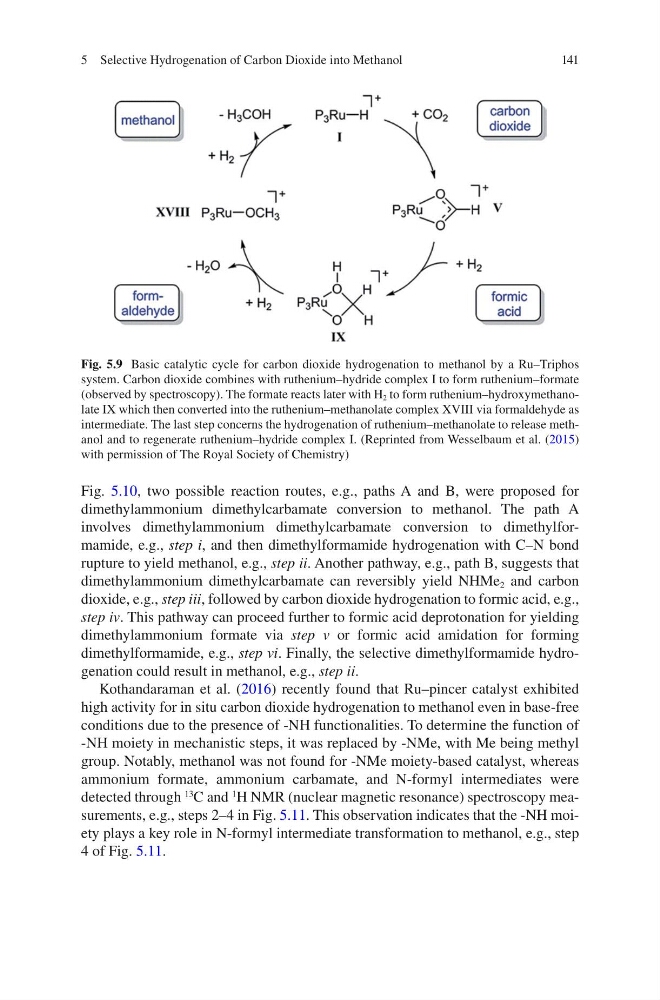
Fig. 5.9 Basic catalytic cycle for carbon dioxide hydrogenation to methanol by a Ru–Triphos
system. Carbon dioxide combines with ruthenium–hydride complex I to form ruthenium–formate
(observed by spectroscopy). The formate reacts later with H 2 to form ruthenium–hydroxymethanolate IX which then converted into the ruthenium–methanolate complex XVIII via formaldehyde as
intermediate. The last step concerns the hydrogenation of ruthenium–methanolate to release methanol and to regenerate ruthenium–hydride complex I. (Reprinted from Wesselbaum et al. (2015)
with permission of The Royal Society of Chemistry)
5 Selective Hydrogenation of Carbon Dioxide into Methanol
Fig. 5.10, two possible reaction routes, e.g., paths A and B, were proposed for
dimethylammonium dimethylcarbamate conversion to methanol. The path A
involves dimethylammonium dimethylcarbamate conversion to dimethylformamide, e.g., step i, and then dimethylformamide hydrogenation with C–N bond
rupture to yield methanol, e.g., step ii. Another pathway, e.g., path B, suggests that
dimethylammonium dimethylcarbamate can reversibly yield NHMe 2 and carbon
dioxide, e.g., step iii, followed by carbon dioxide hydrogenation to formic acid, e.g.,
step iv. This pathway can proceed further to formic acid deprotonation for yielding
dimethylammonium formate via step v or formic acid amidation for forming
dimethylformamide, e.g., step vi. Finally, the selective dimethylformamide hydrogenation could result in methanol, e.g., step ii.
Kothandaraman et al. (2016) recently found that Ru–pincer catalyst exhibited
high activity for in situ carbon dioxide hydrogenation to methanol even in base-free
conditions due to the presence of -NH functionalities. To determine the function of
-NH moiety in mechanistic steps, it was replaced by -NMe, with Me being methyl
group. Notably, methanol was not found for -NMe moiety-based catalyst, whereas
ammonium formate, ammonium carbamate, and N-formyl intermediates were
detected through
13
C and
1
H NMR (nuclear magnetic resonance) spectroscopy measurements, e.g., steps 2–4 in Fig. 5.11. This observation indicates that the -NH moiety plays a key role in N-formyl intermediate transformation to methanol, e.g., step
4 of Fig. 5.11.
Fig. 5.9 Basic catalytic cycle for carbon dioxide hydrogenation to methanol by a Ru–Triphos
system. Carbon dioxide combines with ruthenium–hydride complex I to form ruthenium–formate
(observed by spectroscopy). The formate reacts later with H 2 to form ruthenium–hydroxymethanolate IX which then converted into the ruthenium–methanolate complex XVIII via formaldehyde as
intermediate. The last step concerns the hydrogenation of ruthenium–methanolate to release methanol and to regenerate ruthenium–hydride complex I. (Reprinted from Wesselbaum et al. (2015)
with permission of The Royal Society of Chemistry)
5 Selective Hydrogenation of Carbon Dioxide into Methanol