

98
transfer of electrons in the catalytic zone and with the transfer of positive charge to
the anode. A very effectual transformation of CO 2 from the transfer of electrons
inside the conductive band (CB) of TiO 2 is obtained in formic acid. The decrease in
the CO 2 and O 2 gas evolution taken place in separate solutions in numerous catalysts and oxidation of HCOOH by anode may be avoided by these separate solutions in the photo reactor system. Reduction products yields were markedly
increased by providing sufficient external electric power. This research not only
provides an innovative photocatalytic system but also the stylish possible way to
obtain renewable energy through CO 2 . The results presented give you a very promising platform with the realization of the renewable energy cycle of carbon under
sunlight (Qin et al. 2013).
4.3 Electrochemical Conversion
Generally, in an electrolytic cell, CO 2 is reduced electrochemically, and commonly
electrolytic cell is made up of a couple of electrodes (i.e., cathode and anode) coated
with catalyst(s) and electrolyte(s). A representative illustration of the basic arrangement of a CO 2 -electroreduction electrolytic cell is given in Fig. 4.5 (Udupa et al.
1971; Angamuthu et al. 2010).
Through electroreduction, CO 2 conversion can work as a useful fuel with energystorage medium and high-tech and promising capability (Udupa et al. 1971;
Angamuthu et al. 2010; Marshall and Walsh 1985; Suffredini et al. 2000; Whipple
2010; Murata and Hori 1991; Toyohara et al. 1995; Rice et al. 2002; Tanaka and
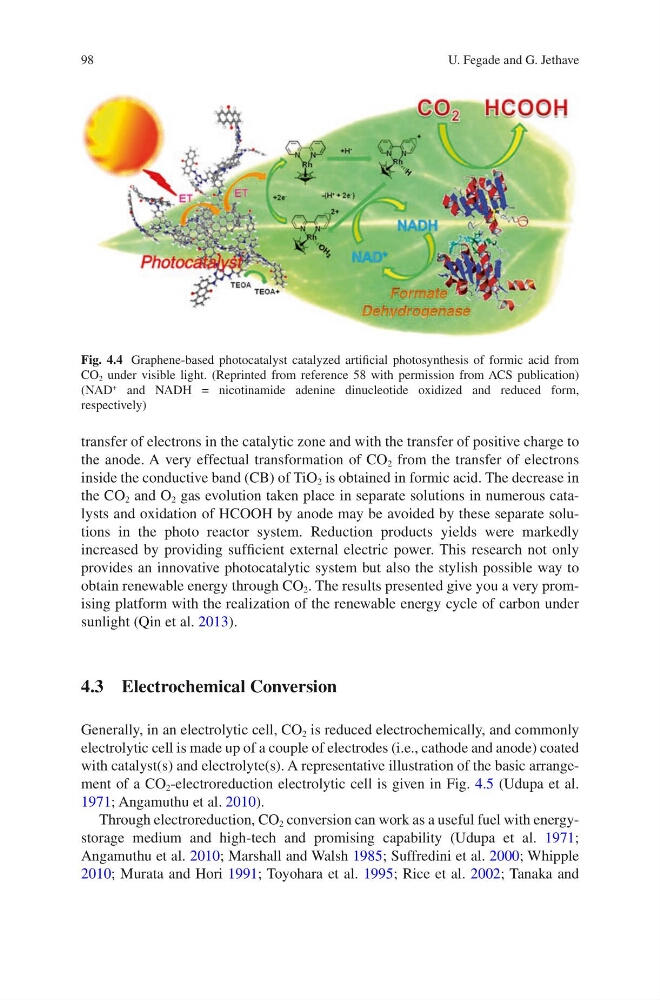
Fig. 4.4 Graphene-based photocatalyst catalyzed artificial photosynthesis of formic acid from
CO 2 under visible light. (Reprinted from reference 58 with permission from ACS publication)
(NAD
+ and NADH = nicotinamide adenine dinucleotide oxidized and reduced form,
respectively)
U. Fegade and G. Jethave
transfer of electrons in the catalytic zone and with the transfer of positive charge to
the anode. A very effectual transformation of CO 2 from the transfer of electrons
inside the conductive band (CB) of TiO 2 is obtained in formic acid. The decrease in
the CO 2 and O 2 gas evolution taken place in separate solutions in numerous catalysts and oxidation of HCOOH by anode may be avoided by these separate solutions in the photo reactor system. Reduction products yields were markedly
increased by providing sufficient external electric power. This research not only
provides an innovative photocatalytic system but also the stylish possible way to
obtain renewable energy through CO 2 . The results presented give you a very promising platform with the realization of the renewable energy cycle of carbon under
sunlight (Qin et al. 2013).
4.3 Electrochemical Conversion
Generally, in an electrolytic cell, CO 2 is reduced electrochemically, and commonly
electrolytic cell is made up of a couple of electrodes (i.e., cathode and anode) coated
with catalyst(s) and electrolyte(s). A representative illustration of the basic arrangement of a CO 2 -electroreduction electrolytic cell is given in Fig. 4.5 (Udupa et al.
1971; Angamuthu et al. 2010).
Through electroreduction, CO 2 conversion can work as a useful fuel with energystorage medium and high-tech and promising capability (Udupa et al. 1971;
Angamuthu et al. 2010; Marshall and Walsh 1985; Suffredini et al. 2000; Whipple
2010; Murata and Hori 1991; Toyohara et al. 1995; Rice et al. 2002; Tanaka and
Fig. 4.4 Graphene-based photocatalyst catalyzed artificial photosynthesis of formic acid from
CO 2 under visible light. (Reprinted from reference 58 with permission from ACS publication)
(NAD
+ and NADH = nicotinamide adenine dinucleotide oxidized and reduced form,
respectively)
U. Fegade and G. Jethave