

96
with a bridging ligand. RuReCl could photocatalyzed carbon dioxide reduction,
utilizing electron donar C 6 H 8 O 6 (ascorbate), in an aqueous system also. The main
outcome of the photocatalytic reduction was HCOOH in the water system; this is
altogether dissimilar in product conveyance from that in a triethanolamine (TEOA)
and DMF mixed solution in which the essential product was CO (Fig. 4.2). A
13
CO 2
tagging test plainly demonstrated that HCOOH was created from CO 2 . Turnover
number is 25%, and 83% selectivity of the HCOOH creation is observed. The quantum yield was 0.2%, which is much less than comparable to the TEOA-DMF compound solution (Nakada et al. 2015).
Fumiaki Yoshitomi et al. (2015) also made hybrid material perovskite oxynitride
semiconductor consisting of CaTaO 2 N, and its band gap is 2.5 eV. Below the visible
light to HCOOH manufacture with large selectivity (>99%), it works as a building
block for the reduction of CO 2 in Z-scheme with the assistance of an atomic Ru
complex (RuRu′) (Fig. 4.3). The two-phase photoexcitation system, where CaTaO 2 N
and RuRu′ sensory unit are both photoexcited, Ag nanoparticles mediate the sensor
unit electron transfer from CaTaO 2 N. Result of physicochemical analysis suggested
that facilitating the alteration of CaTaO 2 N with Ag nanoparticles exhibits the most
favorable distribution, and interfacial e-transfer is facilitated from CaTaO 2 N’s to
RuRu′ conduction band (Yoshitomi et al. 2015).
Rajesh K. Yadav and co-authors (2012) reported the synthesis and application of
a photocatalyst-enzyme coupled framework bonded the multianthraquinonesubstituted porphyrin. It is a powerful and efficient material for CO 2 photoreduction
into formic acid. The authors illustrated a worthy model of the photocatalyst based
on graphene material and the selective production of solar fuel from CO 2 as well
(Fig. 4.4) (Yadav et al. 2012). Santosh Kumar and team (2018) have also developed
photocatalyst based on graphene oxide decorated with aminoporphyrin anchoring
cobalt complex with 96.49 μmol efficiency for 2 h. The graphene oxide decorated
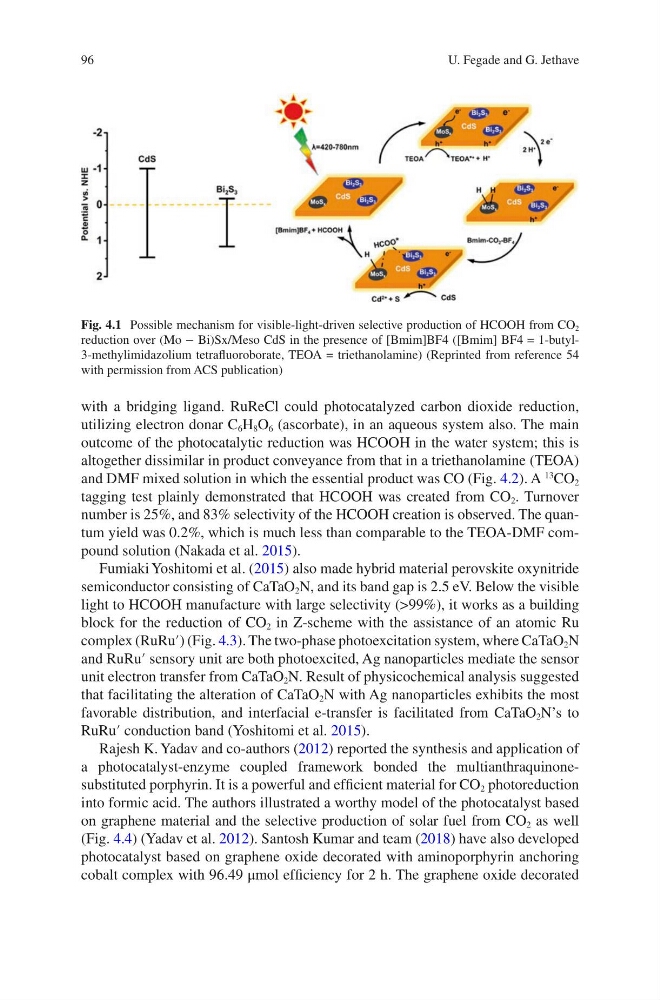
Fig. 4.1 Possible mechanism for visible-light-driven selective production of HCOOH from CO 2
reduction over (Mo − Bi)Sx/Meso CdS in the presence of [Bmim]BF4 ([Bmim] BF4 = 1-butyl3-methylimidazolium tetrafluoroborate, TEOA = triethanolamine) (Reprinted from reference 54
with permission from ACS publication)
U. Fegade and G. Jethave
with a bridging ligand. RuReCl could photocatalyzed carbon dioxide reduction,
utilizing electron donar C 6 H 8 O 6 (ascorbate), in an aqueous system also. The main
outcome of the photocatalytic reduction was HCOOH in the water system; this is
altogether dissimilar in product conveyance from that in a triethanolamine (TEOA)
and DMF mixed solution in which the essential product was CO (Fig. 4.2). A
13
CO 2
tagging test plainly demonstrated that HCOOH was created from CO 2 . Turnover
number is 25%, and 83% selectivity of the HCOOH creation is observed. The quantum yield was 0.2%, which is much less than comparable to the TEOA-DMF compound solution (Nakada et al. 2015).
Fumiaki Yoshitomi et al. (2015) also made hybrid material perovskite oxynitride
semiconductor consisting of CaTaO 2 N, and its band gap is 2.5 eV. Below the visible
light to HCOOH manufacture with large selectivity (>99%), it works as a building
block for the reduction of CO 2 in Z-scheme with the assistance of an atomic Ru
complex (RuRu′) (Fig. 4.3). The two-phase photoexcitation system, where CaTaO 2 N
and RuRu′ sensory unit are both photoexcited, Ag nanoparticles mediate the sensor
unit electron transfer from CaTaO 2 N. Result of physicochemical analysis suggested
that facilitating the alteration of CaTaO 2 N with Ag nanoparticles exhibits the most
favorable distribution, and interfacial e-transfer is facilitated from CaTaO 2 N’s to
RuRu′ conduction band (Yoshitomi et al. 2015).
Rajesh K. Yadav and co-authors (2012) reported the synthesis and application of
a photocatalyst-enzyme coupled framework bonded the multianthraquinonesubstituted porphyrin. It is a powerful and efficient material for CO 2 photoreduction
into formic acid. The authors illustrated a worthy model of the photocatalyst based
on graphene material and the selective production of solar fuel from CO 2 as well
(Fig. 4.4) (Yadav et al. 2012). Santosh Kumar and team (2018) have also developed
photocatalyst based on graphene oxide decorated with aminoporphyrin anchoring
cobalt complex with 96.49 μmol efficiency for 2 h. The graphene oxide decorated
Fig. 4.1 Possible mechanism for visible-light-driven selective production of HCOOH from CO 2
reduction over (Mo − Bi)Sx/Meso CdS in the presence of [Bmim]BF4 ([Bmim] BF4 = 1-butyl3-methylimidazolium tetrafluoroborate, TEOA = triethanolamine) (Reprinted from reference 54
with permission from ACS publication)
U. Fegade and G. Jethave