

emitted wavelengths can be observed in the scattered radiation (see Fig. 4.49). This
is caused by the possibility that the vibration levels in ground and excited level differ
before and after excitation. These fine differences represent the same energy differences as compared to IR spectroscopy. Two types of shifts can be observed, the
Stokes and Anti-Stokes radiation. As illustrated in Fig. 4.49), measuring the scattering radiation by known exciting primary radiation allows to identify the differences
of vibration energies according to IR spectroscopy.
The interpretation of Raman spectra is comparable to the approaches introduced
for IR spectroscopy. Therefore, all implications and molecular information deduced
from IR spectra can be obtained by Raman spectroscopy. However, intensity differs
partly significantly between IR and Raman absorptions and, consequently, the
spectra are complementary but not identical as illustrated schematically in Fig. 4.50.
subsƟtuƟon paƩern of an aromaƟc ring
paƩern
band
degree of subsƟtuƟon
example
5 neighboring H
770-735 (s)
710-685 (s)
monosubsƟtuƟon
4 neighboring H
760-740 (s)
1,2-disubsƟtuƟon
3 neighboring H
800-770 (s)
1,3-disubst ituƟon
1,2,3-trisubst itut ion
2 neighboring H
840-800 (s)
1,4-disubst itut ion
1,3,4-trisubst itut ion
…
Isolated H
900-800 (w)
1,3-disubst itut ion
1,3,5-trisubst ituion
…
X n
X
X
X
X
X
X
X
X
X
X
X
X
X
X
X
Note: mulƟple paƩern are possible,
e.g. 1,3-subsƟtuƟon implies both an isolated H and 3 neighboring H
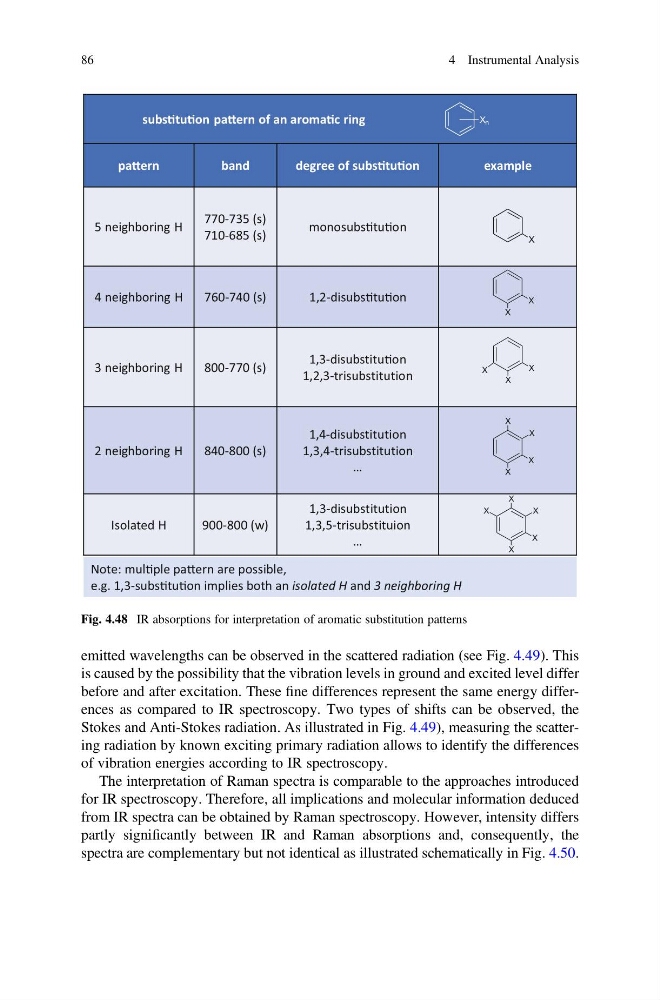
Fig. 4.48 IR absorptions for interpretation of aromatic substitution patterns
86
4 Instrumental Analysis
is caused by the possibility that the vibration levels in ground and excited level differ
before and after excitation. These fine differences represent the same energy differences as compared to IR spectroscopy. Two types of shifts can be observed, the
Stokes and Anti-Stokes radiation. As illustrated in Fig. 4.49), measuring the scattering radiation by known exciting primary radiation allows to identify the differences
of vibration energies according to IR spectroscopy.
The interpretation of Raman spectra is comparable to the approaches introduced
for IR spectroscopy. Therefore, all implications and molecular information deduced
from IR spectra can be obtained by Raman spectroscopy. However, intensity differs
partly significantly between IR and Raman absorptions and, consequently, the
spectra are complementary but not identical as illustrated schematically in Fig. 4.50.
subsƟtuƟon paƩern of an aromaƟc ring
paƩern
band
degree of subsƟtuƟon
example
5 neighboring H
770-735 (s)
710-685 (s)
monosubsƟtuƟon
4 neighboring H
760-740 (s)
1,2-disubsƟtuƟon
3 neighboring H
800-770 (s)
1,3-disubst ituƟon
1,2,3-trisubst itut ion
2 neighboring H
840-800 (s)
1,4-disubst itut ion
1,3,4-trisubst itut ion
…
Isolated H
900-800 (w)
1,3-disubst itut ion
1,3,5-trisubst ituion
…
X n
X
X
X
X
X
X
X
X
X
X
X
X
X
X
X
Note: mulƟple paƩern are possible,
e.g. 1,3-subsƟtuƟon implies both an isolated H and 3 neighboring H
Fig. 4.48 IR absorptions for interpretation of aromatic substitution patterns
86
4 Instrumental Analysis