

A further aspect characterizing the variability of chromatographic applications is
related to the type of chromatograms. Chromatograms represent the result of a
chromatographic separation. However, the separation can be obtained in two different dimensions, a spatial and a temporal one. First order chromatograms are a
function of concentration and retention distance. Such chromatograms result from
chromatographic separations that are stopped after a certain time as illustrated in
Fig. 3.15. Then, the individual analytes are located at different distances from the
starting point, the corresponding characteristic parameter as used in chromatography
is the retention factor R f . This value is the ratio between the actual retention pathway
of an analyte and the maximum possible pathway. Correspondingly, these values
range between 0 and 1 and represent the relative movement of an analyte in the given
chromatographic system.
In a second order chromatography the analytes are allowed to leave the chromatographic systems. The time of elution, also called retention time, is measured and
correlated with the corresponding concentrations. Hence, a 2nd order chromatogram
is a function of concentration and time (see Fig. 3.16). An advantage of such
chromatography is the possibility to collect individual fractions discretely. Thereafter, the separated compounds can individually be analyzed (see Sect. 3.3.2).
Mobile phase
Chromatography
Gas
SupercriƟcal fluid
Liquid
Liquid
Solid
Liquid
Solid
Liquid
Solid
Gas-liquid
chromatography
(GLC)
Gas-solid
chromatography
(GSC)
SupercriƟcal fluid
chromatography
(SFC)
Thin layer
chromatography
(TLC)
Liquid-solid
chromatography
(LSC)
Ion exchange
chromatography
(IEC)
Size exclusion
chromatography
(SEC)
StaƟonary phase
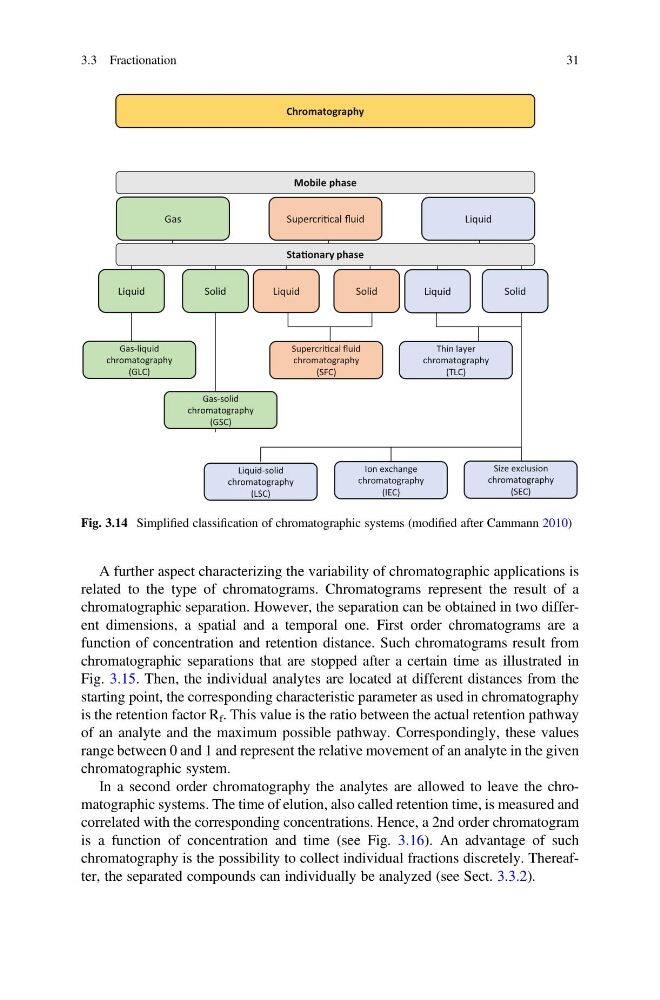
Fig. 3.14 Simplified classification of chromatographic systems (modified after Cammann 2010)
3.3 Fractionation
31
related to the type of chromatograms. Chromatograms represent the result of a
chromatographic separation. However, the separation can be obtained in two different dimensions, a spatial and a temporal one. First order chromatograms are a
function of concentration and retention distance. Such chromatograms result from
chromatographic separations that are stopped after a certain time as illustrated in
Fig. 3.15. Then, the individual analytes are located at different distances from the
starting point, the corresponding characteristic parameter as used in chromatography
is the retention factor R f . This value is the ratio between the actual retention pathway
of an analyte and the maximum possible pathway. Correspondingly, these values
range between 0 and 1 and represent the relative movement of an analyte in the given
chromatographic system.
In a second order chromatography the analytes are allowed to leave the chromatographic systems. The time of elution, also called retention time, is measured and
correlated with the corresponding concentrations. Hence, a 2nd order chromatogram
is a function of concentration and time (see Fig. 3.16). An advantage of such
chromatography is the possibility to collect individual fractions discretely. Thereafter, the separated compounds can individually be analyzed (see Sect. 3.3.2).
Mobile phase
Chromatography
Gas
SupercriƟcal fluid
Liquid
Liquid
Solid
Liquid
Solid
Liquid
Solid
Gas-liquid
chromatography
(GLC)
Gas-solid
chromatography
(GSC)
SupercriƟcal fluid
chromatography
(SFC)
Thin layer
chromatography
(TLC)
Liquid-solid
chromatography
(LSC)
Ion exchange
chromatography
(IEC)
Size exclusion
chromatography
(SEC)
StaƟonary phase
Fig. 3.14 Simplified classification of chromatographic systems (modified after Cammann 2010)
3.3 Fractionation
31