

292
W. Li et al.
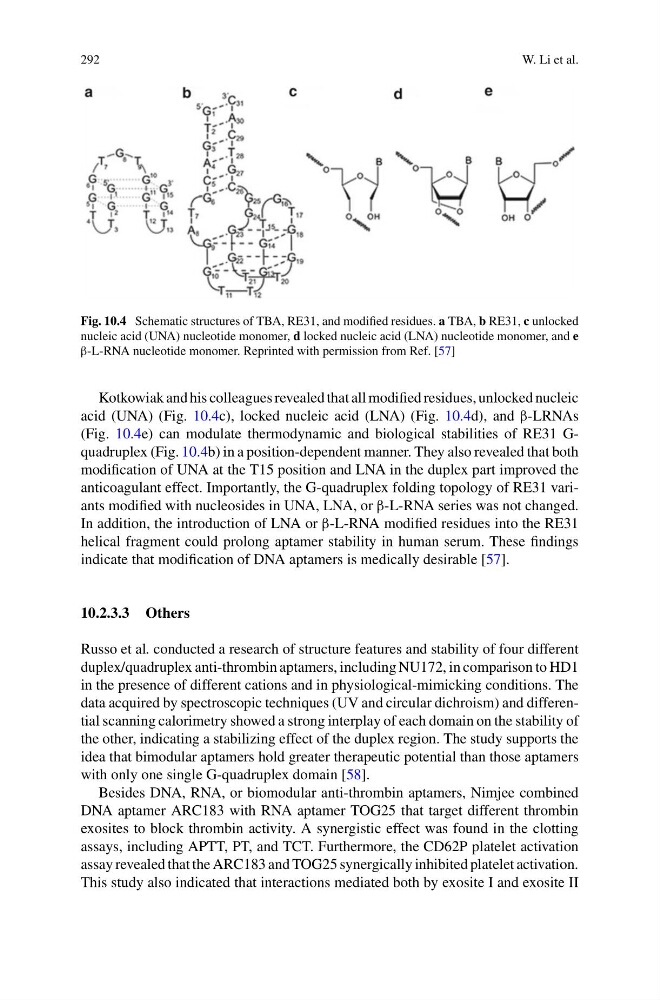
Fig. 10.4 Schematic structures of TBA, RE31, and modified residues. a TBA, b RE31, c unlocked
nucleic acid (UNA) nucleotide monomer, d locked nucleic acid (LNA) nucleotide monomer, and e
β-L-RNA nucleotide monomer. Reprinted with permission from Ref. [57]
Kotkowiak and his colleagues revealed that all modified residues, unlocked nucleic
acid (UNA) (Fig. 10.4c), locked nucleic acid (LNA) (Fig. 10.4d), and β-LRNAs
(Fig. 10.4e) can modulate thermodynamic and biological stabilities of RE31 Gquadruplex (Fig. 10.4b) in a position-dependent manner. They also revealed that both
modification of UNA at the T15 position and LNA in the duplex part improved the
anticoagulant effect. Importantly, the G-quadruplex folding topology of RE31 variants modified with nucleosides in UNA, LNA, or β-L-RNA series was not changed.
In addition, the introduction of LNA or β-L-RNA modified residues into the RE31
helical fragment could prolong aptamer stability in human serum. These findings
indicate that modification of DNA aptamers is medically desirable [57].
10.2.3.3 Others
Russo et al. conducted a research of structure features and stability of four different
duplex/quadruplex anti-thrombin aptamers, including NU172, in comparison to HD1
in the presence of different cations and in physiological-mimicking conditions. The
data acquired by spectroscopic techniques (UV and circular dichroism) and differential scanning calorimetry showed a strong interplay of each domain on the stability of
the other, indicating a stabilizing effect of the duplex region. The study supports the
idea that bimodular aptamers hold greater therapeutic potential than those aptamers
with only one single G-quadruplex domain [58].
Besides DNA, RNA, or biomodular anti-thrombin aptamers, Nimjee combined
DNA aptamer ARC183 with RNA aptamer TOG25 that target different thrombin
exosites to block thrombin activity. A synergistic effect was found in the clotting
assays, including APTT, PT, and TCT. Furthermore, the CD62P platelet activation
assay revealed that the ARC183 and TOG25 synergically inhibited platelet activation.
This study also indicated that interactions mediated both by exosite I and exosite II
W. Li et al.
Fig. 10.4 Schematic structures of TBA, RE31, and modified residues. a TBA, b RE31, c unlocked
nucleic acid (UNA) nucleotide monomer, d locked nucleic acid (LNA) nucleotide monomer, and e
β-L-RNA nucleotide monomer. Reprinted with permission from Ref. [57]
Kotkowiak and his colleagues revealed that all modified residues, unlocked nucleic
acid (UNA) (Fig. 10.4c), locked nucleic acid (LNA) (Fig. 10.4d), and β-LRNAs
(Fig. 10.4e) can modulate thermodynamic and biological stabilities of RE31 Gquadruplex (Fig. 10.4b) in a position-dependent manner. They also revealed that both
modification of UNA at the T15 position and LNA in the duplex part improved the
anticoagulant effect. Importantly, the G-quadruplex folding topology of RE31 variants modified with nucleosides in UNA, LNA, or β-L-RNA series was not changed.
In addition, the introduction of LNA or β-L-RNA modified residues into the RE31
helical fragment could prolong aptamer stability in human serum. These findings
indicate that modification of DNA aptamers is medically desirable [57].
10.2.3.3 Others
Russo et al. conducted a research of structure features and stability of four different
duplex/quadruplex anti-thrombin aptamers, including NU172, in comparison to HD1
in the presence of different cations and in physiological-mimicking conditions. The
data acquired by spectroscopic techniques (UV and circular dichroism) and differential scanning calorimetry showed a strong interplay of each domain on the stability of
the other, indicating a stabilizing effect of the duplex region. The study supports the
idea that bimodular aptamers hold greater therapeutic potential than those aptamers
with only one single G-quadruplex domain [58].
Besides DNA, RNA, or biomodular anti-thrombin aptamers, Nimjee combined
DNA aptamer ARC183 with RNA aptamer TOG25 that target different thrombin
exosites to block thrombin activity. A synergistic effect was found in the clotting
assays, including APTT, PT, and TCT. Furthermore, the CD62P platelet activation
assay revealed that the ARC183 and TOG25 synergically inhibited platelet activation.
This study also indicated that interactions mediated both by exosite I and exosite II