

222
T. Zhang et al.
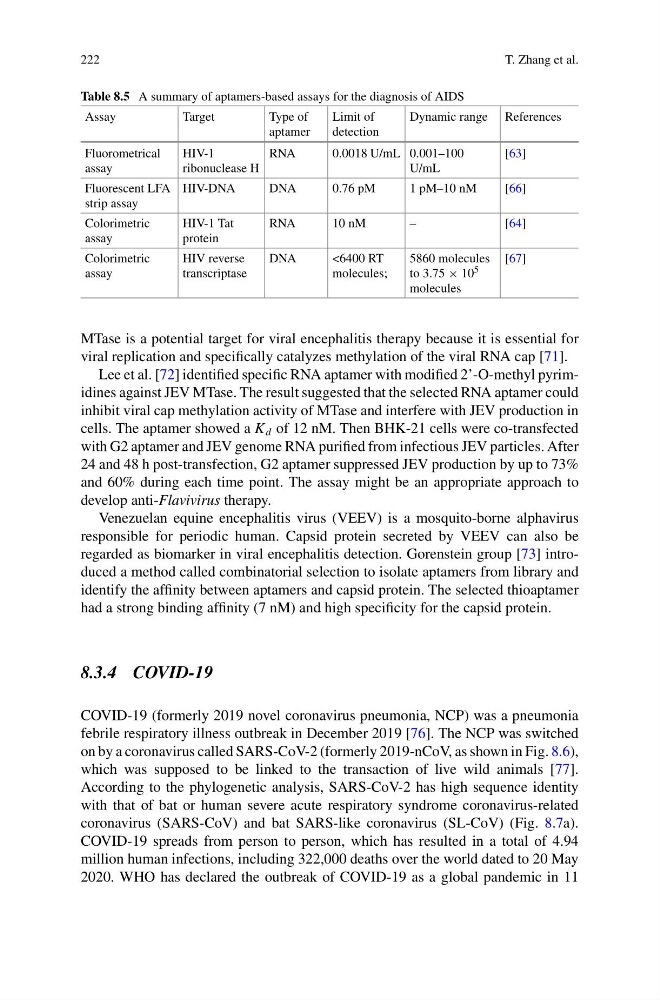
Table 8.5 A summary of aptamers-based assays for the diagnosis of AIDS
Assay
Target
Type of
aptamer
Limit of
detection
Dynamic range References
Fluorometrical
assay
HIV-1
ribonuclease H
RNA
0.0018 U/mL 0.001–100
U/mL
[63]
Fluorescent LFA
strip assay
HIV-DNA
DNA
0.76 pM
1 pM–10 nM
[66]
Colorimetric
assay
HIV-1 Tat
protein
RNA
10 nM
–
[64]
Colorimetric
assay
HIV reverse
transcriptase
DNA
<6400 RT
molecules;
5860 molecules
to 3.75 × 10 5
molecules
[67]
MTase is a potential target for viral encephalitis therapy because it is essential for
viral replication and specifically catalyzes methylation of the viral RNA cap [71].
Lee et al. [72] identified specific RNA aptamer with modified 2’-O-methyl pyrimidines against JEV MTase. The result suggested that the selected RNA aptamer could
inhibit viral cap methylation activity of MTase and interfere with JEV production in
cells. The aptamer showed a K d of 12 nM. Then BHK-21 cells were co-transfected
with G2 aptamer and JEV genome RNA purified from infectious JEV particles. After
24 and 48 h post-transfection, G2 aptamer suppressed JEV production by up to 73%
and 60% during each time point. The assay might be an appropriate approach to
develop anti-Flavivirus therapy.
Venezuelan equine encephalitis virus (VEEV) is a mosquito-borne alphavirus
responsible for periodic human. Capsid protein secreted by VEEV can also be
regarded as biomarker in viral encephalitis detection. Gorenstein group [73] introduced a method called combinatorial selection to isolate aptamers from library and
identify the affinity between aptamers and capsid protein. The selected thioaptamer
had a strong binding affinity (7 nM) and high specificity for the capsid protein.
8.3.4 COVID-19
COVID-19 (formerly 2019 novel coronavirus pneumonia, NCP) was a pneumonia
febrile respiratory illness outbreak in December 2019 [76]. The NCP was switched
on by a coronavirus called SARS-CoV-2 (formerly 2019-nCoV, as shown in Fig. 8.6),
which was supposed to be linked to the transaction of live wild animals [77].
According to the phylogenetic analysis, SARS-CoV-2 has high sequence identity
with that of bat or human severe acute respiratory syndrome coronavirus-related
coronavirus (SARS-CoV) and bat SARS-like coronavirus (SL-CoV) (Fig. 8.7a).
COVID-19 spreads from person to person, which has resulted in a total of 4.94
million human infections, including 322,000 deaths over the world dated to 20 May
2020. WHO has declared the outbreak of COVID-19 as a global pandemic in 11
T. Zhang et al.
Table 8.5 A summary of aptamers-based assays for the diagnosis of AIDS
Assay
Target
Type of
aptamer
Limit of
detection
Dynamic range References
Fluorometrical
assay
HIV-1
ribonuclease H
RNA
0.0018 U/mL 0.001–100
U/mL
[63]
Fluorescent LFA
strip assay
HIV-DNA
DNA
0.76 pM
1 pM–10 nM
[66]
Colorimetric
assay
HIV-1 Tat
protein
RNA
10 nM
–
[64]
Colorimetric
assay
HIV reverse
transcriptase
DNA
<6400 RT
molecules;
5860 molecules
to 3.75 × 10 5
molecules
[67]
MTase is a potential target for viral encephalitis therapy because it is essential for
viral replication and specifically catalyzes methylation of the viral RNA cap [71].
Lee et al. [72] identified specific RNA aptamer with modified 2’-O-methyl pyrimidines against JEV MTase. The result suggested that the selected RNA aptamer could
inhibit viral cap methylation activity of MTase and interfere with JEV production in
cells. The aptamer showed a K d of 12 nM. Then BHK-21 cells were co-transfected
with G2 aptamer and JEV genome RNA purified from infectious JEV particles. After
24 and 48 h post-transfection, G2 aptamer suppressed JEV production by up to 73%
and 60% during each time point. The assay might be an appropriate approach to
develop anti-Flavivirus therapy.
Venezuelan equine encephalitis virus (VEEV) is a mosquito-borne alphavirus
responsible for periodic human. Capsid protein secreted by VEEV can also be
regarded as biomarker in viral encephalitis detection. Gorenstein group [73] introduced a method called combinatorial selection to isolate aptamers from library and
identify the affinity between aptamers and capsid protein. The selected thioaptamer
had a strong binding affinity (7 nM) and high specificity for the capsid protein.
8.3.4 COVID-19
COVID-19 (formerly 2019 novel coronavirus pneumonia, NCP) was a pneumonia
febrile respiratory illness outbreak in December 2019 [76]. The NCP was switched
on by a coronavirus called SARS-CoV-2 (formerly 2019-nCoV, as shown in Fig. 8.6),
which was supposed to be linked to the transaction of live wild animals [77].
According to the phylogenetic analysis, SARS-CoV-2 has high sequence identity
with that of bat or human severe acute respiratory syndrome coronavirus-related
coronavirus (SARS-CoV) and bat SARS-like coronavirus (SL-CoV) (Fig. 8.7a).
COVID-19 spreads from person to person, which has resulted in a total of 4.94
million human infections, including 322,000 deaths over the world dated to 20 May
2020. WHO has declared the outbreak of COVID-19 as a global pandemic in 11