

8 Aptamers for the Diagnosis of Infectious Diseases
221
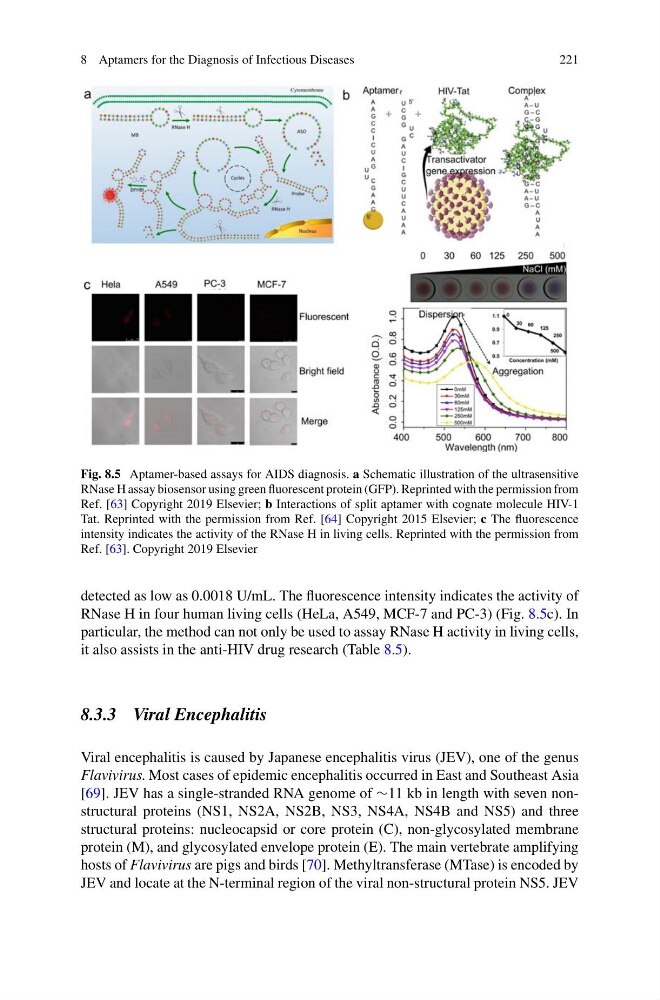
Fig. 8.5 Aptamer-based assays for AIDS diagnosis. a Schematic illustration of the ultrasensitive
RNase H assay biosensor using green fluorescent protein (GFP). Reprinted with the permission from
Ref. [63] Copyright 2019 Elsevier; b Interactions of split aptamer with cognate molecule HIV-1
Tat. Reprinted with the permission from Ref. [64] Copyright 2015 Elsevier; c The fluorescence
intensity indicates the activity of the RNase H in living cells. Reprinted with the permission from
Ref. [63]. Copyright 2019 Elsevier
detected as low as 0.0018 U/mL. The fluorescence intensity indicates the activity of
RNase H in four human living cells (HeLa, A549, MCF-7 and PC-3) (Fig. 8.5c). In
particular, the method can not only be used to assay RNase H activity in living cells,
it also assists in the anti-HIV drug research (Table 8.5).
8.3.3 Viral Encephalitis
Viral encephalitis is caused by Japanese encephalitis virus (JEV), one of the genus
Flavivirus. Most cases of epidemic encephalitis occurred in East and Southeast Asia
[69]. JEV has a single-stranded RNA genome of ∼11 kb in length with seven nonstructural proteins (NS1, NS2A, NS2B, NS3, NS4A, NS4B and NS5) and three
structural proteins: nucleocapsid or core protein (C), non-glycosylated membrane
protein (M), and glycosylated envelope protein (E). The main vertebrate amplifying
hosts of Flavivirus are pigs and birds [70]. Methyltransferase (MTase) is encoded by
JEV and locate at the N-terminal region of the viral non-structural protein NS5. JEV
221
Fig. 8.5 Aptamer-based assays for AIDS diagnosis. a Schematic illustration of the ultrasensitive
RNase H assay biosensor using green fluorescent protein (GFP). Reprinted with the permission from
Ref. [63] Copyright 2019 Elsevier; b Interactions of split aptamer with cognate molecule HIV-1
Tat. Reprinted with the permission from Ref. [64] Copyright 2015 Elsevier; c The fluorescence
intensity indicates the activity of the RNase H in living cells. Reprinted with the permission from
Ref. [63]. Copyright 2019 Elsevier
detected as low as 0.0018 U/mL. The fluorescence intensity indicates the activity of
RNase H in four human living cells (HeLa, A549, MCF-7 and PC-3) (Fig. 8.5c). In
particular, the method can not only be used to assay RNase H activity in living cells,
it also assists in the anti-HIV drug research (Table 8.5).
8.3.3 Viral Encephalitis
Viral encephalitis is caused by Japanese encephalitis virus (JEV), one of the genus
Flavivirus. Most cases of epidemic encephalitis occurred in East and Southeast Asia
[69]. JEV has a single-stranded RNA genome of ∼11 kb in length with seven nonstructural proteins (NS1, NS2A, NS2B, NS3, NS4A, NS4B and NS5) and three
structural proteins: nucleocapsid or core protein (C), non-glycosylated membrane
protein (M), and glycosylated envelope protein (E). The main vertebrate amplifying
hosts of Flavivirus are pigs and birds [70]. Methyltransferase (MTase) is encoded by
JEV and locate at the N-terminal region of the viral non-structural protein NS5. JEV