

184
M. Irfan et al.
7.2.1 Discovery of Aptamers Against Different Types
of Cancer
The worldwide morbidity and mortality of cancer have increased in recent years.
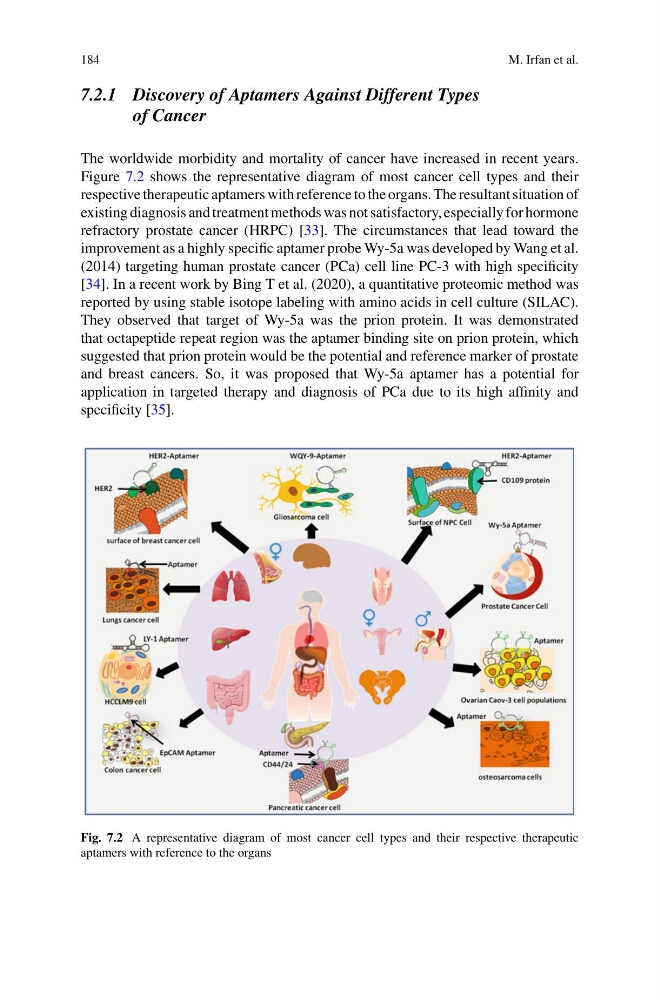
Figure 7.2 shows the representative diagram of most cancer cell types and their
respective therapeutic aptamers with reference to the organs. The resultant situation of
existing diagnosis and treatment methods was not satisfactory, especially for hormone
refractory prostate cancer (HRPC) [33]. The circumstances that lead toward the
improvement as a highly specific aptamer probe Wy-5a was developed by Wang et al.
(2014) targeting human prostate cancer (PCa) cell line PC-3 with high specificity
[34]. In a recent work by Bing T et al. (2020), a quantitative proteomic method was
reported by using stable isotope labeling with amino acids in cell culture (SILAC).
They observed that target of Wy-5a was the prion protein. It was demonstrated
that octapeptide repeat region was the aptamer binding site on prion protein, which
suggested that prion protein would be the potential and reference marker of prostate
and breast cancers. So, it was proposed that Wy-5a aptamer has a potential for
application in targeted therapy and diagnosis of PCa due to its high affinity and
specificity [35].
Fig. 7.2 A representative diagram of most cancer cell types and their respective therapeutic
aptamers with reference to the organs
M. Irfan et al.
7.2.1 Discovery of Aptamers Against Different Types
of Cancer
The worldwide morbidity and mortality of cancer have increased in recent years.
Figure 7.2 shows the representative diagram of most cancer cell types and their
respective therapeutic aptamers with reference to the organs. The resultant situation of
existing diagnosis and treatment methods was not satisfactory, especially for hormone
refractory prostate cancer (HRPC) [33]. The circumstances that lead toward the
improvement as a highly specific aptamer probe Wy-5a was developed by Wang et al.
(2014) targeting human prostate cancer (PCa) cell line PC-3 with high specificity
[34]. In a recent work by Bing T et al. (2020), a quantitative proteomic method was
reported by using stable isotope labeling with amino acids in cell culture (SILAC).
They observed that target of Wy-5a was the prion protein. It was demonstrated
that octapeptide repeat region was the aptamer binding site on prion protein, which
suggested that prion protein would be the potential and reference marker of prostate
and breast cancers. So, it was proposed that Wy-5a aptamer has a potential for
application in targeted therapy and diagnosis of PCa due to its high affinity and
specificity [35].
Fig. 7.2 A representative diagram of most cancer cell types and their respective therapeutic
aptamers with reference to the organs