

7 Aptamers for Personalized Therapeutics
183
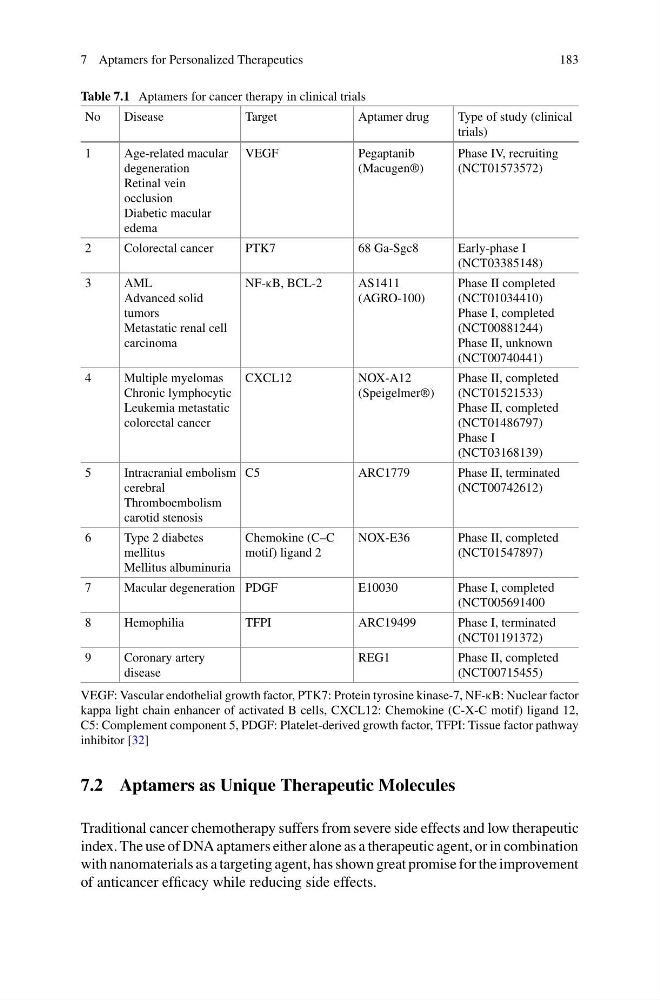
Table 7.1 Aptamers for cancer therapy in clinical trials
No
Disease
Target
Aptamer drug
Type of study (clinical
trials)
1
Age-related macular
degeneration
Retinal vein
occlusion
Diabetic macular
edema
VEGF
Pegaptanib
(Macugen®)
Phase IV, recruiting
(NCT01573572)
2
Colorectal cancer
PTK7
68 Ga-Sgc8
Early-phase I
(NCT03385148)
3
AML
Advanced solid
tumors
Metastatic renal cell
carcinoma
NF-κB, BCL-2
AS1411
(AGRO-100)
Phase II completed
(NCT01034410)
Phase I, completed
(NCT00881244)
Phase II, unknown
(NCT00740441)
4
Multiple myelomas
Chronic lymphocytic
Leukemia metastatic
colorectal cancer
CXCL12
NOX-A12
(Speigelmer®)
Phase II, completed
(NCT01521533)
Phase II, completed
(NCT01486797)
Phase I
(NCT03168139)
5
Intracranial embolism
cerebral
Thromboembolism
carotid stenosis
C5
ARC1779
Phase II, terminated
(NCT00742612)
6
Type 2 diabetes
mellitus
Mellitus albuminuria
Chemokine (C–C
motif) ligand 2
NOX-E36
Phase II, completed
(NCT01547897)
7
Macular degeneration PDGF
E10030
Phase I, completed
(NCT005691400
8
Hemophilia
TFPI
ARC19499
Phase I, terminated
(NCT01191372)
9
Coronary artery
disease
REG1
Phase II, completed
(NCT00715455)
VEGF: Vascular endothelial growth factor, PTK7: Protein tyrosine kinase-7, NF-κB: Nuclear factor
kappa light chain enhancer of activated B cells, CXCL12: Chemokine (C-X-C motif) ligand 12,
C5: Complement component 5, PDGF: Platelet-derived growth factor, TFPI: Tissue factor pathway
inhibitor [32]
7.2 Aptamers as Unique Therapeutic Molecules
Traditional cancer chemotherapy suffers from severe side effects and low therapeutic
index. The use of DNA aptamers either alone as a therapeutic agent, or in combination
with nanomaterials as a targeting agent, has shown great promise for the improvement
of anticancer efficacy while reducing side effects.
183
Table 7.1 Aptamers for cancer therapy in clinical trials
No
Disease
Target
Aptamer drug
Type of study (clinical
trials)
1
Age-related macular
degeneration
Retinal vein
occlusion
Diabetic macular
edema
VEGF
Pegaptanib
(Macugen®)
Phase IV, recruiting
(NCT01573572)
2
Colorectal cancer
PTK7
68 Ga-Sgc8
Early-phase I
(NCT03385148)
3
AML
Advanced solid
tumors
Metastatic renal cell
carcinoma
NF-κB, BCL-2
AS1411
(AGRO-100)
Phase II completed
(NCT01034410)
Phase I, completed
(NCT00881244)
Phase II, unknown
(NCT00740441)
4
Multiple myelomas
Chronic lymphocytic
Leukemia metastatic
colorectal cancer
CXCL12
NOX-A12
(Speigelmer®)
Phase II, completed
(NCT01521533)
Phase II, completed
(NCT01486797)
Phase I
(NCT03168139)
5
Intracranial embolism
cerebral
Thromboembolism
carotid stenosis
C5
ARC1779
Phase II, terminated
(NCT00742612)
6
Type 2 diabetes
mellitus
Mellitus albuminuria
Chemokine (C–C
motif) ligand 2
NOX-E36
Phase II, completed
(NCT01547897)
7
Macular degeneration PDGF
E10030
Phase I, completed
(NCT005691400
8
Hemophilia
TFPI
ARC19499
Phase I, terminated
(NCT01191372)
9
Coronary artery
disease
REG1
Phase II, completed
(NCT00715455)
VEGF: Vascular endothelial growth factor, PTK7: Protein tyrosine kinase-7, NF-κB: Nuclear factor
kappa light chain enhancer of activated B cells, CXCL12: Chemokine (C-X-C motif) ligand 12,
C5: Complement component 5, PDGF: Platelet-derived growth factor, TFPI: Tissue factor pathway
inhibitor [32]
7.2 Aptamers as Unique Therapeutic Molecules
Traditional cancer chemotherapy suffers from severe side effects and low therapeutic
index. The use of DNA aptamers either alone as a therapeutic agent, or in combination
with nanomaterials as a targeting agent, has shown great promise for the improvement
of anticancer efficacy while reducing side effects.