

6
L. Hao and H. Gu
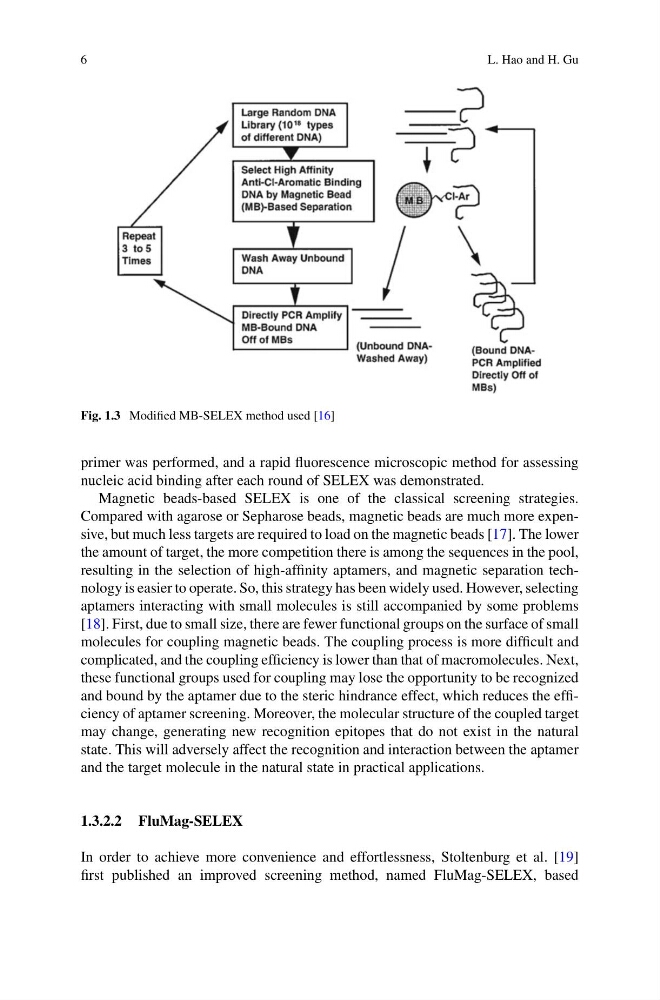
Fig. 1.3 Modified MB-SELEX method used [16]
primer was performed, and a rapid fluorescence microscopic method for assessing
nucleic acid binding after each round of SELEX was demonstrated.
Magnetic beads-based SELEX is one of the classical screening strategies.
Compared with agarose or Sepharose beads, magnetic beads are much more expensive, but much less targets are required to load on the magnetic beads [17]. The lower
the amount of target, the more competition there is among the sequences in the pool,
resulting in the selection of high-affinity aptamers, and magnetic separation technology is easier to operate. So, this strategy has been widely used. However, selecting
aptamers interacting with small molecules is still accompanied by some problems
[18]. First, due to small size, there are fewer functional groups on the surface of small
molecules for coupling magnetic beads. The coupling process is more difficult and
complicated, and the coupling efficiency is lower than that of macromolecules. Next,
these functional groups used for coupling may lose the opportunity to be recognized
and bound by the aptamer due to the steric hindrance effect, which reduces the efficiency of aptamer screening. Moreover, the molecular structure of the coupled target
may change, generating new recognition epitopes that do not exist in the natural
state. This will adversely affect the recognition and interaction between the aptamer
and the target molecule in the natural state in practical applications.
1.3.2.2 FluMag-SELEX
In order to achieve more convenience and effortlessness, Stoltenburg et al. [19]
first published an improved screening method, named FluMag-SELEX, based
L. Hao and H. Gu
Fig. 1.3 Modified MB-SELEX method used [16]
primer was performed, and a rapid fluorescence microscopic method for assessing
nucleic acid binding after each round of SELEX was demonstrated.
Magnetic beads-based SELEX is one of the classical screening strategies.
Compared with agarose or Sepharose beads, magnetic beads are much more expensive, but much less targets are required to load on the magnetic beads [17]. The lower
the amount of target, the more competition there is among the sequences in the pool,
resulting in the selection of high-affinity aptamers, and magnetic separation technology is easier to operate. So, this strategy has been widely used. However, selecting
aptamers interacting with small molecules is still accompanied by some problems
[18]. First, due to small size, there are fewer functional groups on the surface of small
molecules for coupling magnetic beads. The coupling process is more difficult and
complicated, and the coupling efficiency is lower than that of macromolecules. Next,
these functional groups used for coupling may lose the opportunity to be recognized
and bound by the aptamer due to the steric hindrance effect, which reduces the efficiency of aptamer screening. Moreover, the molecular structure of the coupled target
may change, generating new recognition epitopes that do not exist in the natural
state. This will adversely affect the recognition and interaction between the aptamer
and the target molecule in the natural state in practical applications.
1.3.2.2 FluMag-SELEX
In order to achieve more convenience and effortlessness, Stoltenburg et al. [19]
first published an improved screening method, named FluMag-SELEX, based