

4
L. Hao and H. Gu
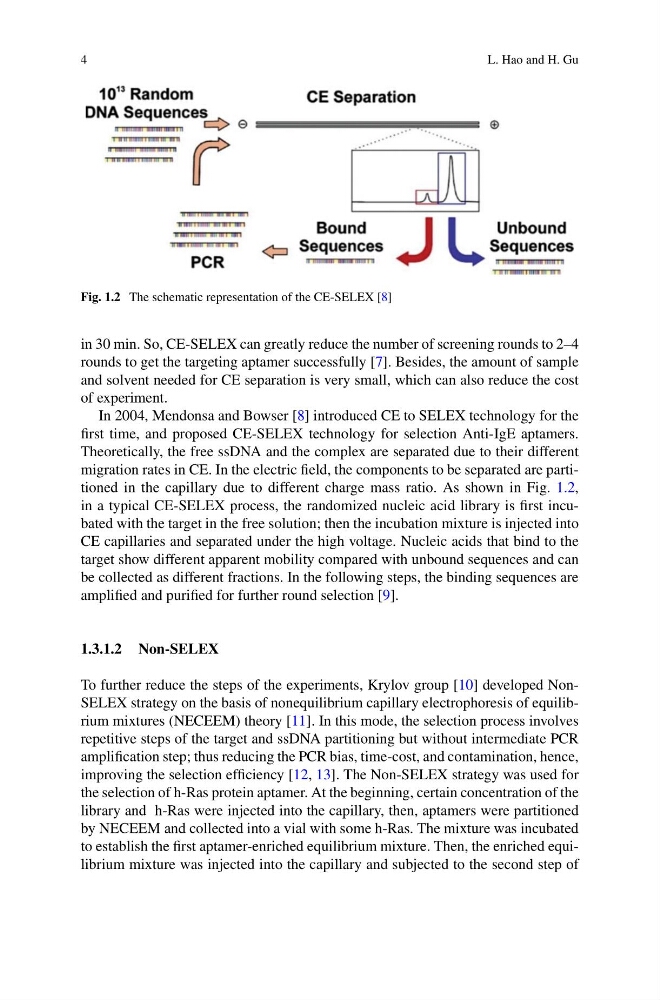
Fig. 1.2 The schematic representation of the CE-SELEX [8]
in 30 min. So, CE-SELEX can greatly reduce the number of screening rounds to 2–4
rounds to get the targeting aptamer successfully [7]. Besides, the amount of sample
and solvent needed for CE separation is very small, which can also reduce the cost
of experiment.
In 2004, Mendonsa and Bowser [8] introduced CE to SELEX technology for the
first time, and proposed CE-SELEX technology for selection Anti-IgE aptamers.
Theoretically, the free ssDNA and the complex are separated due to their different
migration rates in CE. In the electric field, the components to be separated are partitioned in the capillary due to different charge mass ratio. As shown in Fig. 1.2,
in a typical CE-SELEX process, the randomized nucleic acid library is first incubated with the target in the free solution; then the incubation mixture is injected into
CE capillaries and separated under the high voltage. Nucleic acids that bind to the
target show different apparent mobility compared with unbound sequences and can
be collected as different fractions. In the following steps, the binding sequences are
amplified and purified for further round selection [9].
1.3.1.2 Non-SELEX
To further reduce the steps of the experiments, Krylov group [10] developed NonSELEX strategy on the basis of nonequilibrium capillary electrophoresis of equilibrium mixtures (NECEEM) theory [11]. In this mode, the selection process involves
repetitive steps of the target and ssDNA partitioning but without intermediate PCR
amplification step; thus reducing the PCR bias, time-cost, and contamination, hence,
improving the selection efficiency [12, 13]. The Non-SELEX strategy was used for
the selection of h-Ras protein aptamer. At the beginning, certain concentration of the
library and h-Ras were injected into the capillary, then, aptamers were partitioned
by NECEEM and collected into a vial with some h-Ras. The mixture was incubated
to establish the first aptamer-enriched equilibrium mixture. Then, the enriched equilibrium mixture was injected into the capillary and subjected to the second step of
L. Hao and H. Gu
Fig. 1.2 The schematic representation of the CE-SELEX [8]
in 30 min. So, CE-SELEX can greatly reduce the number of screening rounds to 2–4
rounds to get the targeting aptamer successfully [7]. Besides, the amount of sample
and solvent needed for CE separation is very small, which can also reduce the cost
of experiment.
In 2004, Mendonsa and Bowser [8] introduced CE to SELEX technology for the
first time, and proposed CE-SELEX technology for selection Anti-IgE aptamers.
Theoretically, the free ssDNA and the complex are separated due to their different
migration rates in CE. In the electric field, the components to be separated are partitioned in the capillary due to different charge mass ratio. As shown in Fig. 1.2,
in a typical CE-SELEX process, the randomized nucleic acid library is first incubated with the target in the free solution; then the incubation mixture is injected into
CE capillaries and separated under the high voltage. Nucleic acids that bind to the
target show different apparent mobility compared with unbound sequences and can
be collected as different fractions. In the following steps, the binding sequences are
amplified and purified for further round selection [9].
1.3.1.2 Non-SELEX
To further reduce the steps of the experiments, Krylov group [10] developed NonSELEX strategy on the basis of nonequilibrium capillary electrophoresis of equilibrium mixtures (NECEEM) theory [11]. In this mode, the selection process involves
repetitive steps of the target and ssDNA partitioning but without intermediate PCR
amplification step; thus reducing the PCR bias, time-cost, and contamination, hence,
improving the selection efficiency [12, 13]. The Non-SELEX strategy was used for
the selection of h-Ras protein aptamer. At the beginning, certain concentration of the
library and h-Ras were injected into the capillary, then, aptamers were partitioned
by NECEEM and collected into a vial with some h-Ras. The mixture was incubated
to establish the first aptamer-enriched equilibrium mixture. Then, the enriched equilibrium mixture was injected into the capillary and subjected to the second step of