

6 Aptamers for Targeted Therapy
131
1993 · 1994 · 1995 · 1996 · 1997 · 1998 · 1999 · 2000 · 2001 · 2002 · 2003 · 2004
VEGF-165
declared target
NX1838
Composition
difined
Pre-clinical
development
initiated
IND filed
Phase 1
initiated
Gilead acquires
NeXstar
Eyetech
licenses
pegabtanib
Phase 2/3
initiated
Phase 2/3
enrollment
completed
NDA filed
FDA
approval
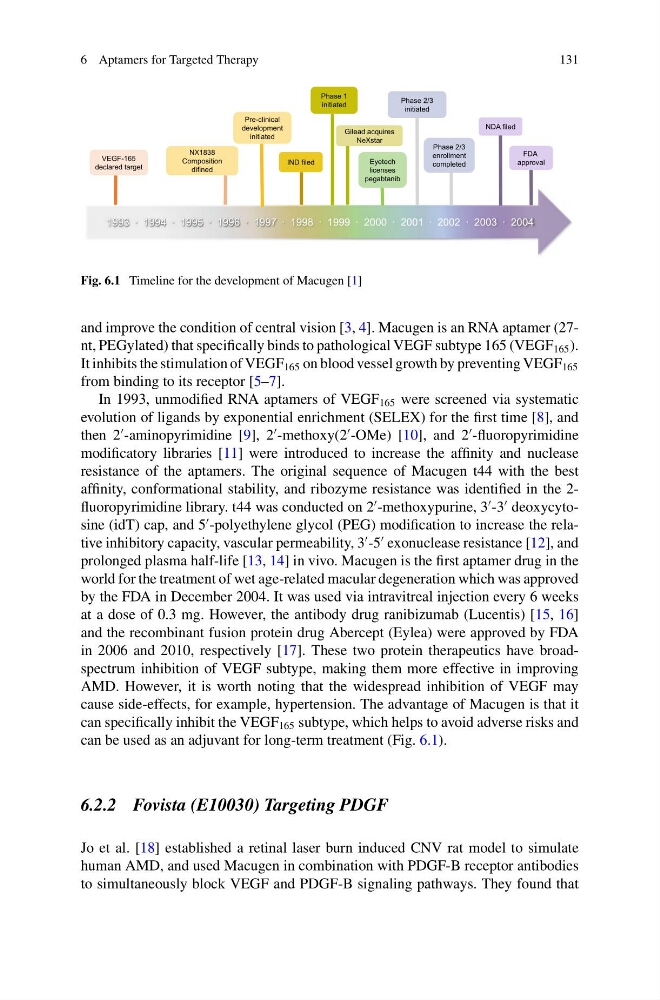
Fig. 6.1 Timeline for the development of Macugen [1]
and improve the condition of central vision [3, 4]. Macugen is an RNA aptamer (27nt, PEGylated) that specifically binds to pathological VEGF subtype 165 (VEGF 165 ).
It inhibits the stimulation of VEGF 165 on blood vessel growth by preventing VEGF 165
from binding to its receptor [5–7].
In 1993, unmodified RNA aptamers of VEGF 165 were screened via systematic
evolution of ligands by exponential enrichment (SELEX) for the first time [8], and
then 2
-aminopyrimidine [9], 2
-methoxy(2
-OMe) [10], and 2
-fluoropyrimidine
modificatory libraries [11] were introduced to increase the affinity and nuclease
resistance of the aptamers. The original sequence of Macugen t44 with the best
affinity, conformational stability, and ribozyme resistance was identified in the 2fluoropyrimidine library. t44 was conducted on 2
-methoxypurine, 3
-3
deoxycytosine (idT) cap, and 5
-polyethylene glycol (PEG) modification to increase the relative inhibitory capacity, vascular permeability, 3
-5
exonuclease resistance [12], and
prolonged plasma half-life [13, 14] in vivo. Macugen is the first aptamer drug in the
world for the treatment of wet age-related macular degeneration which was approved
by the FDA in December 2004. It was used via intravitreal injection every 6 weeks
at a dose of 0.3 mg. However, the antibody drug ranibizumab (Lucentis) [15, 16]
and the recombinant fusion protein drug Abercept (Eylea) were approved by FDA
in 2006 and 2010, respectively [17]. These two protein therapeutics have broadspectrum inhibition of VEGF subtype, making them more effective in improving
AMD. However, it is worth noting that the widespread inhibition of VEGF may
cause side-effects, for example, hypertension. The advantage of Macugen is that it
can specifically inhibit the VEGF 165 subtype, which helps to avoid adverse risks and
can be used as an adjuvant for long-term treatment (Fig. 6.1).
6.2.2 Fovista (E10030) Targeting PDGF
Jo et al. [18] established a retinal laser burn induced CNV rat model to simulate
human AMD, and used Macugen in combination with PDGF-B receptor antibodies
to simultaneously block VEGF and PDGF-B signaling pathways. They found that
131
1993 · 1994 · 1995 · 1996 · 1997 · 1998 · 1999 · 2000 · 2001 · 2002 · 2003 · 2004
VEGF-165
declared target
NX1838
Composition
difined
Pre-clinical
development
initiated
IND filed
Phase 1
initiated
Gilead acquires
NeXstar
Eyetech
licenses
pegabtanib
Phase 2/3
initiated
Phase 2/3
enrollment
completed
NDA filed
FDA
approval
Fig. 6.1 Timeline for the development of Macugen [1]
and improve the condition of central vision [3, 4]. Macugen is an RNA aptamer (27nt, PEGylated) that specifically binds to pathological VEGF subtype 165 (VEGF 165 ).
It inhibits the stimulation of VEGF 165 on blood vessel growth by preventing VEGF 165
from binding to its receptor [5–7].
In 1993, unmodified RNA aptamers of VEGF 165 were screened via systematic
evolution of ligands by exponential enrichment (SELEX) for the first time [8], and
then 2
-aminopyrimidine [9], 2
-methoxy(2
-OMe) [10], and 2
-fluoropyrimidine
modificatory libraries [11] were introduced to increase the affinity and nuclease
resistance of the aptamers. The original sequence of Macugen t44 with the best
affinity, conformational stability, and ribozyme resistance was identified in the 2fluoropyrimidine library. t44 was conducted on 2
-methoxypurine, 3
-3
deoxycytosine (idT) cap, and 5
-polyethylene glycol (PEG) modification to increase the relative inhibitory capacity, vascular permeability, 3
-5
exonuclease resistance [12], and
prolonged plasma half-life [13, 14] in vivo. Macugen is the first aptamer drug in the
world for the treatment of wet age-related macular degeneration which was approved
by the FDA in December 2004. It was used via intravitreal injection every 6 weeks
at a dose of 0.3 mg. However, the antibody drug ranibizumab (Lucentis) [15, 16]
and the recombinant fusion protein drug Abercept (Eylea) were approved by FDA
in 2006 and 2010, respectively [17]. These two protein therapeutics have broadspectrum inhibition of VEGF subtype, making them more effective in improving
AMD. However, it is worth noting that the widespread inhibition of VEGF may
cause side-effects, for example, hypertension. The advantage of Macugen is that it
can specifically inhibit the VEGF 165 subtype, which helps to avoid adverse risks and
can be used as an adjuvant for long-term treatment (Fig. 6.1).
6.2.2 Fovista (E10030) Targeting PDGF
Jo et al. [18] established a retinal laser burn induced CNV rat model to simulate
human AMD, and used Macugen in combination with PDGF-B receptor antibodies
to simultaneously block VEGF and PDGF-B signaling pathways. They found that