

Kinematic and Kinetic Analysis of a Biomechanical Model
65
connection represents ankle dorsiflexion. This study will provide fundamental information and insight into how biarticular muscles affect locomotion, and how this new
biarticular muscle model reacts to perturbations when compared to our previous model
and to animal behavior. Then, findings regarding how to best control biarticular muscles
could be applied to our dog robot [3] or other legged robots.
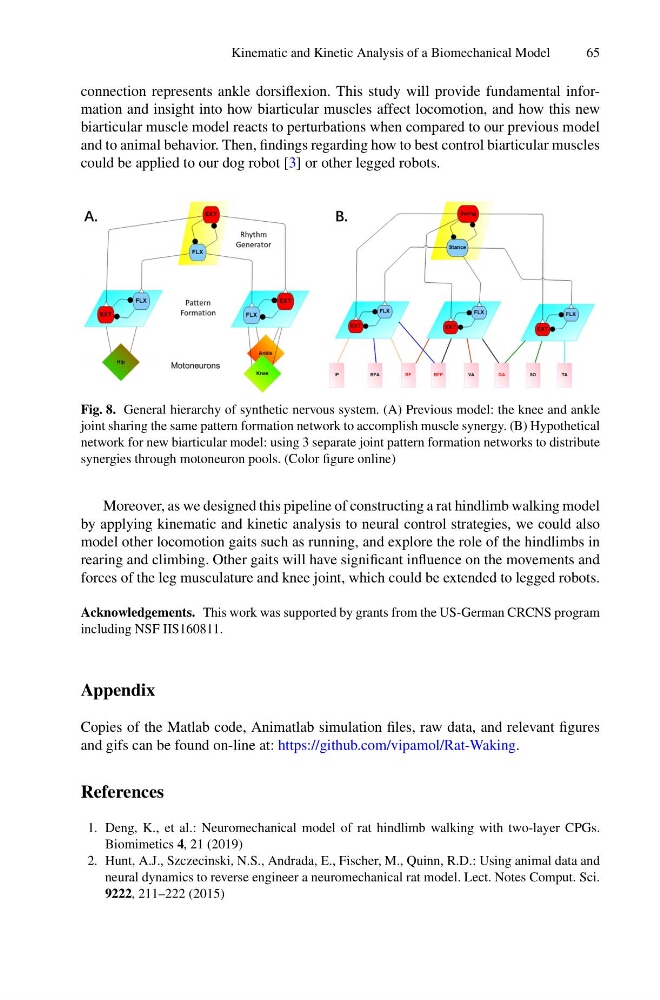
Fig. 8. General hierarchy of synthetic nervous system. (A) Previous model: the knee and ankle
joint sharing the same pattern formation network to accomplish muscle synergy. (B) Hypothetical
network for new biarticular model: using 3 separate joint pattern formation networks to distribute
synergies through motoneuron pools. (Color figure online)
Moreover, as we designed this pipeline of constructing a rat hindlimb walking model
by applying kinematic and kinetic analysis to neural control strategies, we could also
model other locomotion gaits such as running, and explore the role of the hindlimbs in
rearing and climbing. Other gaits will have significant influence on the movements and
forces of the leg musculature and knee joint, which could be extended to legged robots.
Acknowledgements. This work was supported by grants from the US-German CRCNS program
including NSF IIS160811.
Appendix
Copies of the Matlab code, Animatlab simulation files, raw data, and relevant figures
and gifs can be found on-line at: https://github.com/vipamol/Rat-Waking.
References
1. Deng, K., et al.: Neuromechanical model of rat hindlimb walking with two-layer CPGs.
Biomimetics 4, 21 (2019)
2. Hunt, A.J., Szczecinski, N.S., Andrada, E., Fischer, M., Quinn, R.D.: Using animal data and
neural dynamics to reverse engineer a neuromechanical rat model. Lect. Notes Comput. Sci.
9222, 211–222 (2015)
65
connection represents ankle dorsiflexion. This study will provide fundamental information and insight into how biarticular muscles affect locomotion, and how this new
biarticular muscle model reacts to perturbations when compared to our previous model
and to animal behavior. Then, findings regarding how to best control biarticular muscles
could be applied to our dog robot [3] or other legged robots.
Fig. 8. General hierarchy of synthetic nervous system. (A) Previous model: the knee and ankle
joint sharing the same pattern formation network to accomplish muscle synergy. (B) Hypothetical
network for new biarticular model: using 3 separate joint pattern formation networks to distribute
synergies through motoneuron pools. (Color figure online)
Moreover, as we designed this pipeline of constructing a rat hindlimb walking model
by applying kinematic and kinetic analysis to neural control strategies, we could also
model other locomotion gaits such as running, and explore the role of the hindlimbs in
rearing and climbing. Other gaits will have significant influence on the movements and
forces of the leg musculature and knee joint, which could be extended to legged robots.
Acknowledgements. This work was supported by grants from the US-German CRCNS program
including NSF IIS160811.
Appendix
Copies of the Matlab code, Animatlab simulation files, raw data, and relevant figures
and gifs can be found on-line at: https://github.com/vipamol/Rat-Waking.
References
1. Deng, K., et al.: Neuromechanical model of rat hindlimb walking with two-layer CPGs.
Biomimetics 4, 21 (2019)
2. Hunt, A.J., Szczecinski, N.S., Andrada, E., Fischer, M., Quinn, R.D.: Using animal data and
neural dynamics to reverse engineer a neuromechanical rat model. Lect. Notes Comput. Sci.
9222, 211–222 (2015)