

Integrated Topological Planning and Scheduling
33
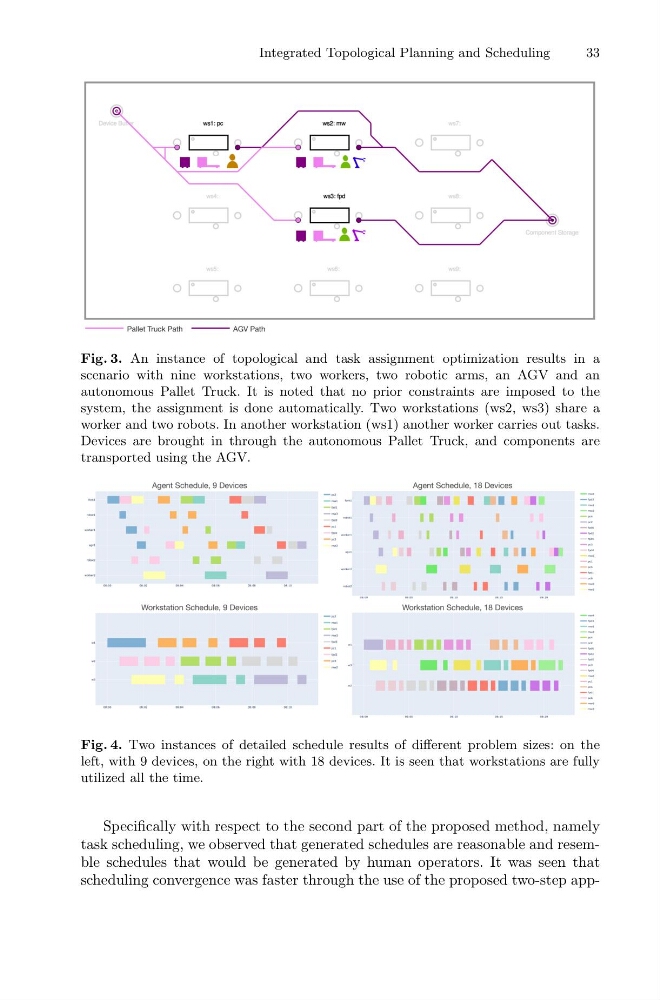
Fig. 3. An instance of topological and task assignment optimization results in a
scenario with nine workstations, two workers, two robotic arms, an AGV and an
autonomous Pallet Truck. It is noted that no prior constraints are imposed to the
system, the assignment is done automatically. Two workstations (ws2, ws3) share a
worker and two robots. In another workstation (ws1) another worker carries out tasks.
Devices are brought in through the autonomous Pallet Truck, and components are
transported using the AGV.
Fig. 4. Two instances of detailed schedule results of different problem sizes: on the
left, with 9 devices, on the right with 18 devices. It is seen that workstations are fully
utilized all the time.
Specifically with respect to the second part of the proposed method, namely
task scheduling, we observed that generated schedules are reasonable and resemble schedules that would be generated by human operators. It was seen that
scheduling convergence was faster through the use of the proposed two-step app-
33
Fig. 3. An instance of topological and task assignment optimization results in a
scenario with nine workstations, two workers, two robotic arms, an AGV and an
autonomous Pallet Truck. It is noted that no prior constraints are imposed to the
system, the assignment is done automatically. Two workstations (ws2, ws3) share a
worker and two robots. In another workstation (ws1) another worker carries out tasks.
Devices are brought in through the autonomous Pallet Truck, and components are
transported using the AGV.
Fig. 4. Two instances of detailed schedule results of different problem sizes: on the
left, with 9 devices, on the right with 18 devices. It is seen that workstations are fully
utilized all the time.
Specifically with respect to the second part of the proposed method, namely
task scheduling, we observed that generated schedules are reasonable and resemble schedules that would be generated by human operators. It was seen that
scheduling convergence was faster through the use of the proposed two-step app-