

Fast Reverse Replays in a Robotic Hippocampal Model
397
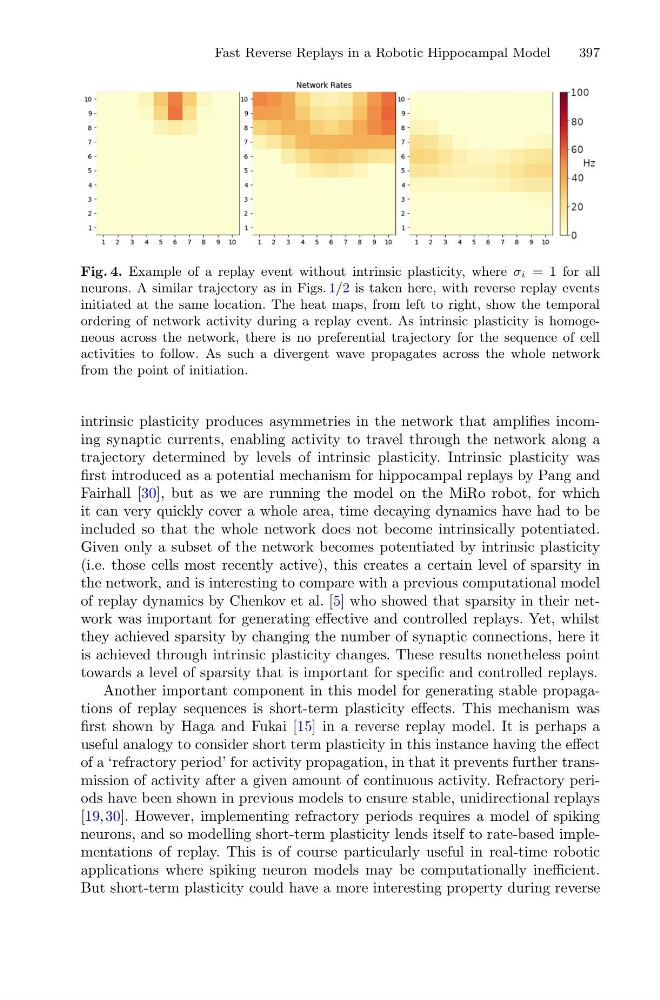
Fig. 4. Example of a replay event without intrinsic plasticity, where σi = 1 for all
neurons. A similar trajectory as in Figs. 1/2 is taken here, with reverse replay events
initiated at the same location. The heat maps, from left to right, show the temporal
ordering of network activity during a replay event. As intrinsic plasticity is homogeneous across the network, there is no preferential trajectory for the sequence of cell
activities to follow. As such a divergent wave propagates across the whole network
from the point of initiation.
intrinsic plasticity produces asymmetries in the network that amplifies incoming synaptic currents, enabling activity to travel through the network along a
trajectory determined by levels of intrinsic plasticity. Intrinsic plasticity was
first introduced as a potential mechanism for hippocampal replays by Pang and
Fairhall [30], but as we are running the model on the MiRo robot, for which
it can very quickly cover a whole area, time decaying dynamics have had to be
included so that the whole network does not become intrinsically potentiated.
Given only a subset of the network becomes potentiated by intrinsic plasticity
(i.e. those cells most recently active), this creates a certain level of sparsity in
the network, and is interesting to compare with a previous computational model
of replay dynamics by Chenkov et al. [5] who showed that sparsity in their network was important for generating effective and controlled replays. Yet, whilst
they achieved sparsity by changing the number of synaptic connections, here it
is achieved through intrinsic plasticity changes. These results nonetheless point
towards a level of sparsity that is important for specific and controlled replays.
Another important component in this model for generating stable propagations of replay sequences is short-term plasticity effects. This mechanism was
first shown by Haga and Fukai [15] in a reverse replay model. It is perhaps a
useful analogy to consider short term plasticity in this instance having the effect
of a ‘refractory period’ for activity propagation, in that it prevents further transmission of activity after a given amount of continuous activity. Refractory periods have been shown in previous models to ensure stable, unidirectional replays
[19,30]. However, implementing refractory periods requires a model of spiking
neurons, and so modelling short-term plasticity lends itself to rate-based implementations of replay. This is of course particularly useful in real-time robotic
applications where spiking neuron models may be computationally inefficient.
But short-term plasticity could have a more interesting property during reverse
397
Fig. 4. Example of a replay event without intrinsic plasticity, where σi = 1 for all
neurons. A similar trajectory as in Figs. 1/2 is taken here, with reverse replay events
initiated at the same location. The heat maps, from left to right, show the temporal
ordering of network activity during a replay event. As intrinsic plasticity is homogeneous across the network, there is no preferential trajectory for the sequence of cell
activities to follow. As such a divergent wave propagates across the whole network
from the point of initiation.
intrinsic plasticity produces asymmetries in the network that amplifies incoming synaptic currents, enabling activity to travel through the network along a
trajectory determined by levels of intrinsic plasticity. Intrinsic plasticity was
first introduced as a potential mechanism for hippocampal replays by Pang and
Fairhall [30], but as we are running the model on the MiRo robot, for which
it can very quickly cover a whole area, time decaying dynamics have had to be
included so that the whole network does not become intrinsically potentiated.
Given only a subset of the network becomes potentiated by intrinsic plasticity
(i.e. those cells most recently active), this creates a certain level of sparsity in
the network, and is interesting to compare with a previous computational model
of replay dynamics by Chenkov et al. [5] who showed that sparsity in their network was important for generating effective and controlled replays. Yet, whilst
they achieved sparsity by changing the number of synaptic connections, here it
is achieved through intrinsic plasticity changes. These results nonetheless point
towards a level of sparsity that is important for specific and controlled replays.
Another important component in this model for generating stable propagations of replay sequences is short-term plasticity effects. This mechanism was
first shown by Haga and Fukai [15] in a reverse replay model. It is perhaps a
useful analogy to consider short term plasticity in this instance having the effect
of a ‘refractory period’ for activity propagation, in that it prevents further transmission of activity after a given amount of continuous activity. Refractory periods have been shown in previous models to ensure stable, unidirectional replays
[19,30]. However, implementing refractory periods requires a model of spiking
neurons, and so modelling short-term plasticity lends itself to rate-based implementations of replay. This is of course particularly useful in real-time robotic
applications where spiking neuron models may be computationally inefficient.
But short-term plasticity could have a more interesting property during reverse