

360
A. Thoma et al.
3.2 Introducing the HV-Index
A mathematical function is required to implement a strategy in a technical system. To
define such a function and for further investigation of the dependency on additional
parameters, an adaption of the Laterality Index (LI) was developed. Usually, the Laterality Index is used as a measure of bias and gives the probability that a bee will fly left or
right. However, this index is adapted such that differentiation between horizontal, e.g.,
flying around the obstacle, and vertical, e.g., flying over the obstacle, evasion is made.
Therefore, this coefficient shall be called the Horizontality Verticality Index (HV). This
index is defined analog to the LI index by:
HV = (V − H) / N
( 1 )
where H and V are the numbers of evasion routes, either horizontal or vertical, chosen
by the bees. N = H + V is the number of flights. An HV index of 1 is associated with a
bias for vertical evasion, while −1 is associated with a bias for horizontal evasion.
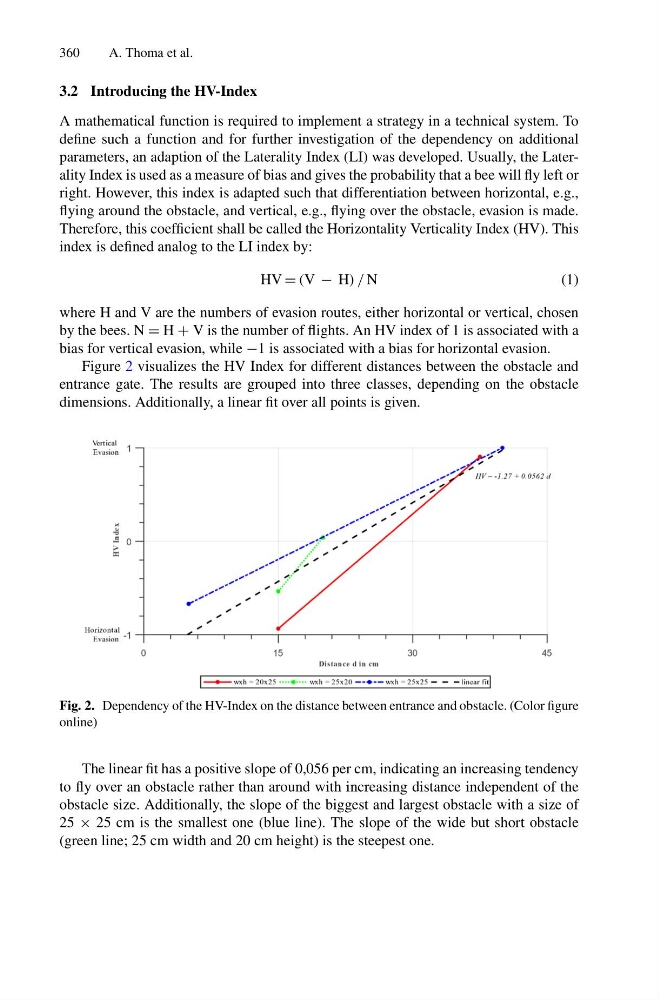
Figure 2 visualizes the HV Index for different distances between the obstacle and
entrance gate. The results are grouped into three classes, depending on the obstacle
dimensions. Additionally, a linear fit over all points is given.
Fig. 2. Dependency of the HV-Index on the distance between entrance and obstacle. (Color figure
online)
The linear fit has a positive slope of 0,056 per cm, indicating an increasing tendency
to fly over an obstacle rather than around with increasing distance independent of the
obstacle size. Additionally, the slope of the biggest and largest obstacle with a size of
25 × 25 cm is the smallest one (blue line). The slope of the wide but short obstacle
(green line; 25 cm width and 20 cm height) is the steepest one.
A. Thoma et al.
3.2 Introducing the HV-Index
A mathematical function is required to implement a strategy in a technical system. To
define such a function and for further investigation of the dependency on additional
parameters, an adaption of the Laterality Index (LI) was developed. Usually, the Laterality Index is used as a measure of bias and gives the probability that a bee will fly left or
right. However, this index is adapted such that differentiation between horizontal, e.g.,
flying around the obstacle, and vertical, e.g., flying over the obstacle, evasion is made.
Therefore, this coefficient shall be called the Horizontality Verticality Index (HV). This
index is defined analog to the LI index by:
HV = (V − H) / N
( 1 )
where H and V are the numbers of evasion routes, either horizontal or vertical, chosen
by the bees. N = H + V is the number of flights. An HV index of 1 is associated with a
bias for vertical evasion, while −1 is associated with a bias for horizontal evasion.
Figure 2 visualizes the HV Index for different distances between the obstacle and
entrance gate. The results are grouped into three classes, depending on the obstacle
dimensions. Additionally, a linear fit over all points is given.
Fig. 2. Dependency of the HV-Index on the distance between entrance and obstacle. (Color figure
online)
The linear fit has a positive slope of 0,056 per cm, indicating an increasing tendency
to fly over an obstacle rather than around with increasing distance independent of the
obstacle size. Additionally, the slope of the biggest and largest obstacle with a size of
25 × 25 cm is the smallest one (blue line). The slope of the wide but short obstacle
(green line; 25 cm width and 20 cm height) is the steepest one.