

308
P. E. Schiebel et al.
behavior is not necessary to passively reorient after collision. However, it may
be that changing strategy after the initial buckling is desirable. For example, to
reverse the direction change caused by the obstacle.
While both the robot and snake body buckled after collision with the wall
(Fig. 4A, t = 4.5 s and Fig. 4B, t = 117 ms), the snake would bend to higher
curvatures. The animal has more joints and a higher aspect ratio (length divided
by width) than the robot. Increasing the number of joints increases the available
resolution while increasing aspect ratio allows higher curvature bends before selfintersection of the body. The snake’s morphology thus allowed it to use more
waves along the body (average wavenumber on the surface of granular matter
is 1.9 waves [25]). We hypothesize that this allows the posterior portions of the
body to continue providing thrust while the front portion is being buckled by
the environmental forces.
We note that, even in our setup where the robot-terrain friction was lowenough that the robot’s wheels would slip relative to the substrate, we still
observed buckling of the joints. This was because our mechanical design offered
very little resistance, less than the other forces acting on the robot, to buckling
toward active motors.
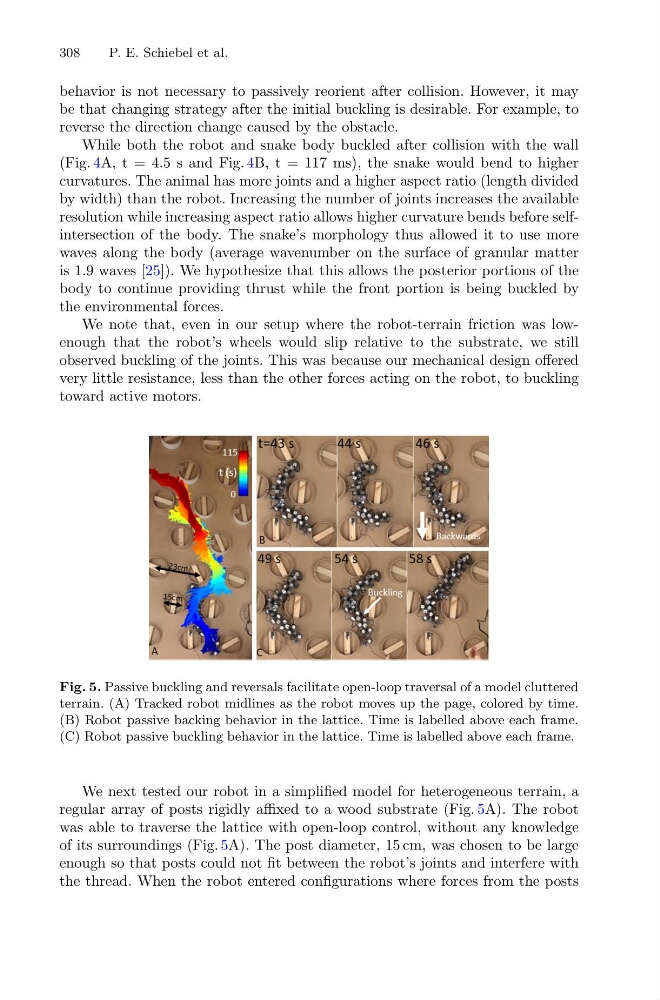
Fig. 5. Passive buckling and reversals facilitate open-loop traversal of a model cluttered
terrain. (A) Tracked robot midlines as the robot moves up the page, colored by time.
(B) Robot passive backing behavior in the lattice. Time is labelled above each frame.
(C) Robot passive buckling behavior in the lattice. Time is labelled above each frame.
We next tested our robot in a simplified model for heterogeneous terrain, a
regular array of posts rigidly affixed to a wood substrate (Fig. 5A). The robot
was able to traverse the lattice with open-loop control, without any knowledge
of its surroundings (Fig. 5A). The post diameter, 15 cm, was chosen to be large
enough so that posts could not fit between the robot’s joints and interfere with
the thread. When the robot entered configurations where forces from the posts
P. E. Schiebel et al.
behavior is not necessary to passively reorient after collision. However, it may
be that changing strategy after the initial buckling is desirable. For example, to
reverse the direction change caused by the obstacle.
While both the robot and snake body buckled after collision with the wall
(Fig. 4A, t = 4.5 s and Fig. 4B, t = 117 ms), the snake would bend to higher
curvatures. The animal has more joints and a higher aspect ratio (length divided
by width) than the robot. Increasing the number of joints increases the available
resolution while increasing aspect ratio allows higher curvature bends before selfintersection of the body. The snake’s morphology thus allowed it to use more
waves along the body (average wavenumber on the surface of granular matter
is 1.9 waves [25]). We hypothesize that this allows the posterior portions of the
body to continue providing thrust while the front portion is being buckled by
the environmental forces.
We note that, even in our setup where the robot-terrain friction was lowenough that the robot’s wheels would slip relative to the substrate, we still
observed buckling of the joints. This was because our mechanical design offered
very little resistance, less than the other forces acting on the robot, to buckling
toward active motors.
Fig. 5. Passive buckling and reversals facilitate open-loop traversal of a model cluttered
terrain. (A) Tracked robot midlines as the robot moves up the page, colored by time.
(B) Robot passive backing behavior in the lattice. Time is labelled above each frame.
(C) Robot passive buckling behavior in the lattice. Time is labelled above each frame.
We next tested our robot in a simplified model for heterogeneous terrain, a
regular array of posts rigidly affixed to a wood substrate (Fig. 5A). The robot
was able to traverse the lattice with open-loop control, without any knowledge
of its surroundings (Fig. 5A). The post diameter, 15 cm, was chosen to be large
enough so that posts could not fit between the robot’s joints and interfere with
the thread. When the robot entered configurations where forces from the posts