

Robophysical Modeling of Soft Limbless Locomotors
307
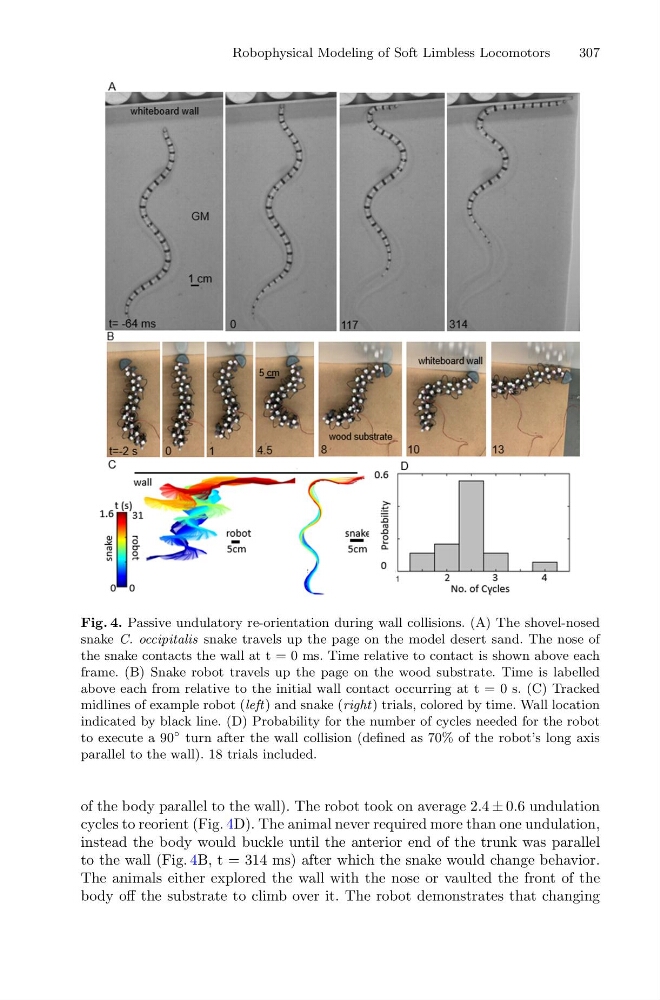
Fig. 4. Passive undulatory re-orientation during wall collisions. (A) The shovel-nosed
snake C. occipitalis snake travels up the page on the model desert sand. The nose of
the snake contacts the wall at t = 0 ms. Time relative to contact is shown above each
frame. (B) Snake robot travels up the page on the wood substrate. Time is labelled
above each from relative to the initial wall contact occurring at t = 0 s. (C) Tracked
midlines of example robot (left) and snake (right) trials, colored by time. Wall location
indicated by black line. (D) Probability for the number of cycles needed for the robot
to execute a 90
◦ turn after the wall collision (defined as 70% of the robot’s long axis
parallel to the wall). 18 trials included.
of the body parallel to the wall). The robot took on average 2.4 ± 0.6 undulation
cycles to reorient (Fig. 4D). The animal never required more than one undulation,
instead the body would buckle until the anterior end of the trunk was parallel
to the wall (Fig. 4B, t = 314 ms) after which the snake would change behavior.
The animals either explored the wall with the nose or vaulted the front of the
body off the substrate to climb over it. The robot demonstrates that changing
307
Fig. 4. Passive undulatory re-orientation during wall collisions. (A) The shovel-nosed
snake C. occipitalis snake travels up the page on the model desert sand. The nose of
the snake contacts the wall at t = 0 ms. Time relative to contact is shown above each
frame. (B) Snake robot travels up the page on the wood substrate. Time is labelled
above each from relative to the initial wall contact occurring at t = 0 s. (C) Tracked
midlines of example robot (left) and snake (right) trials, colored by time. Wall location
indicated by black line. (D) Probability for the number of cycles needed for the robot
to execute a 90
◦ turn after the wall collision (defined as 70% of the robot’s long axis
parallel to the wall). 18 trials included.
of the body parallel to the wall). The robot took on average 2.4 ± 0.6 undulation
cycles to reorient (Fig. 4D). The animal never required more than one undulation,
instead the body would buckle until the anterior end of the trunk was parallel
to the wall (Fig. 4B, t = 314 ms) after which the snake would change behavior.
The animals either explored the wall with the nose or vaulted the front of the
body off the substrate to climb over it. The robot demonstrates that changing