

Neuromechanical Model of fCO Sensory Inhibition
151
0 2 4 6 8 10
t (s)
0
200
300
0 2 4 6 8 10
Hz
t (s)
0
20
mV
40
t (s)
0 2 4 6 8 10
t (s)
0 2 4 6 8 10
0
-0.4
t (s)
0 2 4 6 8 10
t (s)
0 2 4 6 8 10
rad
-0.8
Open Loop
Closed Loop
Slow MN Firing Frequency
= Ext
= Flex
Slow Muscle Fiber
Membrane Voltage
= Ext
= Flex
Joint Rotation
Flexion Position and Velocity Inhibited
fCO
Stretch
100
0.4
0 2 4 6 8 10
t (s)
0
20
40
0 2 4 6 8 10
Hz
t (s)
0
1
mV
2
t (s)
0 2 4 6 8 10
t (s)
0 2 4 6 8 10
0
-0.4
t (s)
0 2 4 6 8 10
t (s)
0 2 4 6 8 10
rad
-0.8
Open Loop
Closed Loop
Slow MN Firing Frequency
= Ext
= Flex
Slow Muscle Fiber
Membrane Voltage
= Ext
= Flex
Joint Rotation
(a) Joint Flexion
fCO
Stretch
(b) Joint Extension
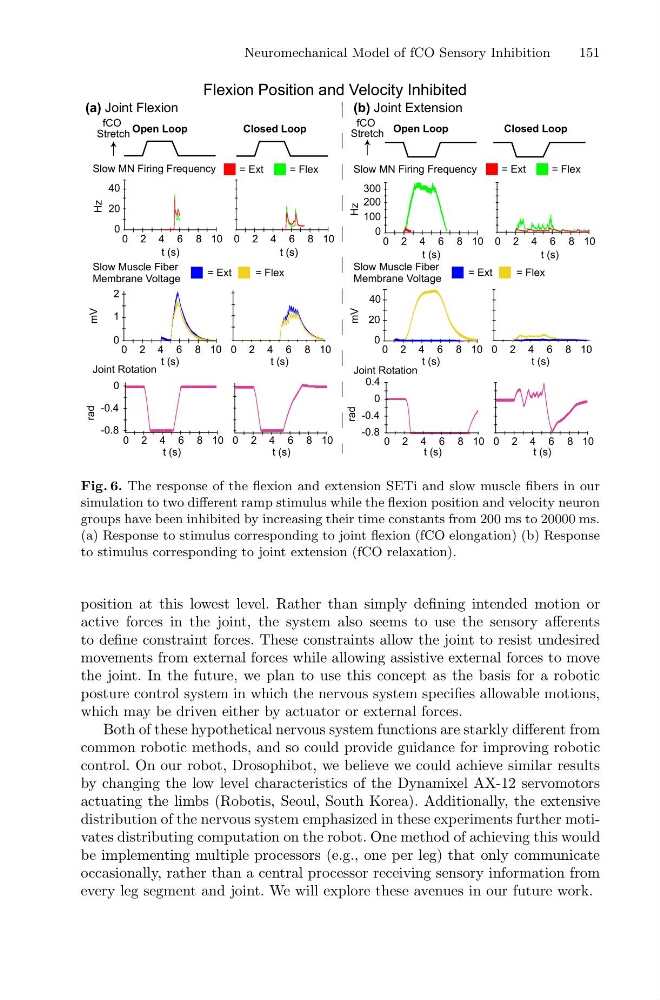
Fig. 6. The response of the flexion and extension SETi and slow muscle fibers in our
simulation to two different ramp stimulus while the flexion position and velocity neuron
groups have been inhibited by increasing their time constants from 200 ms to 20000 ms.
(a) Response to stimulus corresponding to joint flexion (fCO elongation) (b) Response
to stimulus corresponding to joint extension (fCO relaxation).
position at this lowest level. Rather than simply defining intended motion or
active forces in the joint, the system also seems to use the sensory afferents
to define constraint forces. These constraints allow the joint to resist undesired
movements from external forces while allowing assistive external forces to move
the joint. In the future, we plan to use this concept as the basis for a robotic
posture control system in which the nervous system specifies allowable motions,
which may be driven either by actuator or external forces.
Both of these hypothetical nervous system functions are starkly different from
common robotic methods, and so could provide guidance for improving robotic
control. On our robot, Drosophibot, we believe we could achieve similar results
by changing the low level characteristics of the Dynamixel AX-12 servomotors
actuating the limbs (Robotis, Seoul, South Korea). Additionally, the extensive
distribution of the nervous system emphasized in these experiments further motivates distributing computation on the robot. One method of achieving this would
be implementing multiple processors (e.g., one per leg) that only communicate
occasionally, rather than a central processor receiving sensory information from
every leg segment and joint. We will explore these avenues in our future work.
151
0 2 4 6 8 10
t (s)
0
200
300
0 2 4 6 8 10
Hz
t (s)
0
20
mV
40
t (s)
0 2 4 6 8 10
t (s)
0 2 4 6 8 10
0
-0.4
t (s)
0 2 4 6 8 10
t (s)
0 2 4 6 8 10
rad
-0.8
Open Loop
Closed Loop
Slow MN Firing Frequency
= Ext
= Flex
Slow Muscle Fiber
Membrane Voltage
= Ext
= Flex
Joint Rotation
Flexion Position and Velocity Inhibited
fCO
Stretch
100
0.4
0 2 4 6 8 10
t (s)
0
20
40
0 2 4 6 8 10
Hz
t (s)
0
1
mV
2
t (s)
0 2 4 6 8 10
t (s)
0 2 4 6 8 10
0
-0.4
t (s)
0 2 4 6 8 10
t (s)
0 2 4 6 8 10
rad
-0.8
Open Loop
Closed Loop
Slow MN Firing Frequency
= Ext
= Flex
Slow Muscle Fiber
Membrane Voltage
= Ext
= Flex
Joint Rotation
(a) Joint Flexion
fCO
Stretch
(b) Joint Extension
Fig. 6. The response of the flexion and extension SETi and slow muscle fibers in our
simulation to two different ramp stimulus while the flexion position and velocity neuron
groups have been inhibited by increasing their time constants from 200 ms to 20000 ms.
(a) Response to stimulus corresponding to joint flexion (fCO elongation) (b) Response
to stimulus corresponding to joint extension (fCO relaxation).
position at this lowest level. Rather than simply defining intended motion or
active forces in the joint, the system also seems to use the sensory afferents
to define constraint forces. These constraints allow the joint to resist undesired
movements from external forces while allowing assistive external forces to move
the joint. In the future, we plan to use this concept as the basis for a robotic
posture control system in which the nervous system specifies allowable motions,
which may be driven either by actuator or external forces.
Both of these hypothetical nervous system functions are starkly different from
common robotic methods, and so could provide guidance for improving robotic
control. On our robot, Drosophibot, we believe we could achieve similar results
by changing the low level characteristics of the Dynamixel AX-12 servomotors
actuating the limbs (Robotis, Seoul, South Korea). Additionally, the extensive
distribution of the nervous system emphasized in these experiments further motivates distributing computation on the robot. One method of achieving this would
be implementing multiple processors (e.g., one per leg) that only communicate
occasionally, rather than a central processor receiving sensory information from
every leg segment and joint. We will explore these avenues in our future work.