

1. Prepare 0.1% SDS solution for the stripping.
2. Bring the stripping solution to boil using a microwave.
3. Put the membrane in a plastic box with the RNA surface
upwards. Pour the hot stripping solution (85–95
C) directly
onto the membrane until the membrane floats in the solution.
4. Wait for 20 min.
5. Repeat steps 1–4.
6. Rinse the membrane in 2Â SSC buffer to remove the SDS.
Proceed to pre-hybridization in PerfectHyb Plus buffer, or
store the membrane in a plastic sleeve at RT until needed.
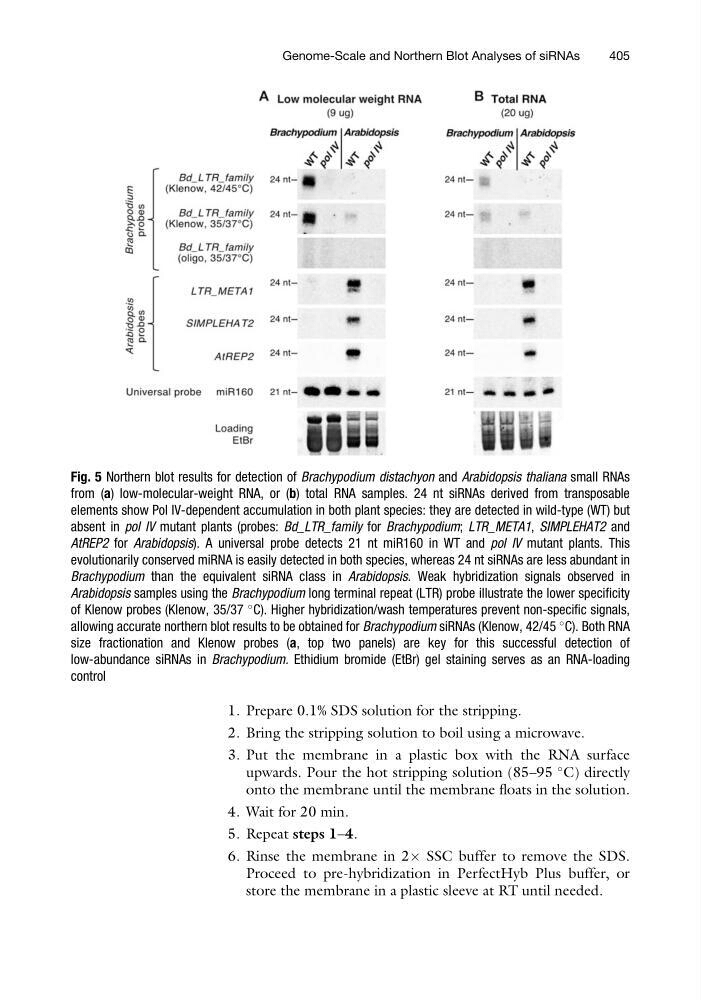
Fig. 5 Northern blot results for detection of Brachypodium distachyon and Arabidopsis thaliana small RNAs
from (a) low-molecular-weight RNA, or (b) total RNA samples. 24 nt siRNAs derived from transposable
elements show Pol IV-dependent accumulation in both plant species: they are detected in wild-type (WT) but
absent in pol IV mutant plants (probes: Bd_LTR_family for Brachypodium; LTR_META1, SIMPLEHAT2 and
AtREP2 for Arabidopsis). A universal probe detects 21 nt miR160 in WT and pol IV mutant plants. This
evolutionarily conserved miRNA is easily detected in both species, whereas 24 nt siRNAs are less abundant in
Brachypodium than the equivalent siRNA class in Arabidopsis. Weak hybridization signals observed in
Arabidopsis samples using the Brachypodium long terminal repeat (LTR) probe illustrate the lower specificity
of Klenow probes (Klenow, 35/37
C). Higher hybridization/wash temperatures prevent non-specific signals,
allowing accurate northern blot results to be obtained for Brachypodium siRNAs (Klenow, 42/45
C). Both RNA
size fractionation and Klenow probes (a, top two panels) are key for this successful detection of
low-abundance siRNAs in Brachypodium. Ethidium bromide (EtBr) gel staining serves as an RNA-loading
control
Genome-Scale and Northern Blot Analyses of siRNAs
405
2. Bring the stripping solution to boil using a microwave.
3. Put the membrane in a plastic box with the RNA surface
upwards. Pour the hot stripping solution (85–95
C) directly
onto the membrane until the membrane floats in the solution.
4. Wait for 20 min.
5. Repeat steps 1–4.
6. Rinse the membrane in 2Â SSC buffer to remove the SDS.
Proceed to pre-hybridization in PerfectHyb Plus buffer, or
store the membrane in a plastic sleeve at RT until needed.
Fig. 5 Northern blot results for detection of Brachypodium distachyon and Arabidopsis thaliana small RNAs
from (a) low-molecular-weight RNA, or (b) total RNA samples. 24 nt siRNAs derived from transposable
elements show Pol IV-dependent accumulation in both plant species: they are detected in wild-type (WT) but
absent in pol IV mutant plants (probes: Bd_LTR_family for Brachypodium; LTR_META1, SIMPLEHAT2 and
AtREP2 for Arabidopsis). A universal probe detects 21 nt miR160 in WT and pol IV mutant plants. This
evolutionarily conserved miRNA is easily detected in both species, whereas 24 nt siRNAs are less abundant in
Brachypodium than the equivalent siRNA class in Arabidopsis. Weak hybridization signals observed in
Arabidopsis samples using the Brachypodium long terminal repeat (LTR) probe illustrate the lower specificity
of Klenow probes (Klenow, 35/37
C). Higher hybridization/wash temperatures prevent non-specific signals,
allowing accurate northern blot results to be obtained for Brachypodium siRNAs (Klenow, 42/45
C). Both RNA
size fractionation and Klenow probes (a, top two panels) are key for this successful detection of
low-abundance siRNAs in Brachypodium. Ethidium bromide (EtBr) gel staining serves as an RNA-loading
control
Genome-Scale and Northern Blot Analyses of siRNAs
405