

26
R. W. Taylor and V. Sandoghdar
(a)
(b)
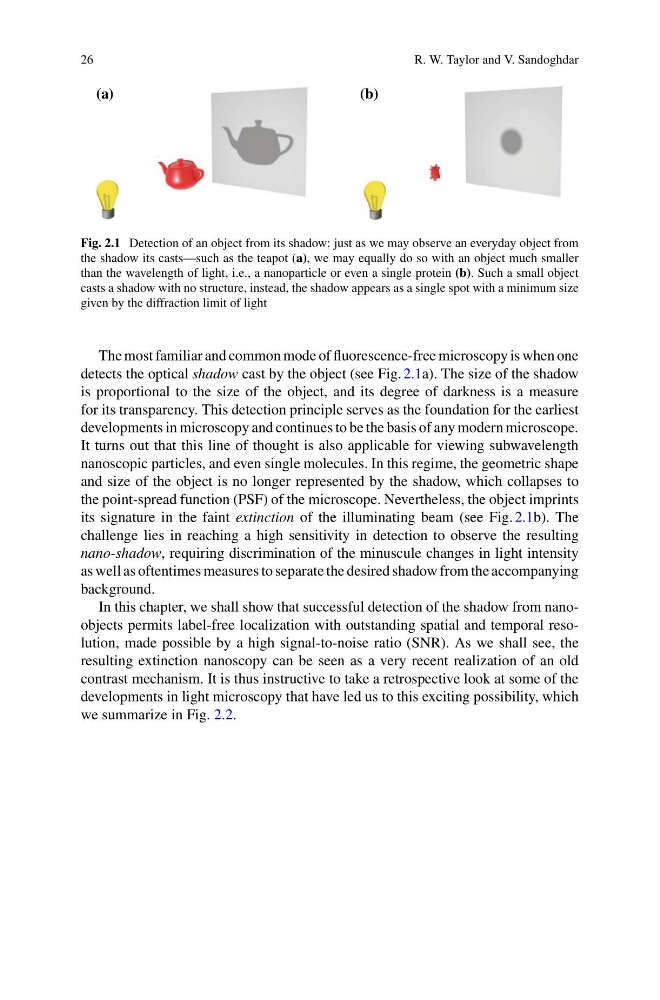
Fig. 2.1 Detection of an object from its shadow: just as we may observe an everyday object from
the shadow its casts—such as the teapot (a), we may equally do so with an object much smaller
than the wavelength of light, i.e., a nanoparticle or even a single protein (b). Such a small object
casts a shadow with no structure, instead, the shadow appears as a single spot with a minimum size
given by the diffraction limit of light
The most familiar and common mode of fluorescence-free microscopy is when one
detects the optical shadow cast by the object (see Fig. 2.1a). The size of the shadow
is proportional to the size of the object, and its degree of darkness is a measure
for its transparency. This detection principle serves as the foundation for the earliest
developments in microscopy and continues to be the basis of any modern microscope.
It turns out that this line of thought is also applicable for viewing subwavelength
nanoscopic particles, and even single molecules. In this regime, the geometric shape
and size of the object is no longer represented by the shadow, which collapses to
the point-spread function (PSF) of the microscope. Nevertheless, the object imprints
its signature in the faint extinction of the illuminating beam (see Fig. 2.1b). The
challenge lies in reaching a high sensitivity in detection to observe the resulting
nano-shadow, requiring discrimination of the minuscule changes in light intensity
as well as oftentimes measures to separate the desired shadow from the accompanying
background.
In this chapter, we shall show that successful detection of the shadow from nanoobjects permits label-free localization with outstanding spatial and temporal resolution, made possible by a high signal-to-noise ratio (SNR). As we shall see, the
resulting extinction nanoscopy can be seen as a very recent realization of an old
contrast mechanism. It is thus instructive to take a retrospective look at some of the
developments in light microscopy that have led us to this exciting possibility, which
we summarize in Fig. 2.2.
R. W. Taylor and V. Sandoghdar
(a)
(b)
Fig. 2.1 Detection of an object from its shadow: just as we may observe an everyday object from
the shadow its casts—such as the teapot (a), we may equally do so with an object much smaller
than the wavelength of light, i.e., a nanoparticle or even a single protein (b). Such a small object
casts a shadow with no structure, instead, the shadow appears as a single spot with a minimum size
given by the diffraction limit of light
The most familiar and common mode of fluorescence-free microscopy is when one
detects the optical shadow cast by the object (see Fig. 2.1a). The size of the shadow
is proportional to the size of the object, and its degree of darkness is a measure
for its transparency. This detection principle serves as the foundation for the earliest
developments in microscopy and continues to be the basis of any modern microscope.
It turns out that this line of thought is also applicable for viewing subwavelength
nanoscopic particles, and even single molecules. In this regime, the geometric shape
and size of the object is no longer represented by the shadow, which collapses to
the point-spread function (PSF) of the microscope. Nevertheless, the object imprints
its signature in the faint extinction of the illuminating beam (see Fig. 2.1b). The
challenge lies in reaching a high sensitivity in detection to observe the resulting
nano-shadow, requiring discrimination of the minuscule changes in light intensity
as well as oftentimes measures to separate the desired shadow from the accompanying
background.
In this chapter, we shall show that successful detection of the shadow from nanoobjects permits label-free localization with outstanding spatial and temporal resolution, made possible by a high signal-to-noise ratio (SNR). As we shall see, the
resulting extinction nanoscopy can be seen as a very recent realization of an old
contrast mechanism. It is thus instructive to take a retrospective look at some of the
developments in light microscopy that have led us to this exciting possibility, which
we summarize in Fig. 2.2.