

264
O. Tzang et al.
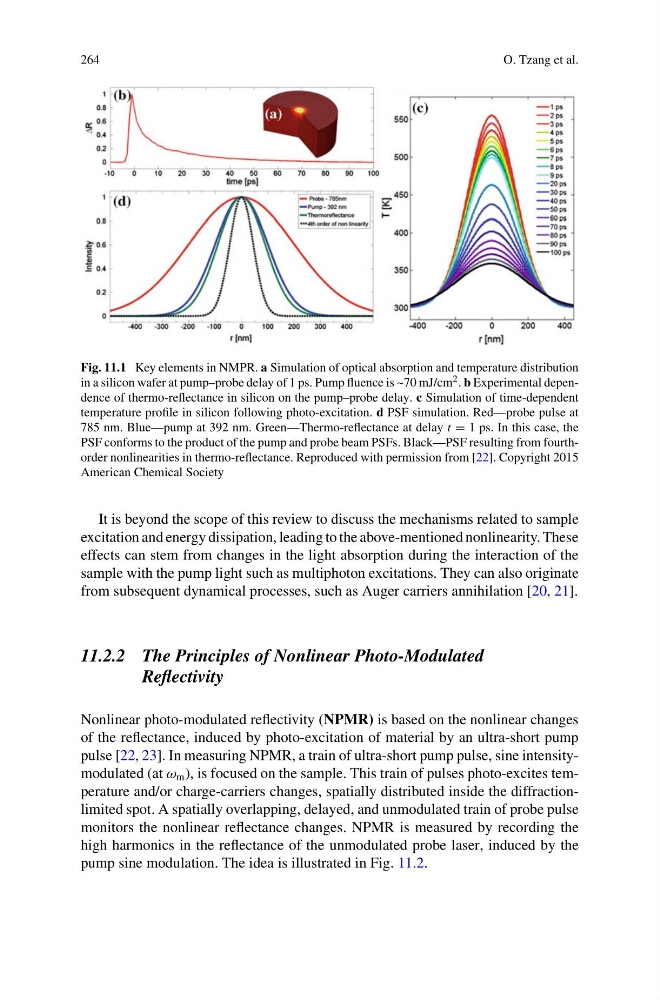
Fig. 11.1 Key elements in NMPR. a Simulation of optical absorption and temperature distribution
in a silicon wafer at pump–probe delay of 1 ps. Pump fluence is ~70 mJ/cm 2 . b Experimental dependence of thermo-reflectance in silicon on the pump–probe delay. c Simulation of time-dependent
temperature profile in silicon following photo-excitation. d PSF simulation. Red—probe pulse at
785 nm. Blue—pump at 392 nm. Green—Thermo-reflectance at delay t = 1 ps. In this case, the
PSF conforms to the product of the pump and probe beam PSFs. Black—PSF resulting from fourthorder nonlinearities in thermo-reflectance. Reproduced with permission from [22]. Copyright 2015
American Chemical Society
It is beyond the scope of this review to discuss the mechanisms related to sample
excitation and energy dissipation, leading to the above-mentioned nonlinearity. These
effects can stem from changes in the light absorption during the interaction of the
sample with the pump light such as multiphoton excitations. They can also originate
from subsequent dynamical processes, such as Auger carriers annihilation [20, 21].
11.2.2 The Principles of Nonlinear Photo-Modulated
Reflectivity
Nonlinear photo-modulated reflectivity (NPMR) is based on the nonlinear changes
of the reflectance, induced by photo-excitation of material by an ultra-short pump
pulse [22, 23]. In measuring NPMR, a train of ultra-short pump pulse, sine intensitymodulated (at ω m ), is focused on the sample. This train of pulses photo-excites temperature and/or charge-carriers changes, spatially distributed inside the diffractionlimited spot. A spatially overlapping, delayed, and unmodulated train of probe pulse
monitors the nonlinear reflectance changes. NPMR is measured by recording the
high harmonics in the reflectance of the unmodulated probe laser, induced by the
pump sine modulation. The idea is illustrated in Fig. 11.2.
O. Tzang et al.
Fig. 11.1 Key elements in NMPR. a Simulation of optical absorption and temperature distribution
in a silicon wafer at pump–probe delay of 1 ps. Pump fluence is ~70 mJ/cm 2 . b Experimental dependence of thermo-reflectance in silicon on the pump–probe delay. c Simulation of time-dependent
temperature profile in silicon following photo-excitation. d PSF simulation. Red—probe pulse at
785 nm. Blue—pump at 392 nm. Green—Thermo-reflectance at delay t = 1 ps. In this case, the
PSF conforms to the product of the pump and probe beam PSFs. Black—PSF resulting from fourthorder nonlinearities in thermo-reflectance. Reproduced with permission from [22]. Copyright 2015
American Chemical Society
It is beyond the scope of this review to discuss the mechanisms related to sample
excitation and energy dissipation, leading to the above-mentioned nonlinearity. These
effects can stem from changes in the light absorption during the interaction of the
sample with the pump light such as multiphoton excitations. They can also originate
from subsequent dynamical processes, such as Auger carriers annihilation [20, 21].
11.2.2 The Principles of Nonlinear Photo-Modulated
Reflectivity
Nonlinear photo-modulated reflectivity (NPMR) is based on the nonlinear changes
of the reflectance, induced by photo-excitation of material by an ultra-short pump
pulse [22, 23]. In measuring NPMR, a train of ultra-short pump pulse, sine intensitymodulated (at ω m ), is focused on the sample. This train of pulses photo-excites temperature and/or charge-carriers changes, spatially distributed inside the diffractionlimited spot. A spatially overlapping, delayed, and unmodulated train of probe pulse
monitors the nonlinear reflectance changes. NPMR is measured by recording the
high harmonics in the reflectance of the unmodulated probe laser, induced by the
pump sine modulation. The idea is illustrated in Fig. 11.2.