

5 Near-Field Scanning Optical Microscope Combined with Digital …
133
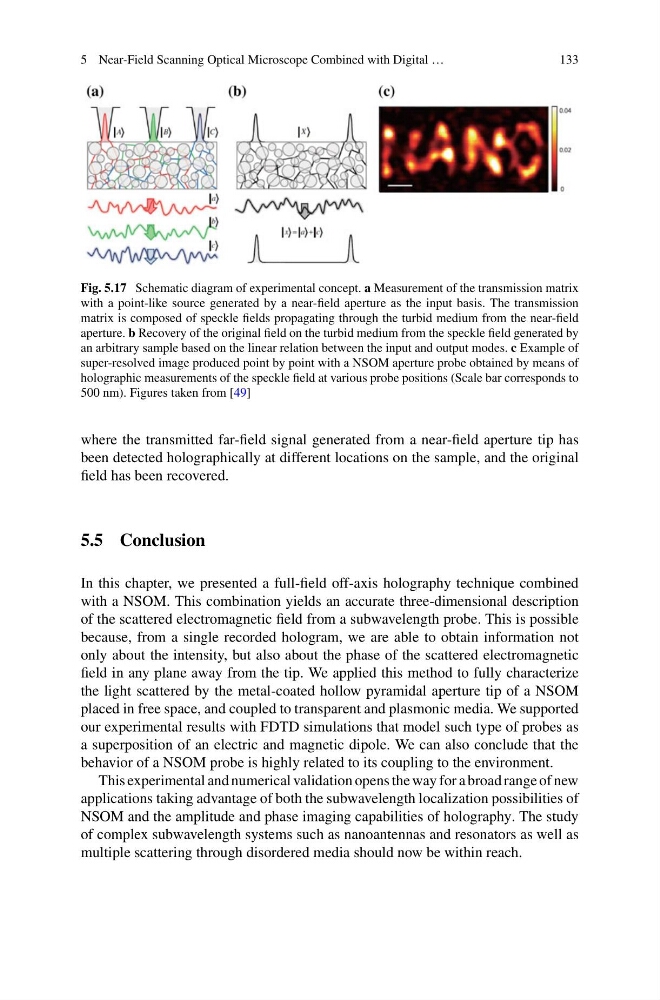
Fig. 5.17 Schematic diagram of experimental concept. a Measurement of the transmission matrix
with a point-like source generated by a near-field aperture as the input basis. The transmission
matrix is composed of speckle fields propagating through the turbid medium from the near-field
aperture. b Recovery of the original field on the turbid medium from the speckle field generated by
an arbitrary sample based on the linear relation between the input and output modes. c Example of
super-resolved image produced point by point with a NSOM aperture probe obtained by means of
holographic measurements of the speckle field at various probe positions (Scale bar corresponds to
500 nm). Figures taken from [49]
where the transmitted far-field signal generated from a near-field aperture tip has
been detected holographically at different locations on the sample, and the original
field has been recovered.
5.5 Conclusion
In this chapter, we presented a full-field off-axis holography technique combined
with a NSOM. This combination yields an accurate three-dimensional description
of the scattered electromagnetic field from a subwavelength probe. This is possible
because, from a single recorded hologram, we are able to obtain information not
only about the intensity, but also about the phase of the scattered electromagnetic
field in any plane away from the tip. We applied this method to fully characterize
the light scattered by the metal-coated hollow pyramidal aperture tip of a NSOM
placed in free space, and coupled to transparent and plasmonic media. We supported
our experimental results with FDTD simulations that model such type of probes as
a superposition of an electric and magnetic dipole. We can also conclude that the
behavior of a NSOM probe is highly related to its coupling to the environment.
This experimental and numerical validation opens the way for a broad range of new
applications taking advantage of both the subwavelength localization possibilities of
NSOM and the amplitude and phase imaging capabilities of holography. The study
of complex subwavelength systems such as nanoantennas and resonators as well as
multiple scattering through disordered media should now be within reach.
133
Fig. 5.17 Schematic diagram of experimental concept. a Measurement of the transmission matrix
with a point-like source generated by a near-field aperture as the input basis. The transmission
matrix is composed of speckle fields propagating through the turbid medium from the near-field
aperture. b Recovery of the original field on the turbid medium from the speckle field generated by
an arbitrary sample based on the linear relation between the input and output modes. c Example of
super-resolved image produced point by point with a NSOM aperture probe obtained by means of
holographic measurements of the speckle field at various probe positions (Scale bar corresponds to
500 nm). Figures taken from [49]
where the transmitted far-field signal generated from a near-field aperture tip has
been detected holographically at different locations on the sample, and the original
field has been recovered.
5.5 Conclusion
In this chapter, we presented a full-field off-axis holography technique combined
with a NSOM. This combination yields an accurate three-dimensional description
of the scattered electromagnetic field from a subwavelength probe. This is possible
because, from a single recorded hologram, we are able to obtain information not
only about the intensity, but also about the phase of the scattered electromagnetic
field in any plane away from the tip. We applied this method to fully characterize
the light scattered by the metal-coated hollow pyramidal aperture tip of a NSOM
placed in free space, and coupled to transparent and plasmonic media. We supported
our experimental results with FDTD simulations that model such type of probes as
a superposition of an electric and magnetic dipole. We can also conclude that the
behavior of a NSOM probe is highly related to its coupling to the environment.
This experimental and numerical validation opens the way for a broad range of new
applications taking advantage of both the subwavelength localization possibilities of
NSOM and the amplitude and phase imaging capabilities of holography. The study
of complex subwavelength systems such as nanoantennas and resonators as well as
multiple scattering through disordered media should now be within reach.