

310
S. Frisken et al.
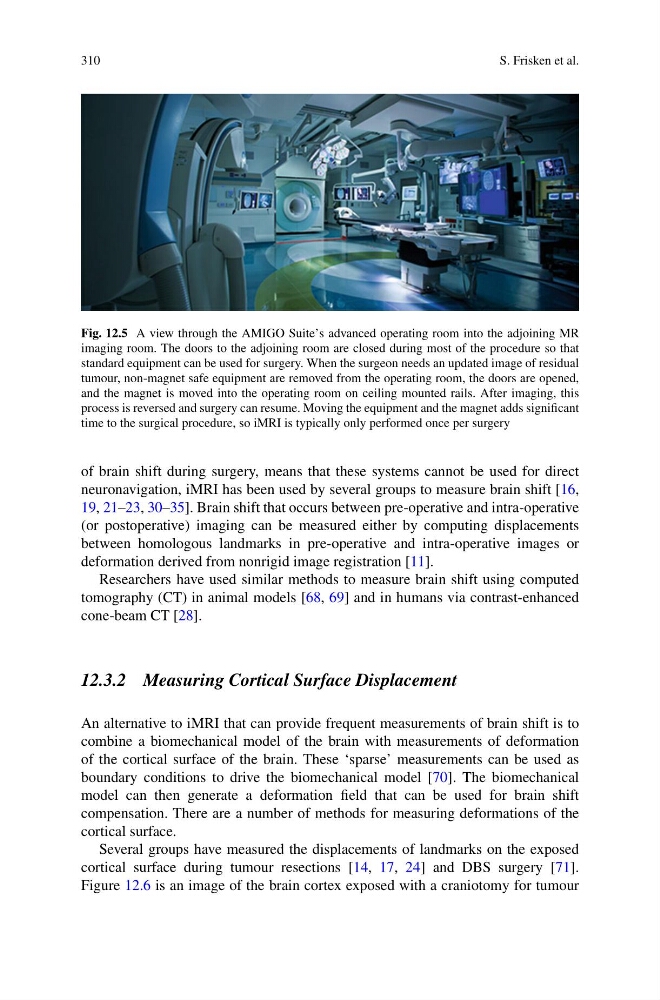
Fig. 12.5 A view through the AMIGO Suite’s advanced operating room into the adjoining MR
imaging room. The doors to the adjoining room are closed during most of the procedure so that
standard equipment can be used for surgery. When the surgeon needs an updated image of residual
tumour, non-magnet safe equipment are removed from the operating room, the doors are opened,
and the magnet is moved into the operating room on ceiling mounted rails. After imaging, this
process is reversed and surgery can resume. Moving the equipment and the magnet adds significant
time to the surgical procedure, so iMRI is typically only performed once per surgery
of brain shift during surgery, means that these systems cannot be used for direct
neuronavigation, iMRI has been used by several groups to measure brain shift [16,
19, 21–23, 30–35]. Brain shift that occurs between pre-operative and intra-operative
(or postoperative) imaging can be measured either by computing displacements
between homologous landmarks in pre-operative and intra-operative images or
deformation derived from nonrigid image registration [11].
Researchers have used similar methods to measure brain shift using computed
tomography (CT) in animal models [68, 69] and in humans via contrast-enhanced
cone-beam CT [28].
12.3.2 Measuring Cortical Surface Displacement
An alternative to iMRI that can provide frequent measurements of brain shift is to
combine a biomechanical model of the brain with measurements of deformation
of the cortical surface of the brain. These ‘sparse’ measurements can be used as
boundary conditions to drive the biomechanical model [70]. The biomechanical
model can then generate a deformation field that can be used for brain shift
compensation. There are a number of methods for measuring deformations of the
cortical surface.
Several groups have measured the displacements of landmarks on the exposed
cortical surface during tumour resections [14, 17, 24] and DBS surgery [71].
Figure 12.6 is an image of the brain cortex exposed with a craniotomy for tumour
S. Frisken et al.
Fig. 12.5 A view through the AMIGO Suite’s advanced operating room into the adjoining MR
imaging room. The doors to the adjoining room are closed during most of the procedure so that
standard equipment can be used for surgery. When the surgeon needs an updated image of residual
tumour, non-magnet safe equipment are removed from the operating room, the doors are opened,
and the magnet is moved into the operating room on ceiling mounted rails. After imaging, this
process is reversed and surgery can resume. Moving the equipment and the magnet adds significant
time to the surgical procedure, so iMRI is typically only performed once per surgery
of brain shift during surgery, means that these systems cannot be used for direct
neuronavigation, iMRI has been used by several groups to measure brain shift [16,
19, 21–23, 30–35]. Brain shift that occurs between pre-operative and intra-operative
(or postoperative) imaging can be measured either by computing displacements
between homologous landmarks in pre-operative and intra-operative images or
deformation derived from nonrigid image registration [11].
Researchers have used similar methods to measure brain shift using computed
tomography (CT) in animal models [68, 69] and in humans via contrast-enhanced
cone-beam CT [28].
12.3.2 Measuring Cortical Surface Displacement
An alternative to iMRI that can provide frequent measurements of brain shift is to
combine a biomechanical model of the brain with measurements of deformation
of the cortical surface of the brain. These ‘sparse’ measurements can be used as
boundary conditions to drive the biomechanical model [70]. The biomechanical
model can then generate a deformation field that can be used for brain shift
compensation. There are a number of methods for measuring deformations of the
cortical surface.
Several groups have measured the displacements of landmarks on the exposed
cortical surface during tumour resections [14, 17, 24] and DBS surgery [71].
Figure 12.6 is an image of the brain cortex exposed with a craniotomy for tumour