

7 Computational EEG Analysis for the Diagnosis of Psychiatric …
157
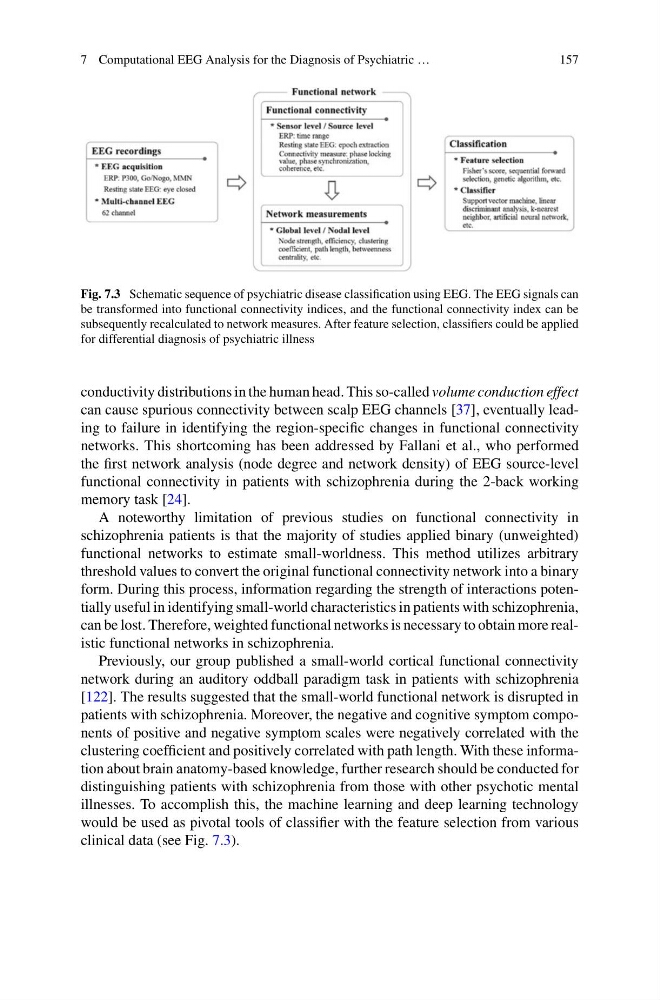
Fig. 7.3 Schematic sequence of psychiatric disease classification using EEG. The EEG signals can
be transformed into functional connectivity indices, and the functional connectivity index can be
subsequently recalculated to network measures. After feature selection, classifiers could be applied
for differential diagnosis of psychiatric illness
conductivity distributions in the human head. This so-called volume conduction effect
can cause spurious connectivity between scalp EEG channels [37], eventually leading to failure in identifying the region-specific changes in functional connectivity
networks. This shortcoming has been addressed by Fallani et al., who performed
the first network analysis (node degree and network density) of EEG source-level
functional connectivity in patients with schizophrenia during the 2-back working
memory task [24].
A noteworthy limitation of previous studies on functional connectivity in
schizophrenia patients is that the majority of studies applied binary (unweighted)
functional networks to estimate small-worldness. This method utilizes arbitrary
threshold values to convert the original functional connectivity network into a binary
form. During this process, information regarding the strength of interactions potentially useful in identifying small-world characteristics in patients with schizophrenia,
can be lost. Therefore, weighted functional networks is necessary to obtain more realistic functional networks in schizophrenia.
Previously, our group published a small-world cortical functional connectivity
network during an auditory oddball paradigm task in patients with schizophrenia
[122]. The results suggested that the small-world functional network is disrupted in
patients with schizophrenia. Moreover, the negative and cognitive symptom components of positive and negative symptom scales were negatively correlated with the
clustering coefficient and positively correlated with path length. With these information about brain anatomy-based knowledge, further research should be conducted for
distinguishing patients with schizophrenia from those with other psychotic mental
illnesses. To accomplish this, the machine learning and deep learning technology
would be used as pivotal tools of classifier with the feature selection from various
clinical data (see Fig. 7.3).
157
Fig. 7.3 Schematic sequence of psychiatric disease classification using EEG. The EEG signals can
be transformed into functional connectivity indices, and the functional connectivity index can be
subsequently recalculated to network measures. After feature selection, classifiers could be applied
for differential diagnosis of psychiatric illness
conductivity distributions in the human head. This so-called volume conduction effect
can cause spurious connectivity between scalp EEG channels [37], eventually leading to failure in identifying the region-specific changes in functional connectivity
networks. This shortcoming has been addressed by Fallani et al., who performed
the first network analysis (node degree and network density) of EEG source-level
functional connectivity in patients with schizophrenia during the 2-back working
memory task [24].
A noteworthy limitation of previous studies on functional connectivity in
schizophrenia patients is that the majority of studies applied binary (unweighted)
functional networks to estimate small-worldness. This method utilizes arbitrary
threshold values to convert the original functional connectivity network into a binary
form. During this process, information regarding the strength of interactions potentially useful in identifying small-world characteristics in patients with schizophrenia,
can be lost. Therefore, weighted functional networks is necessary to obtain more realistic functional networks in schizophrenia.
Previously, our group published a small-world cortical functional connectivity
network during an auditory oddball paradigm task in patients with schizophrenia
[122]. The results suggested that the small-world functional network is disrupted in
patients with schizophrenia. Moreover, the negative and cognitive symptom components of positive and negative symptom scales were negatively correlated with the
clustering coefficient and positively correlated with path length. With these information about brain anatomy-based knowledge, further research should be conducted for
distinguishing patients with schizophrenia from those with other psychotic mental
illnesses. To accomplish this, the machine learning and deep learning technology
would be used as pivotal tools of classifier with the feature selection from various
clinical data (see Fig. 7.3).